‘The Professionals’ – Mathematics…the poetry of logical ideas!

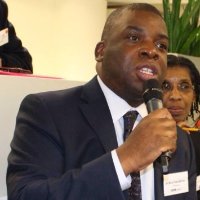
Dr Nira Chamberlain
Dr Nira Chamberlain

‘The Professionals’ is our latest addition to The Hub. Here, we share wisdom and advice from inspirational professionals who have made their mark in their respective disciplines. I (Amara) was privileged to be invited to speak at a STEM Careers Event and I was inspired and challenged by Dr Chamberlain’s enthusiasm for his subject. I wrote the quote below in my notebook and have been applying it to every personal and professional challenge I have come across to date. In today’s article, Dr Nira Chamberlain – listed by the Science Council as one of the UK’s top 100 scientists – discusses his passion for Mathematics and what it takes to excel as a professional mathematician.

“Mathematics is not easy, it isn’t supposed to be easy. It is about being tenacious and working on a problem until you can find a solution, it is about not giving up!”

Nira Chamberlain 

APH: Can you tell us about your educational and professional background?

NC: I am a Professional Mathematical Modeller, Chartered Scientist, Chartered Mathematician and Fellow of the Institute of Mathematics and its Applications. I have a PhD in Mathematics, MSc in Industrial Mathematical Modelling and BSc (Hons) in Mathematics. In addition to this, I am a BBC Expert Voice.

APH: When did you realise you wanted to pursue a career in Mathematics?

NC: When I was 17 years old, I successful solved a Geography field trip problem using mathematical statistics. I had to find the relationship between a river’s depth and its speed. I thought… this is good fun! Four years later, I was informed that I could pursue a career as a Professional Mathematician.

APH: Please could you expatiate on what you mean by “you were informed you could pursue a career as a professional mathematician.”

NC: As I was entering the final year of my Mathematics Degree, I took a Careers book from the Library. I went through this to list all the possible jobs I could do. When I reached the section Professional Mathematician, I closed the book and looked no further.

APH: In your opinion, what are the important skills and personal attributes that are required to succeed as a Mathematician?

NC: In my opinion, to succeed in mathematics you would have to be highly motivated, hard working as well as fiercely competitive but have honour and integrity. You must also be determined to show you are the best in the world but must respect and learn from other highly skilled mathematicians. Finally, you must be absolutely willing to go to heroic lengths to avoid being defeated by a problem. This is how you succeed as a mathematician. The moment you become arrogant or complacent is the time you stop being a mathematician.

APH: You mention being ‘fiercely competitive’ as an important attribute to succeed as a mathematician. Please could you elaborate on this? Sometimes people read ‘competitive’ as ‘combative’ Do you have any wisdom to share on how we can remain competitive but not fall into the ‘win at all costs’ trap?

NC: A mathematician’s competitiveness is driven by the need to solve even more complex problems, in other words, ‘to up my game.’ This is similar to a weightlifter lifting larger weights than before. In order to improve, a mathematician will need other mathematicians to bounce his/her ideas off which may require them to up their game as well. Mathematics is creative not political, you cannot push the frontier of mathematics forward by knocking down your fellow mathematician or stealing their ideas.

APH: Are there any myths about Mathematics & Mathematicians that you come across?

NC:  Some common ones are that the best mathematicians are those who can solve problems in 2 seconds flat, can multiply big numbers in their head, find mathematics easy and never ever make mistakes! This is so far from the truth.

Another myth is that mathematics is boring. It certainly is not! Mathematics is the poetry of logical ideas!

APH:  Can you describe a typical working day? What do you like the most and least about your job?

My day consists of solving the “impossible” and doing the mathematics that scientist and engineers can’t do.  Most days, I am designing a mathematical approach on the whiteboard, then I am working on a computer writing complex mathematical algorithms. What I most like about my job is turning complex real life problems into a mathematical argument and then solving it. On the downside, sometimes due to the nature of my job, I could be away from my family for long periods. However, due to technology advancements this is occurring less and less.

APH: What do you wish someone else had told you before you embarked on your professional journey?

NC: The importance and value of doing a PhD. Seven years into my career I met members  of the Congress of African-American Research Mathematicians. They showed me the importance of adding significant knowledge to the field of mathematics as well as the need of having more Black mathematicians achieving this.

APH: Do you have any mentors? If yes, who are they and how important has having a mentor been to you?

NC: My cousin is a Professor of Economics and is my intellectual inspiration. A Black man who pursued his intellectual passion to the very top of his field   – wow! He gave me advice and encouragement, so he is the nearest thing to being a mentor. I also have an international and domestic network of mathematical friends. We chat and encourage each other. There is a saying, “iron sharpens iron” and this is true. We keep each other mathematically sharp,

APH: What achievements are you most proud of? 

Successfully completing my PhD part time while I was working full time and raising a family at the same time. Being recognized by the Science Council as one of the Top 100 Scientists in the UK. Becoming the first Black Mathematician to make it into the Who’s Who. There are only approximately 30 mathematicians in the Who’s Who and they tend to be the UK’s most top notch mathematicians. To be recognized in this way and to join such an exclusive group, I have to give God the praise.

APH: What advice would you share with parents or guardians about helping their children develop a love for Mathematics? 

Mathematics is really a fantastic adventurous game and should be viewed as such. The British mathematician Sir John Kingman once said,

“Mathematicians are better if they stay a bit childish and play the game as a game. This is the key to teaching mathematics, it’s not to flood people with practical problems, rather it is to say that this is the best game that has ever been invented. It beats Monopoly, it beats chess and it happens that it can enable you to land rockets on the moon. The real mathematical advances have been made by people who just loved it.”

APH: What advice would you share with anyone who is thinking of a pursuing a career in Mathematics?

In my formative years there were not that many Black mathematical role models. However, my Dad instilled confidence and self-esteem in me by telling me that;

“You do not need anybody’s permission to be a great mathematician”.

These words has stuck with me to this very day.  Believing in yourself is one of the keys in doing mathematics.

APH: How do you maintain a sense of balance while juggling your different roles – both personal and professional?

If there is a mathematical problem I need to go to war with then I do the “Nairobi shift”. This means getting up at 4am to do 3 hours of mathematics. I spend the rest of the day working and looking after the family before going to bed at 8pm. At 4am, I am at my mathematical peak and my boys are asleep! : )
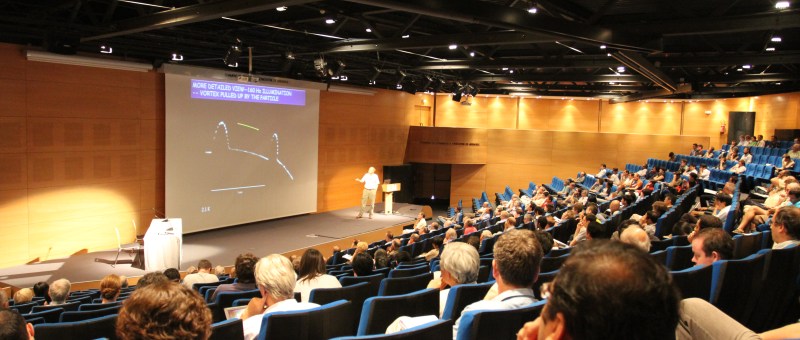
Reflections – Attending my first international conference

I have always loved attending conferences because they provide opportunities to network with other scholars, publicise my research activities, as well as build my research profile. I have attended some conferences in the UK and when I got the email that my paper has been accepted for presentation at the American Marketing Association (AMA) Winter Education Conference, I was excited and started looking forward to it.

Attending an international conference requires good preparation. The conference organiser was very helpful with providing travel information, especially regarding obtaining a visa. All that was required by the American Embassy was my invitation letter in addition to a student confirmation letter from my University. I was amazed at how simple the process was.

Before I knew it, I was off to San Antonio, Texas. The immigration officials seemed surprised that I was only visiting for a few days for a conference. The Conference had a very different atmosphere to conferences I had attended in the UK – this could be due to the fact that Americans were by far the biggest nationality present!

There are some things I found particularly interesting:

Early Riser – I am used to the first session of each day starting between 9:00 and 10:00 in the morning but sessions started as early as 8:00 am! Each day was fully packed with events but it was great to have the opportunity to explore different sessions and meet lots of people.

Networking – Though I was quite reserved in my networking approach, I used every opportunity to network. I chatted to people I sat with in sessions or met during lunch. In relaxed atmospheres, it is easier to start conversations and get to know people. Interestingly too, I was able to network with people I had met on Twitter before the conference.

The PhD Process: US vs. UK – I learnt about the differences between how PhDs are structured in the US and the UK. In the US, PhD candidates can spend at least 5 years working towards their PhD. A lot of work (and time) is spent grooming candidates for research and academia, which I find to be very different from how the PhD process occurs in the UK. There were also indications that a large proportion of American Marketing research is quantitative – developing and testing models – this means researchers heavily rely on statistical packages and tools. Candidates are taught to use these tools as an integral part of their PhD.

The Job market – I learnt that you can use ‘one stone to kill two birds’ while attending the AMA Conference.  Apart from presenting your research and networking, you could probably leave with a new job and start preparing for life as an Assistant Professor! This requires a lot of planning though as you would need to have applied long before the conference. The point to note however, is the fact that it has been incorporated into the conference. Universities know they can recruit at the conference and students are well prepared for the fact that they could be interviewed during the conference.

The Socials – Unfortunately, there was no social event as I would have expected. Typically, UK conferences are for three days; Wednesday to Friday; with socials being held on the penultimate night. Socials provide a good opportunity for conference delegates to ‘let their hair down’ and socialise in an informal atmosphere. I decided to entertain myself by visiting some key landmark sites in San Antonio.

Overall, it was a wonderful experience, I did enjoy myself, meet nice people and develop some productive relationships. Most importantly, it was a challenging, thought provoking opportunity to see how I could best improve myself, in terms of developing my research skills, publications and getting ready for the job market. I plan to attend the Summer AMA in 2016 as I will be more than ready to explore opportunities USA has got to offer.

Emmanuel Mogaji is a member of the Centre for Advances in Marketing, Business and Management Research Institute at the University of Bedfordshire Business School. His research interests are on the design and development of marketing communication for service providers, universities and charity organisations. He is currently working on his PhD, focusing on advertising strategies by UK financial service providers. He tweets @e_mogaji.

Please share your stories with us, we would love to hear from you. Contact us @ aspiringprofessionalshub@gmail.com or @AspProfHub

A Master Chef at Work – A Culinary Take on the PhD Process

CookingI have heard many metaphors for the PhD process – ‘a dark tunnel’, ‘a lonely path’, ‘skating like an octopus on wheels’ but I had never thought about doing a PhD using culinary terms. In this ‘Reflections’ article, Dr Nadia Anwar shares an interesting take on her PhD journey.

Doing a PhD is like cooking a very complicated but worthwhile dish on a steady and consistent heat. One needs to be extra careful right from the beginning, keeping in mind all the logistic and practical issues involved in creating one’s delicacy. For instance, how much will the whole dish cost? What kind of hob will be good? Which cooking pot will be best to use? A non-stick pan is highly recommended as you need something that can take the heat and not burn too easily. Do you have all the ingredients? What if one of the ingredients is unavailable? Where will you find it, when…, how…? Who will be the people helping you in your preparation and then in the process itself? These and many other questions will be your preliminary guide to a wonderful cooking experience. You do not need to worry about who is going to share the dish with you for there will be many to lick their fingers once it is cooked.

You will need three types of people according to the function they will perform in your cooking process: Dish sponsors (the ones who are financially supporting you – they can either be your family members or external sponsors), tasters (supervisors), and judges (external examiners). Although all these people are somehow mandatory, in this project, a very significant part is played by the tasters. Once you have got all the ingredients, you start putting them in one at a time at the appropriate stages of the cooking process. Check the fire, is it low, medium or high? If it is low, the dish may never get cooked. If it is very high it may burn the whole thing before it is cooked. So use the proper heat it requires. Sometimes, though, you may need to increase or lower the heat in order to evaporate the extra water or otherwise to retain the proper amount of moisture. You must be flexible.

Now, the tough part (yes! it’s still easy until now); start putting the spices into your pan which although are not your main ingredients, have a crucial role to play in the final texture and taste of your dish. Have you got the right measuring spoon and are you using a non-sticking ladle and moving it only when really needed? Good. A difficult situation can sometimes occur when by dint of bad luck or while busy in cherishing an unavoidably inspirational moment you put a particular spice more than it is needed and there is no way you can undo the act. Do not panic, it may be several times that you make this mistake. The only thing you can do is to save as many ingredients as you can, throw the rest in the sink and start over again. It is advised that you keep extra calm in such dire situations as panicking will only aggravate the situation. Your senior fellow researchers can be of some help as they can listen to your kitchen tragedies and relate their horrible failed experiences to empathise with you. Since their noses are very sensitive to smells, they may even tell you if something is burning.

ChefBe patient with your plans. By this time you may already be performing as a creative and expert cook.  Just keep cooking and adding into your dish all those relevant new spices that have recently been introduced in the market. You will soon realise that your dish has attained a particular texture of its own. Let me tell you the most difficult part is to know when it is cooked or how much time it still requires for the final dish to be ready. Do not worry. Your tasters will tell you when to turn the heat off, decorate your dish and serve. Once out there in front of the judges, even they cannot do anything to save the day if you have made a last moment mistake.

It is time now for the judges to comment. They may reject it altogether, they may make funny faces, they may spit it out or they may ask you to keep cooking it on the same heat for a tad bit longer. If you have really put your energies into making your dish a success and you are lucky then it is highly likely that they find your dish very tasty and start licking their fingers (yes, and even in front of you). I know the whole process is tiring and many a times may test your nerves but be patient. If it is done properly, you will become a master chef!

Nadia Anwar recently completed her PhD in Nigerian drama from The University of Northampton, UK. She is a lecturer in English at the Education Department in Pakistan and visiting faculty member at University of Management and Sciences. Her primary areas of interest are African literature in general and Nigerian theatre and drama in particular.

If you enjoyed reading this article, please share and subscribe to our network! Would you like to share an article in The Hub? We would love to hear from you. Please get in touch – info@aspiringprofessionalshub.com

So they ‘fall in love in the lab’ and they ‘cry’, so what? – lending a voice to the conversation about women in Science

Picture1In the past week there has been an outcry about the place of women in science following the comments by Nobel Prize winner, Professor Tim Hunt suggesting the need for sexually segregated labs as women in labs are a distraction because they ‘fall in love’ and ‘cry’ when their work is criticised. His comments raised furore, with both men and women – in science and other disciplines.Sadly, this is not the first denigrative assertion to be made about female professionals, particularly within Science, Technology, Engineering and Mathematics. Sadder still, it probably will not be the last.

A friend of ours – a non-scientist – heard about these comments and posted articles on Facebook about the legendary late Marie Curie (1867-1934), the first woman to win a Nobel prize and the only woman to have won it twice. She was famous for her work on radioactivity and in 2009 was  voted the most inspirational woman in science. We now have Marie Curie research fellowships which have provided both men and women excellent opportunities to carry out research that have contributed to the development of the science. Aside from Marie Curie,  there have been many other female scientists who have made outstanding contributions to their fields such as Mary Somerville, Dorothy Hodgkin, Rosalind Franklin, Alice Roberts and Maggie Aderin-Pocock.

Amidst the furore which engulfed the science pages of many newspapers and editorials in the last week, there is a lighter yet important point to consider in this conversation.  Many people do meet their spouses or partners at their places of study or work – this is not unique to the sciences. Does it really matter? We know a lot of ‘research couples’, when you spend so much time in the lab or in a work environment, you can get to know your colleagues on a much more intimate level. As long as you remain professional, ‘falling in love’ does not need be a bad thing.  Thus, the suggestion that it is a distraction is really far from the truth. `Falling in love’ in the laboratory environment is not a distraction but rather should be seen as a blessing in disguise as many scientists would not have a hope in Pluto to find partners and spouses because of the demands of the research or science. Perhaps we need to celebrate science unions widely so that it is accepted! Perhaps!!

As for the comments on crying!!!  The thought of the alternative to crying makes crying possibly a much milder reaction to criticism. Until you learn to deal with it, most of us – male and female alike – do not respond well to criticism. In all disciplines, criticism abounds but we must use it as a tool for growth. There have been scientists, men included, who have resorted to far worse actions following criticisms of their publications, retractions of their publications or failure to get certain grants. For anyone who keeps up with the ‘going ons’ in their field, you will be very conversant with these. Should we now applaud violent reactions or in some cases suicidal tendencies following criticism because crying is for want of a better word, intolerable?

At least they cry, come back and try again to succeed which is the basis of research. Who knows! The Marie Curie’s, Rosalind Franklin’s and Sally Davies’s of this world shed a tear or many in the early days of their scientific journeys to the point where they achieved global status but do we remember them for ‘falling in love in the lab’ or ‘crying’? Of course not, thus, the comments should be given the response it deserves, NOTHING!! Whilst we generally lambast the comments alluded to Prof Hunt let’s silently applaud him for saying what he thinks in the open for us all to tackle a much bigger problem of stereotyping and marginalisation of women in the scientific and technical careers.

Women have immensely contributed to science and in my opinion, whilst every scientist is not a woman, every woman is a scientist after all women perceive, experience, plan, execute, and manage biological change better than any male scientist. (Open for debate!!).

In future posts we will address the real world issues surrounding gender, race and disability in different career disciplines.

Disclaimer – If after reading this you find yourself falling in love with someone in your lab or feeling the rightful need to cry when your work faces criticism, please do not hold us responsible, but come back and share your wonderful stories.

Making the most of your PhD – Musings of a nearly completed PhD candidate

Picture3In today’s post, Mr A, a third year PhD candidate and in the process of submitting his PhD shares some thoughts on how to manage and make the most of the PhD process.

In the final stages of the PhD, I am faced with the big elephant in the room –writing up the thesis. I feel like my brain is fried beyond recognition and  anything to keep me away from the thesis for a minute appears to be a blessing in disguise. Despite the challenges, this stage of the PhD has been quite an interesting experience with both high and low moments. Overall, I have enjoyed doing a PhD.  Looking back at my journey, there have been several key aspects that have played an important role in my progress. I hope these will be useful to other PhD candidates.

Getting the PhD Supervisor(s)-Student relationship balance right

Some people regard this as the most important and akin to a marriage of convenience.  I would definitely not disagree with this perspective and it is the major juggling act you would have to learn to manage. It is imperative that from the start of your PhD, there is an established order of how your PhD will be managed by both you and your supervisor. Yes YOU! The management of your PhD is just as much your responsibility as you think it is your supervisors’. Knowing what is expected of you at each stage of the process and delivering (at least to some extent) of what is expected is one sure way of keeping the relationship smooth. It is also important you know what you should expect from your supervisors from the early point. Simple things like their areas of strength e.g. technical, pastoral, social etc. and other things like how regularly you should meet should be established early on and maintained. For me, weekly meetings in the first year of my PhD kept me on track and on my toes all the time, in the second year it was a fortnightly exchange and in the final year it has been a case of meeting as and when we deemed necessary which worked for both of us without compromising the quality of the work being undertaken and the timelines to be met.

 Continuous development through University and external workshops

At my University and generally in most UK universities, the graduate schools organise workshops to develop the skills of the research students to help them through the PhD and also preparing them for life beyond the PhD. For any PhD candidates not taking advantage of such graduate school workshops, you are really missing out!! Examples of the type of activities at these workshops include – learning to use statistical tools (SPSS), preparing for transfer and viva voce, academic writing and structuring your thesis, applying for grants and learning to publish. External bodies also organise workshops that are beneficial to the PhD students. For example, in the UK, a group called the Voice of Young Scientists (VOYS), part of the Sense about Science network regularly organise events tailored to develop science PhD students. One of the sought after VOYS workshop helps develops researchers on how to the media and using media tools to communicate the science. Pretty awesome isn’t it?

 Keep reading – and never stop writing

As a PhD student in the sciences, my PhD has been predominantly laboratory based and at times through the PhD whilst I was reading, I wasn’t writing. Now at the stages of the final write up, I have to review old literature and going back to things which I would not have had to if I had kept the writing flowing….tut tut tut!!! Regrets!  The things I didn’t know when I started eh!! I could try blaming the fact that my research is laboratory based but knowing what I do now….it’s no excuse!! As I approach the end of the PhD I have realised how important it is to maintain a writing flow throughout the PhD.

Disseminate your work

The isolation encountered by many PhD students can occasionally create some weird alien feeling of pseudo existence in some odd planet somewhere thus, the chance to talk about your work with your peers or anybody who would care to listen is important.  It can occasionally offer you the chance to get out of the laboratory, office, University and if you are lucky, the country. My PhD journey has been enriched greatly by the opportunities I had to attend several national and international conferences and more than anything else it brings a sense of belonging and pride that you can actually be recognised for the many hours and candles burnt during the night working in your little silo. It also creates an opportunity for feedback from established researchers in your field of study which would only help to improve your research.

Join a professional society

For anyone thinking of embarking on a career in research or academia it is imperative you find a professional society in your area of interest or field to be a part of. Some societies are free for student members whilst others charge a minimal fee for the student members including PhD and postdoctoral members. Without question, this should be high up on your list before or you start your PhD and where possible, get involved. If you can, volunteer for the society as this is one sure way to get yourself noticed. I have been a member of several professional societies and undoubtedly my involvement with the professional societies has been a major highlight and key part of my PhD journey.

Keep a social life

Your supervisor will always want to ensure you are continuously working. S/he might probably want you to spend 30 hrs everyday (if it were possible) eating, thinking and dreaming about your research. Word of advice, ensure you find time for a social life. Whether it is going out for drinks, travelling or whatever “your thing” is, letting your hair down (even if you are bald) occasionally is necessary to sustain you through the PhD and ensuring you have a positive support network for an occasional ‘usual PhD rant’ is also necessary. I still have many people to thank for my occasional outbursts during the PhD especially Dr M. Av-B who’s response was usually “let’s go get a coffee”

No PhD experience is the same anywhere and undoubtedly, there are other helpful aspects that could be beneficial to you as a PhD student. The summary of all of this is simple; be professional, work hard and where you can, CREATE TIME to enjoy yourself because you will need it.

We would love to hear your thoughts on this topic. What advice would you like to share with other PhDs to enable them successfully complete? Please leave a comment below. If you would like to write a guest article or like us to cover a particular topic, please contact us on aspiringprofessionalshub@gmail.com or@AspProfHub