The Entrepreneur’s Corner – Graduate Rejects

When you think about the term ‘entrepreneur’, what comes to mind? Major business oligarchs? Wealthy business moguls? Well think again! The idea of entrepreneurship is no longer a forlorn and unachievable dream. In the United Kingdom, there is a major drive to embed entrepreneurship into University curricula. In today’s post, we had the pleasure of interviewing Derek and Keara Mafohla, founders of ‘Graduate Rejects’, a social enterprise with the aim of improving educational standards for young children in Zimbabwe.

APH: Can you tell us about your educational and professional background?

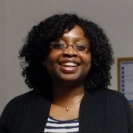
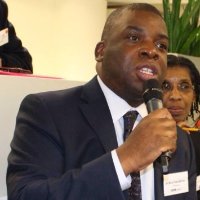
DM& KM: The founders of Graduate Rejects are siblings Derek and Kearabiloe Mafohla. Derek is currently an undergraduate student at the University of Greenwich studying Computer Science whilst Keara Mafohla is a final year student at the University of the West of England studying Biomedical Science.

Can you give an overview about your business or enterprise?

Initially we formed Graduate Rejects as a charity in November 2011 but in January 2013 we adopted the social enterprise model.

Photo Credit: Nelson Vinod Moses

Photo Credit: Nelson Vinod Moses

When we began, we concentrated on a small community in Tshabalala, Bulawayo the second largest city in Zimbabwe. We noticed that there was little educational activity within the community which left children and young adults engaging in drinking and other activities that made no contribution to a successful future. We (Graduate Rejects) decided to donate books to local schools and libraries with the hope of developing and encouraging a reading culture within the community.

What was the inspiration behind your business?

Our love for children and knowledge of the poor education systems they were exposed to were our biggest inspiration. Some schools in Zimbabwe have outdated educational systems and infrastructure. The resulting impact is that children fall into a cycle of attending school for a minimum of 11 years but failing to study further or achieving good grades. We are of the belief that if we are able to encourage proper and more modern ways of studying, children who cannot afford a good education can adopt self-study techniques. Importantly, we embrace the importance of a holistic approach to meeting the educational needs of children.

How important has social media and networking been to your business?

Interestingly for the past year we have been trying to raise money to build a website for our enterprise. We greatly acknowledge the importance of social media as it has helped us promote our work. Twitter, Facebook and Instagram have been our social media platforms of choice since they are free and easy to set up. We engage with a lot of people whenever we write any posts but also we are constantly seeking to learn from others who are interested and willing to share with us.

What are the challenges, if any, you face?

We come from a politically volatile country and whatever form of business or charity you choose, you have to bear that in mind. Shipping costs for the books we donate has always been and remains our biggest challenge. We find that many people are willing to donate books to us but the costs to ship the books are often prohibitive. We are self-funded and that also presents its own challenges. We also think finding the right model for children and adults to get actively involved to further improve study is often tricky but we are dynamic and open to ideas on how to actualise this.

Have you made any mistakes and what lesson(s) did you learn?

Expecting things to work accordingly! It is important to remember that things do not always go to plan but to remember that obstacles do provide an opportunity for personal development and learning.

Finally, what advice would you give aspiring entrepreneurs?

In our experience so far, we suggest that if you are considering starting a business or social enterprise, keep a journal and document all your activities. This provides ‘fodder’ for reflection which is a useful learning tool. Finally, don’t give up when you are faced with challenges.

Please can you share your contact details

We can be reached on:

Facebook: Graduate Rejects Enterprise

Brand You! – Developing your online social presence.

Social mediaGoogle yourself – don’t worry, no one’s watching and I won’t judge you! Were you pleasantly surprised, alarmed or was everything just as you expected? Most of us think we have no social presence online because we do not have any social media accounts but that can be far from true. If your search yielded no results, is that what you really want? Whether you work in sales or not, we are all in the sales business. We are constantly selling our services – skills, expertise, experience – or products and to do this we need to NETWORK. Think of social media as networking with the biggest audience possible – the whole world. In this article, Amara shares how some of these social tools can be used to boost your professional presence and develop your unique and personal brand.

I  like to think of my social presence as not just how I present myself as a professional (and as a person) to the public but also how I am perceived by that public as well. Every time we interact with individuals or organisations, we create an impression whether we are immediately aware of it or not. This is true whether this interaction occurs face to face or online. Social media has become a powerful connection tool and I am constantly reminded of this by the number of guest articles we have received by people I have never met in person but have had the opportunity to connect with online or have just found The Aspiring Professionals Hub through Facebook or Twitter. 

So where to start? For ‘digital visitors’ like myself, I’ll share some examples of some tools and how we can use them to build an online social presence.

LinkedIn

Do you have a LinkedIn account? If no, why not? In my opinion, LinkedIn is the most important ‘place’ for aspiring professionals to be ‘seen.’ Think of LinkedIn as a Facebook for professionals. Your profile is akin to a CV and you are in control of what you choose to reveal or not. Establish a professional image by using an appropriate picture in your profile – no holiday snaps from the beach please! LinkedIn can be used to build connections with other professionals but just as important, you can follow organisations and join groups relevant to your field. There is virtually no discipline that is not covered by a group and if there isn’t one for you, why not start one? Are you naturally shy and find it difficult to walk up to someone at an event and introduce yourself? Look them up on LinkedIn and invite them as a contact. I always recommend adding a short note to the basic LinkedIn invite message introducing yourself. Be professional.

There are many recruiters on LinkedIn so your dream job may just be a new contact or updated profile away. Remember that all recruiters have to work with is your profile, so ensure you update regularly and truthfully. Joining your alumni’s LinkedIn group can help you develop relationships with alumni working at your target organisations who may be willing to offer advice and mentorship. Don’t ignore your LinkedIn page, share posts that you think are relevant to your contacts and within the groups you follow.

Twitter

Twitter could very well be one of the easiest and quickest ways of establishing connections and developing your online social presence. Using 140 characters at a time you can share what you’ve written, information you find insightful or you can follow that company you really, really want to work for, learn about different industries and global brands. For your professional Twitter account, I would recommend using your name in your handle, for example – @amaratweets, @emmanueladukwu, @AspProfHub) – so people associate your handle with your person. I have been pleasantly surprised when someone I have not ‘met’ before has walked up to me and said hello because they recognise me from Twitter. When writing a bio for your profile, make sure that people can understand what you do and not just who you are.

Whenever I attend a meeting or conference, I use hashtags to share information from speakers as well as connect with other attendees. Another way to interact with people in your discipline is to attend webinars and tweetchats. Don’t be shy, contribute to the conversation. Be nice, reply when people ask you questions or send direct messages, retweet what other people are saying. Don’t worry if you do not have many followers in the first 3 days, it takes time to build a network. This rule applies whether building a network face to face or online. You are building your brand – be careful what you tweet especially if you are tweeting on behalf of an organisation.

Facebook

A lot of us are already using Facebook to connect with our family and friends but it can also be a powerful professional networking tool. As of the first quarter of 2015, Facebook had over 1.44 billion active users and with this, the world can really be your oyster. I would advise that if you want to project your professional social presence using Facebook you maintain two separate personas.  I do not think there is anything suspicious about doing this. If potential employers are going to be checking job applicants on networking sites, it is in your interest to find a way to keep private things private. Alternatively, set your privacy settings to manage what you share with your ‘friends’ vs. your professional contacts.

Build your network by adding contacts, joining relevant groups and liking pages where you can connect with like minded professionals. I am learning how important it is now to not just be a silent observer but contribute meaningfully to conversations.

Blogging

Of course, I hadn’t forgotten. Blogging is a communication tool that can really allow you share your story. Everyone loves a good story, it doesn’t matter if you are sharing something personal or communicating your point of view on recent events. If you are a creative person, you can showcase some of your products on your blog. We all know people who have made millions off blogging. Like I said earlier, online, your potential audience is the whole world!

Know your audience and write for your audience. Don’t be afraid to mix things up on your website. Keep improving. Link your Facebook, Twitter and LinkedIn accounts to your blog and use social media to disseminate your work.

There are other tools like Google+, YouTube, ResearchGate. You don’t have to be involved with all of them. Find out what works for you and work it!

My rule when it comes to developing my social presence online is to be authentic and true to my values as well as being professional at all times. I try and practice #netiquette. Always have at the back of your mind that when it is online, it is forever. My mantra is, ‘if you don’t mean it, don’t post it!’ Project an image that you are proud of. It can be intimidating living in the ‘socialsphere’ but you can manage how much you put out there. In my next post, I will discuss some tips for managing your online social presence.

I am left wondering what the next decade will bring. Do you think a day will come – if it isn’t here yet – when our online social presence will mean just as much, if not more to employers than our CVs and personal statements?

HeadshotAbout our writer – After completing a PhD in Microbiology and Food Science,  Amara is developing her career in academia – providing teaching and learning solutions in UK FE and HE Institutions as well as conducting research in Food Microbiology. Amara believes in the combined power of education, mentoring and productive relationships as essential tools for building successful careers.

If you enjoyed reading this article, please share and subscribe to our network! Would you like to share an article in The Hub? We would love to hear from you. Please get in touch – info@aspiringprofessionalshub.com


‘The Professionals’ – Mathematics…the poetry of logical ideas!

Dr Nira Chamberlain
Dr Nira Chamberlain

‘The Professionals’ is our latest addition to The Hub. Here, we share wisdom and advice from inspirational professionals who have made their mark in their respective disciplines. I (Amara) was privileged to be invited to speak at a STEM Careers Event and I was inspired and challenged by Dr Chamberlain’s enthusiasm for his subject. I wrote the quote below in my notebook and have been applying it to every personal and professional challenge I have come across to date. In today’s article, Dr Nira Chamberlain – listed by the Science Council as one of the UK’s top 100 scientists – discusses his passion for Mathematics and what it takes to excel as a professional mathematician.

“Mathematics is not easy, it isn’t supposed to be easy. It is about being tenacious and working on a problem until you can find a solution, it is about not giving up!”

Nira Chamberlain 

APH: Can you tell us about your educational and professional background?

NC: I am a Professional Mathematical Modeller, Chartered Scientist, Chartered Mathematician and Fellow of the Institute of Mathematics and its Applications. I have a PhD in Mathematics, MSc in Industrial Mathematical Modelling and BSc (Hons) in Mathematics. In addition to this, I am a BBC Expert Voice.

APH: When did you realise you wanted to pursue a career in Mathematics?

NC: When I was 17 years old, I successful solved a Geography field trip problem using mathematical statistics. I had to find the relationship between a river’s depth and its speed. I thought… this is good fun! Four years later, I was informed that I could pursue a career as a Professional Mathematician.

APH: Please could you expatiate on what you mean by “you were informed you could pursue a career as a professional mathematician.”

NC: As I was entering the final year of my Mathematics Degree, I took a Careers book from the Library. I went through this to list all the possible jobs I could do. When I reached the section Professional Mathematician, I closed the book and looked no further.

APH: In your opinion, what are the important skills and personal attributes that are required to succeed as a Mathematician?

NC: In my opinion, to succeed in mathematics you would have to be highly motivated, hard working as well as fiercely competitive but have honour and integrity. You must also be determined to show you are the best in the world but must respect and learn from other highly skilled mathematicians. Finally, you must be absolutely willing to go to heroic lengths to avoid being defeated by a problem. This is how you succeed as a mathematician. The moment you become arrogant or complacent is the time you stop being a mathematician.

APH: You mention being ‘fiercely competitive’ as an important attribute to succeed as a mathematician. Please could you elaborate on this? Sometimes people read ‘competitive’ as ‘combative’ Do you have any wisdom to share on how we can remain competitive but not fall into the ‘win at all costs’ trap?

NC: A mathematician’s competitiveness is driven by the need to solve even more complex problems, in other words, ‘to up my game.’ This is similar to a weightlifter lifting larger weights than before. In order to improve, a mathematician will need other mathematicians to bounce his/her ideas off which may require them to up their game as well. Mathematics is creative not political, you cannot push the frontier of mathematics forward by knocking down your fellow mathematician or stealing their ideas.

APH: Are there any myths about Mathematics & Mathematicians that you come across?

NC:  Some common ones are that the best mathematicians are those who can solve problems in 2 seconds flat, can multiply big numbers in their head, find mathematics easy and never ever make mistakes! This is so far from the truth.

Another myth is that mathematics is boring. It certainly is not! Mathematics is the poetry of logical ideas!

APH:  Can you describe a typical working day? What do you like the most and least about your job?

My day consists of solving the “impossible” and doing the mathematics that scientist and engineers can’t do.  Most days, I am designing a mathematical approach on the whiteboard, then I am working on a computer writing complex mathematical algorithms. What I most like about my job is turning complex real life problems into a mathematical argument and then solving it. On the downside, sometimes due to the nature of my job, I could be away from my family for long periods. However, due to technology advancements this is occurring less and less.

APH: What do you wish someone else had told you before you embarked on your professional journey?

NC: The importance and value of doing a PhD. Seven years into my career I met members  of the Congress of African-American Research Mathematicians. They showed me the importance of adding significant knowledge to the field of mathematics as well as the need of having more Black mathematicians achieving this.

APH: Do you have any mentors? If yes, who are they and how important has having a mentor been to you?

NC: My cousin is a Professor of Economics and is my intellectual inspiration. A Black man who pursued his intellectual passion to the very top of his field   – wow! He gave me advice and encouragement, so he is the nearest thing to being a mentor. I also have an international and domestic network of mathematical friends. We chat and encourage each other. There is a saying, “iron sharpens iron” and this is true. We keep each other mathematically sharp,

APH: What achievements are you most proud of? 

Successfully completing my PhD part time while I was working full time and raising a family at the same time. Being recognized by the Science Council as one of the Top 100 Scientists in the UK. Becoming the first Black Mathematician to make it into the Who’s Who. There are only approximately 30 mathematicians in the Who’s Who and they tend to be the UK’s most top notch mathematicians. To be recognized in this way and to join such an exclusive group, I have to give God the praise.

APH: What advice would you share with parents or guardians about helping their children develop a love for Mathematics? 

Mathematics is really a fantastic adventurous game and should be viewed as such. The British mathematician Sir John Kingman once said,

“Mathematicians are better if they stay a bit childish and play the game as a game. This is the key to teaching mathematics, it’s not to flood people with practical problems, rather it is to say that this is the best game that has ever been invented. It beats Monopoly, it beats chess and it happens that it can enable you to land rockets on the moon. The real mathematical advances have been made by people who just loved it.”

APH: What advice would you share with anyone who is thinking of a pursuing a career in Mathematics?

In my formative years there were not that many Black mathematical role models. However, my Dad instilled confidence and self-esteem in me by telling me that;

“You do not need anybody’s permission to be a great mathematician”.

These words has stuck with me to this very day.  Believing in yourself is one of the keys in doing mathematics.

APH: How do you maintain a sense of balance while juggling your different roles – both personal and professional?

If there is a mathematical problem I need to go to war with then I do the “Nairobi shift”. This means getting up at 4am to do 3 hours of mathematics. I spend the rest of the day working and looking after the family before going to bed at 8pm. At 4am, I am at my mathematical peak and my boys are asleep! : )

Reflections – Attending my first international conference

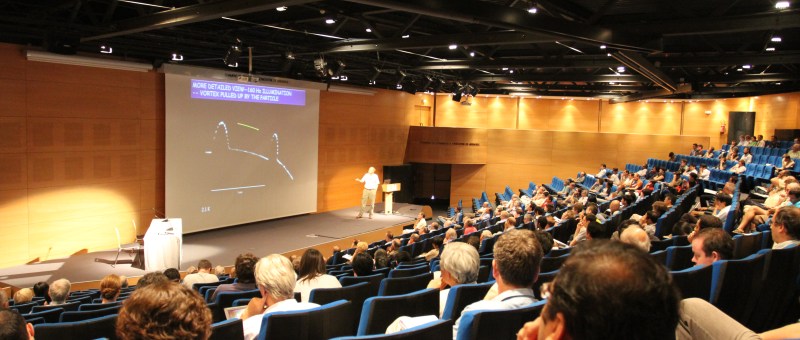
I have always loved attending conferences because they provide opportunities to network with other scholars, publicise my research activities, as well as build my research profile. I have attended some conferences in the UK and when I got the email that my paper has been accepted for presentation at the American Marketing Association (AMA) Winter Education Conference, I was excited and started looking forward to it.

Attending an international conference requires good preparation. The conference organiser was very helpful with providing travel information, especially regarding obtaining a visa. All that was required by the American Embassy was my invitation letter in addition to a student confirmation letter from my University. I was amazed at how simple the process was.

Before I knew it, I was off to San Antonio, Texas. The immigration officials seemed surprised that I was only visiting for a few days for a conference. The Conference had a very different atmosphere to conferences I had attended in the UK – this could be due to the fact that Americans were by far the biggest nationality present!

There are some things I found particularly interesting:

Early Riser – I am used to the first session of each day starting between 9:00 and 10:00 in the morning but sessions started as early as 8:00 am! Each day was fully packed with events but it was great to have the opportunity to explore different sessions and meet lots of people.

Networking – Though I was quite reserved in my networking approach, I used every opportunity to network. I chatted to people I sat with in sessions or met during lunch. In relaxed atmospheres, it is easier to start conversations and get to know people. Interestingly too, I was able to network with people I had met on Twitter before the conference.

The PhD Process: US vs. UK – I learnt about the differences between how PhDs are structured in the US and the UK. In the US, PhD candidates can spend at least 5 years working towards their PhD. A lot of work (and time) is spent grooming candidates for research and academia, which I find to be very different from how the PhD process occurs in the UK. There were also indications that a large proportion of American Marketing research is quantitative – developing and testing models – this means researchers heavily rely on statistical packages and tools. Candidates are taught to use these tools as an integral part of their PhD.

The Job market – I learnt that you can use ‘one stone to kill two birds’ while attending the AMA Conference.  Apart from presenting your research and networking, you could probably leave with a new job and start preparing for life as an Assistant Professor! This requires a lot of planning though as you would need to have applied long before the conference. The point to note however, is the fact that it has been incorporated into the conference. Universities know they can recruit at the conference and students are well prepared for the fact that they could be interviewed during the conference.

The Socials – Unfortunately, there was no social event as I would have expected. Typically, UK conferences are for three days; Wednesday to Friday; with socials being held on the penultimate night. Socials provide a good opportunity for conference delegates to ‘let their hair down’ and socialise in an informal atmosphere. I decided to entertain myself by visiting some key landmark sites in San Antonio.

Overall, it was a wonderful experience, I did enjoy myself, meet nice people and develop some productive relationships. Most importantly, it was a challenging, thought provoking opportunity to see how I could best improve myself, in terms of developing my research skills, publications and getting ready for the job market. I plan to attend the Summer AMA in 2016 as I will be more than ready to explore opportunities USA has got to offer.

Emmanuel Mogaji is a member of the Centre for Advances in Marketing, Business and Management Research Institute at the University of Bedfordshire Business School. His research interests are on the design and development of marketing communication for service providers, universities and charity organisations. He is currently working on his PhD, focusing on advertising strategies by UK financial service providers. He tweets @e_mogaji.

Please share your stories with us, we would love to hear from you. Contact us @ aspiringprofessionalshub@gmail.com or @AspProfHub

A Master Chef at Work – A Culinary Take on the PhD Process

CookingI have heard many metaphors for the PhD process – ‘a dark tunnel’, ‘a lonely path’, ‘skating like an octopus on wheels’ but I had never thought about doing a PhD using culinary terms. In this ‘Reflections’ article, Dr Nadia Anwar shares an interesting take on her PhD journey.

Doing a PhD is like cooking a very complicated but worthwhile dish on a steady and consistent heat. One needs to be extra careful right from the beginning, keeping in mind all the logistic and practical issues involved in creating one’s delicacy. For instance, how much will the whole dish cost? What kind of hob will be good? Which cooking pot will be best to use? A non-stick pan is highly recommended as you need something that can take the heat and not burn too easily. Do you have all the ingredients? What if one of the ingredients is unavailable? Where will you find it, when…, how…? Who will be the people helping you in your preparation and then in the process itself? These and many other questions will be your preliminary guide to a wonderful cooking experience. You do not need to worry about who is going to share the dish with you for there will be many to lick their fingers once it is cooked.

You will need three types of people according to the function they will perform in your cooking process: Dish sponsors (the ones who are financially supporting you – they can either be your family members or external sponsors), tasters (supervisors), and judges (external examiners). Although all these people are somehow mandatory, in this project, a very significant part is played by the tasters. Once you have got all the ingredients, you start putting them in one at a time at the appropriate stages of the cooking process. Check the fire, is it low, medium or high? If it is low, the dish may never get cooked. If it is very high it may burn the whole thing before it is cooked. So use the proper heat it requires. Sometimes, though, you may need to increase or lower the heat in order to evaporate the extra water or otherwise to retain the proper amount of moisture. You must be flexible.

Now, the tough part (yes! it’s still easy until now); start putting the spices into your pan which although are not your main ingredients, have a crucial role to play in the final texture and taste of your dish. Have you got the right measuring spoon and are you using a non-sticking ladle and moving it only when really needed? Good. A difficult situation can sometimes occur when by dint of bad luck or while busy in cherishing an unavoidably inspirational moment you put a particular spice more than it is needed and there is no way you can undo the act. Do not panic, it may be several times that you make this mistake. The only thing you can do is to save as many ingredients as you can, throw the rest in the sink and start over again. It is advised that you keep extra calm in such dire situations as panicking will only aggravate the situation. Your senior fellow researchers can be of some help as they can listen to your kitchen tragedies and relate their horrible failed experiences to empathise with you. Since their noses are very sensitive to smells, they may even tell you if something is burning.

ChefBe patient with your plans. By this time you may already be performing as a creative and expert cook.  Just keep cooking and adding into your dish all those relevant new spices that have recently been introduced in the market. You will soon realise that your dish has attained a particular texture of its own. Let me tell you the most difficult part is to know when it is cooked or how much time it still requires for the final dish to be ready. Do not worry. Your tasters will tell you when to turn the heat off, decorate your dish and serve. Once out there in front of the judges, even they cannot do anything to save the day if you have made a last moment mistake.

It is time now for the judges to comment. They may reject it altogether, they may make funny faces, they may spit it out or they may ask you to keep cooking it on the same heat for a tad bit longer. If you have really put your energies into making your dish a success and you are lucky then it is highly likely that they find your dish very tasty and start licking their fingers (yes, and even in front of you). I know the whole process is tiring and many a times may test your nerves but be patient. If it is done properly, you will become a master chef!

Nadia Anwar recently completed her PhD in Nigerian drama from The University of Northampton, UK. She is a lecturer in English at the Education Department in Pakistan and visiting faculty member at University of Management and Sciences. Her primary areas of interest are African literature in general and Nigerian theatre and drama in particular.

If you enjoyed reading this article, please share and subscribe to our network! Would you like to share an article in The Hub? We would love to hear from you. Please get in touch – info@aspiringprofessionalshub.com