The Entrepreneur’s Corner – My Scents-ible Fragrances

We recently caught up with Hugo, founder and owner of an online beauty, fragrance and cosmetics retail store.  After completing an MSc in information systems technology, Hugo started a cosmetics and fragrance business. Hugo’s business started as an SME but has grown into a company that currently trades across Europe, Asia and the Americas and has attracted the interest of major vendors in retail cosmetics services. In today’s Entrepreneur’s Corner, Hugo shares how he transformed an idea into a business. He also gives advice to budding entrepreneurs looking to delve into the business world.

Aspiring Professionals Hub: Please can you tell us about your educational and professional background?

I am an MSc graduate in Networks and Systems Security from the University of Kent and a BSc graduate in Computing systems from the University of Northampton. I have extensive experience in systems architecture and security, network design and specification, programming and telephone and mobile computing and technology. I now provide IT solutions and services for major organisations as part of a large organisational network in the South of England.

What was the inspiration behind Just you business?

My mum was the biggest inspiration and the drive behind the business. As a child, I always liked perfumes; not just the scent, but the psychological effects and the structural design of perfume bottles. I remember my efforts as a young boy to create what I presumed would be the ‘perfect scent’ spending all my hard earned pocket money on fragrance oil…sadly it ended badly. However, I refused to be discouraged, my passion remained and now I can proudly say that I not only create great perfumes but I am also able  to recreate scents that are unique and appeal to a knowledgeable clientele too.

How important has social media and networking been to your business?

I would say it has been very important to my business. As an online retail store, the core of the business is driven by online traffic. The impact and contribution of social media is immeasurable as new products and special offers are driven and publicised using this platform.  I also find it gives my customers a feeling of clones and direct association with the business especially a business that caters for personal items like perfume and beauty products.

What are the challenges, if any, you face?

Starting out in any business can be a challenge especially having an understanding of the type of products and all the paper work that might be required, for example,  legal documentation. In this type of business there are some specific challenges such as trying to gauge or anticipate customers’ tastes. I also found gaining access to the best suppliers in the market another challenge as atimes some of these suppliers work directly with other competitors in the market hence finding these suppliers and building a good working relationship with them is important. And the other thing, pricing!! Knowing what sort of pricing strategies and what the best prices in the market are, especially prices that beat the bigger competitors in the market.

Have you made any mistakes and what lesson(s) did you learn?

This is an interesting question. One mistake I can clearly remember is underestimating the size of the market and the amount of capital needed to get the business starting out and running effectively. Two key lessons I learnt in this business are: knowing when to stock certain products and at the right seasons as this can prevent non-performance of some products and loss of capital. The second lesson is also very important: conducting regular market research and running regular product performance analysis.

Who are your business role models, if any?

I never had any role models in the business world. I just had my interest and I followed it really.

Finally, what advice would you give aspiring entrepreneurs?

Think of what you love and genuinely have an interest in and go for it not what you think will make you money. Except if you are not planning on investing much of your time in the business.

Contact details

For more details on the online fragrance store, purchasing your own specially scented perfumes or creating your own business, contact Hugo on  +44 (0)  7821441313

#UniAdvice – 7 things successful students do

Exam season is now upon us. While third year undergraduates swot over their dissertations and final exams revision (good luck!); prospective undergraduate students are also preparing to start a new phase in their academic journey. Going to University elicits a range of emotions – excitement, anticipation and sometimes anxiety. In this article, we will be discussing tips that can help you adjust to your new learning environment. We believe some of this information is also relevant to current students to enhance their academic experience.

Seek advice – This should start even before you make a final decision on what University to choose.Open days are a great place to start as you have an opportunity to meet students already enrolled on the courses you are interested in applying for. Current students are best suited to provide information not just about the University but advice on accommodation, living costs and social activities you can get involved with. Furthermore, academics are usually available at these events and can provide valuable information about the course; helping you understand the opportunities and potential challenges you may face. Some pertinent questions you can ask have been covered in our previous article –‘Before you choose a course to study at University.’

Embrace the ‘change’ – University is different. There is a reason why it is called ‘Higher Education.’ If you expect it to be different, then you can begin to prepare for it. It is normal for new students to severely underestimate the amount of work that is required at Univer sity. For every hour you spend in a lecture, you may need to invest another 2-3 hours in independent study. Your teacher tells you something in class but expects you to delve even deeper and tell him/her things they do not know. You are expected to think criticially, write more professionally, read academic journals etc. Look out for your University’s Learning support unit – they provide a whole array of support services that will help you embrace the change.

Get mentored – In recent years, we have been lucky to mentor undergraduate and postgraduate students who have gone on to develop exciting careers. Many Universities now have mentoring schemes providing peer mentor support for first years provided by second and third year students. It is unfortunate that many students do not utilise these even though they are of great value. For second year students, contact your Careers service and see if they have an employability mentoring scheme, where you can be mentored by a professional in your field. We have both benefited greatly from having mentors who invested time and effort to shape our careers and support us through some parts of our university experience. Lecturers can also be a valuable source in developing professional relationships especially if they have worked in the field.

Volunteer – It is great to see more students are starting to value volunteering as a way not only to develop their transferable skills but also as a way to make friends and have a social network whilst at University. Remember that having a degree, even a good one, simply is not enough to keep you ahead. Your experience and skills are things that will set you apart from other candidates when you go for jobs. The idea for this website was born at a volunteering event and we have made a lot of friends through volunteering too. Apart from what you get out of it, just think about the significant contribution you are making to the organisation you are volunteering for.

Apply for an internship – View internships as a valuable contribution to your education. Final year students tell us how they view life outside University with some anxiety as they do not understand how the ‘world of work’ works. An internship can help with that. I (Emmanuel) employed an intern last summer and the experience of carrying out innovative projects with my intern has given me the desire to employ more interns this year. If you would like to go into research, why not ask a research active lecturer if s/he will be taking on any interns. See your Careers adviser for more information. Apart from honing your skills, internships provide the opportunity to develop valuable contacts in your area.

Sign up for a sandwich degree – Should I study for 3 or 4 years? We get this question often from students and parents alike. While it seems like a silly question as 3 is obviously shorter than 4 years, the 4 year sandwich degree is definitely worth considering – taking cost implications into consideration. The sandwich degree offers you the opportunity to be placed at a company or organisation working (mostly paid) for a year. Students who take up these placements usually return better equipped for their final years due to all the experiential learning taking place. In a good number of cases, students are offered jobs by their work placement companies after their degrees provided they attain good grades (a very good incentive we think!!)

Join a professional society – Most courses are affiliated with a professional body.  Majority of them offer student membership at significantly reduced rates or even for free. We benefitted greatly from our membership of the Society for Applied Microbiology and Voice of Young Scientists. Attend events organised by your Society and use them as networking opportunities to develop relationships within your discipline.

Earlier we mentioned going to your Careers department, this is important even if you do not know what you want from them, just go in, say hello and ask what they do! Careers consultants are usually friendly and supportive and will shape up your CVs and guide you through applying for internships, work placements etc.

We would advise you ‘not to give up any extracurricular talents or skills you have before going to University.” A lot is usually said about Universities and employability and less about entrepreneurship. Universities should be the building grounds for you to blossom and let your creativity shine. Please check out our Entrepreneur’s Corner for more inspiration.


If you enjoyed reading this article, please share and subscribe to our network! If you have an article you would like to share with our readers, please get in touch – info@aspiringprofessionalshub.com.

#MyPhDStory – Attending my first conference

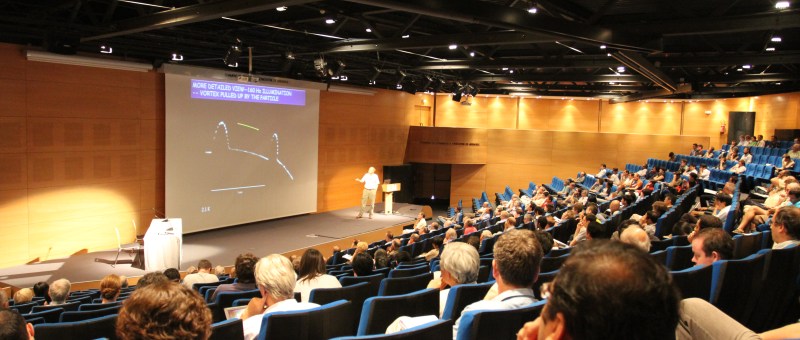
QFS2010-photo-ENSS_2179Conferences provide a good opportunity for academics –early career researchers in particular – to present their work and develop valuable contacts in their field. Preparing for your first conference can seem daunting as you do not know what to expect, especially if you will be presenting! In today’s Reflections post, Nina, a research assistant at the University of the West of England, shares her experience of attending an international scientific conference for the first time.


A few weeks ago, I had the opportunity to present my first poster at the Koninklijke Nederlands Vereniging voor Microbiologie (KNVM) Microbiology Spring Meeting held in Arnhem, Netherlands.  I had never been to a conference before so I hope sharing my experience will help other conference newbies.


Day 1

Monday (AM)

So…I’m not a great sleeper but I woke up quite tired, probably because I was so excited about the trip. It was a short journey from Bristol to Amsterdam – only an hour on plane. When I got to Amsterdam, it took a little while to figure out how the public transport system worked to get to Arnhem. I managed to get on the right train, the right bus and even get off at the right stops. In the end, travelling was easy as everyone spoke English and I arrived in one piece although knowing basic Dutch may have been of some benefit but hindsight is a great thing. The double decker trains blew my mind!

Monday (PM)

The hotel was lovely and I caught up with my industry sponsors and had dinner. This provided a good opportunity to settle in before being swept the official start of the conference. I would highly recommend getting in a day early if you can.

Day 2

Tuesday (PM)

I didn’t sleep terribly well but I think I was just nervous. Breakfast was so good, I forgot about my nerves for a while. I arrived at the conference early to give me enough time to set up my poster. Seeing my poster amongst the others gave me an overwhelming sense of pride and achievement. All the time I spent working on it was so worth it. My sponsors introduced me to a few people after which I attended some plenary sessions. There were about 500 people in the audience and I felt honoured to be among them. I used lunch as an opportunity to mingle with the crowd which was a bit daunting at first as everyone around me was speaking Dutch! I overcame my nerves and introduced myself to people, thankfully, everyone spoke English.

Tuesday (PM) – Poster time

After a few breakout sessions, it was time for the official conference dinner. I was sitting alone at a table and just kept hoping someone would sit with me. Luckily, three lovely Dutch professors sat at my table and we have a very good conversation about our respective countries, academia and loads more. It was so good, I almost forgot that it was time for me to present my poster! In case you were wondering, yes, the poster was presented at night time – after drinks!

I went to stand by my poster and made eye contact with a gentleman whose poster was next to mine. He explained that he was also presenting for the first time and was nervous. It was nice to talk to someone on the same level as I was and this helped me relax. Most attendees just walked by, having had a quick scan, moving on before I could say anything to them. Eventually, one by one, a few people came to ask questions. The questions were not as difficult as I expected e.g. ‘What is your poster about?’, ‘Why is this relevant to us?’ etc. I felt I answered confidently and accurately, overall, it went very well.

Day 3 – Homeward bound

I slept much better as the nerves had finally gone. I attended the morning meetings in the most relaxed state I had been since Monday. Unfortunately, I had to miss the second part of the day’s programme to enable me catch my flight. Overall, it was a great experience and I wondered why I was so nervous in the first place!

I would not call myself an expert on attending conferences but these are a few things I learnt from my experience –

Just be brave and talk to people…it was hard for me at first but I found everyone I spoke to really friendly and engaging.

If presenting a poster, wear something smart but comfortable because you want to be as relaxed as you can be.

Take some work with you, you’ll be amazed how much work you can get done during the commute and with less distractions to boot!

Bring business cards. I didn’t have any but everyone else seemed to. A business card enables people remember you and projects professionalism. If you are going to spend all that time networking, it is important your new contacts can remember your name!

Pace yourself. It can be a long day, especially if you have late night presentations. Try to get settled in a day early to adjust to your new surroundings.

If abroad where English is not the first language, learn basic terminology (Hello, Please, Thank you); it just seems more polite.

Keep your poster, it’s a nice memento of the good work you have done. You can also find somewhere to put it up in your University.

A practical one for the ladies – do not pack new shoes or heels! You’ll be surprised how long you will be on your feet!

As a final thought, just remember that everyone was once in the same boat as you. There is nothing to be afraid of, if anything, this conference proved to me just how fun and relaxed it can be.

Thanks Nina. Please feel free to share your thoughts in the comments section. If you would like to share your experience(s) with us, contact us on aspiringprofessionalshub@gmail.com.

#CareerChat – What does it mean to be globally relevant?

2-globalA few weeks ago, I (Emmanuel) was called upon at the 11th hour by the organisers of an international student conference to replace one of their scheduled speakers. I only had a few hours to prepare to give a talk around their theme of ‘Personal and professional development for global relevance’ (Thanks Amara!) I couldn’t help but ask myself this question “What exactly does it mean to be globally relevant on a personal level?”


As a lecturer and researcher, I was forced to ask myself some questions. Are today’s courses and degrees designed with a “global eye”? Are students being prepared for a global world? How do I know if I am globally relevant? What does it take to be globally relevant? With all these questions in my mind, I chose a title (same as above), which was just as much self-reflection as it was my seminar talk. I will share a few points from my nth hour prepared slides but I am also really curious for your opinion on this topic.

I was surprised at how difficult it was to find a definition for global relevance. I stumbled on a definition of Global Relevance by the International Organization for Standardization (ISO) as “the required characteristic of an International Standard that can be used or implemented as broadly as possible by affected industries and other stakeholders around the world.” I have made some modifications to this definition to “The required characteristic of an individual that can be applied as broadly as possible by affected (knowing, rational, studied, responsible…) individuals, groups and other stakeholders around the world.”

Now armed this this definition, I pose a question to you as I did at the talk – Would you consider yourself to be globally relevant? Global relevance is as much an end point as it is a journey. Without knowledge of where you are journeying to, you can go on a long, unending drive until you run out of fuel. For those seeking global relevance in an area of specialism or interest e.g. sports, academic, technology, writing etc. without knowing what the end goal is might lead you into that long winding path of confusion. Perhaps it is time to look at your personal GPS and reassess your journey (hopefully your GPS is not like my old one which kept telling me GO LEFT at every turn…binned.com)

So how can we find that relevance globally?

Begin with the end in mind – This is our mantra on the Aspiring Professional’s hub. In your field of study, area of business interest or chosen career, is there anyone, business or role model in that position you aspire to be in worldwide? Knowing something about the journey to their attainment or achievement could be a starting guide for you to start a plan for your own global attainment. These days it is not so hard to learn about global figures when you have Google and in most cases these global stars are on social media sites such as LinkedIn, Twitter or have personal websites.

Have a plan – of your own for that career, design, business or idea BUT with a global audience in mind. For example, if you are choosing a course at University, think broadly about how relevant that course is another country or even worldwide before deciding. If creating a business plan, can that business service a need in another town, state, country, continent beyond your current location? So we suggest in whatever your goals or targets, THINK GLOBALLY.

With every good plan and desire come challenges, so Research, Research, Research. This is usually where most plans fail as the LACK OF KNOWLEDGE leads to death of the idea or what was once a great plan.

Understand your USP or Brand – in the business and marketing worlds, the terms USP (unique selling point) and brands come to mind. Understanding what your skills, attributes or ability (USP) or what your brand is in the context of your audience or the people who might need, understand or want those skills are is very important. As Paul Stafford, Co-founder of DesignStudio says “a brand will always be able to transcend barriers if audiences believe and connect with the message.”

Furthermore, whilst understanding personal attributes remains important, sharing and having a community to help you contextualise and develop your ideas is just as important if not more so it is important to Network. Remember, you are not the only one in the world with the ground-breaking or crazy idea so having a platform to harness that attribute or idea with a receptive or critical audience would do you no harm.

Finally, self-evaluation is important. With constant evaluation, you can assess whether you, your ideas or plans are progressing or whether it is stale and needs change or a revamp. Whilst preparing this talk, I came across The Success Indicator Poster by Mary Ellen Tribby, which differentiates, successful from unsuccessful people. This can be your motivational tool to start that global journey.

We would like to say thank you to all our readers. We are humbled at how far reaching our articles have ‘travelled’ and we think it is fair to say we are indeed finding our feet within those murky waters of global relevance. Please share your thoughts on this article by leaving a comment, we learn so much from them! If you have an article to share, please email us @ info@aspiringprofessionalshub.com.

#CareerChat – Dealing with Rejection

1-rejectionDear Dr A 

Thank you for attending the interview for the above position. Regretfully I am now writing to inform you that, on this occasion, you have been unsuccessful.  I would like to take the opportunity to thank you for your interest in working for our organisation. We appreciate the time and care that you have given in submitting your application and attending the interview, and would be happy to receive a further application from you for any future suitable vacancy. I wish you every success in the future. 

Yours sincerely,

HR

It could come by letter, email or face to face but the emotions you experience are the same. It feels like some of the air has been let out of your lungs leaving you feeling like a deflated balloon. If you live long enough, work hard enough and take enough risks, at some point(s) in your career journey, you will experience rejection. In the last few years, especially since the recession, the employment market has been particularly difficult with new graduates bearing the brunt of it. We cannot count the number of times we have read in the newspapers or watched on television where new graduates discuss their inability to get a job despite incredible effort.  I (Amara)  heard about a lady who applied for over a hundred jobs and was not called to a single interview! Technology has made applying for jobs so much easier, however, this comes with the  increased chance of being rejected.

Rejection does not just apply to employment – it could be a manuscript you submitted to a journal or editor, an application you made to your first choice University or a grant application to fund your great big idea. Regardless of where it comes from, rejection can severely dent confidence as we often tend to equate it with failing and being a failure. However, rejection does not have to be such a negative thing. It can actually become a useful learning tool in our personal and professional development journey. So, when you face rejection, what can you do differently?

Keep things in perspective – You may have failed at something but that does not make you a ‘failure’. An interview result is not an indication of your personal worth. No one likes to experience rejection. The rejection letter you see above was one I (Amara) received  and remember how bad I felt when I read it.  I had been excited to make it to the last 4 out of about 100 applicants to be interviewed. The interview had gone really well (in my opinion) but a few days later, I found out I didn’t get the job. After a few days of reflecting, I chose to see the whole process as a positive not negative experience. No, I did not get the job but I had made it to the last 4 out of 100. The top 5%. This meant that there was something about my CV, covering letter, personal statement and application form that had appealed to the employer. Maybe I just wasn’t a right fit for them. Maybe they made a mistake! Interviewers are human after all. Choose to see being invited to an interview as a plus, regardless of whether you get a job or not, at least, they like you on paper! When you experience rejection, try and think objectively. Choose to see failure as an event and not an identity. 

To thyself be true – This calls for some ‘reflection-on-action.’ Think over your application process again? If you have applied for 100 jobs without a single response, then in our opinion there is a problem somewhere. Are you using the ‘scatter-gun’ approach to your job search? Is there a mismatch between your skills profile and the jobs you are applying for? Do both your CV and personal statement match the person-specification in the advertisement or are you just sending the same documents to everyone? Are there any technical or subject specific skills you lack that could improve your chances at success? Did you follow the journal submission instructions to the letter? Does your manuscript fit the scope of the journal where you submitted it? Do you meet the entry requirements to get on the course you have applied for?

Deal with the issues – When it is difficult to know where things are going wrong, seek expert help. A careers adviser can look at your CV and provide information that can be the difference between getting a job or not. A mentor who is knowledgeable of a field that you are trying to get into can provide invaluable advice or know someone who knows someone who needs someone? Do you find yourself really nervous at interviews? So do most people!  Just try to avoid letting your nerves get the upper hand. This might sound like cliché but Practice does make perfect.  If your CV has looked the same for the last 2 years, is there a course that can help you update your skills profile?

Embrace feedback – When you do receive feedback, please remember it is not personal (at least most of the time!). If someone, has in good faith, taken their time to provide that information, see it as them investing in you. They most likely would not do it, if they did not see something positive in you or your work that needs improvement to make it better. Feedback can be difficult to take but if you can be dispassionate about it, you will find it is essential for your personal development. When you find yourself in a situation where you have not done as well as you hoped, seek feedback. Send a follow up email after an interview when you did not get the job. You will learn and grow from it.

Never give up – You never know how close you are to that Yes! Read the biography of any successful person you admire and you will undoubtedly find a rejection story among its pages. A colleague who evaluates grant applications for the EU shared that sometimes the difference between ‘accept’ and ‘reject’ can be 1 or 2 marks out of 100. She has had to reject a grant application that scored 95 out of 100, simply because another one scored 97! Another colleague had a manuscript rejected four times but finally got her work published in an international journal. The biggest surprise was that it got published in the journal she had sent it to in the first place! Each time she got a rejection letter, she improved her manuscript based on the feedback and submitted it again. She had enough self-belief in her research not to be put off by a few stumbling blocks. Be that way about yourself too. Have enough self-belief in what your skills can bring to an organisation or what your big idea can bring to the world. Be persistent and tenacious. You just never know.

aa-headshotAbout our writer – After completing a PhD in Microbiology, Amara is building her career in academia. She is grateful for every opportunity to teach and mentor a new generation of scientists, undertake research and develop international partnerships. She believes in the combined power of education and productive relationships in building successful careers. Stay connected on Twitter – @amaratweets

 If you enjoyed reading this article, please share and subscribe to our network! If you have an article you would like to share with our readers, please get in touch – info@aspiringprofessionalshub.com.