#PhDAdvice – How to make a successful transition from PhD to Industry!

Are you currently working in academia, or a researcher thinking of a career move away from the world of academia? In today’s post, Dr Monika Stuczen reflects on her transition from her PhD into a role in industry and shares some tips for anyone thinking of a similar career move.

My career path has been somewhat unconventional. I graduated with an MSc in Laboratory Medicine from the Medical University of Bialystock in Poland (my home country) and began my journey into the English system following an offer to work as a Research Scientist at Manchester Metropolitan University to work on a clinical trial project.

I remember my first week at work! The stress, the language barrier and equipment which I had never used…. It was a lot to take in within a short period of time! However my focus and determination helped me pull through. Within a year of work in research I was offered a fully funded PhD scholarship to carry out research in Microbiology which I was very pleased about.

Throughout my PhD, I took advantage of any opportunities to gain experience in academia such as supporting teaching, laboratory demonstrations and working as a student support tutor. All these activities helped me develop transferable skills. I was also interested and active with developing collaborations with businesses and one of these collaborative activities gave me the opportunity to present my research at national and international conferences providing great networking opportunities with scientists from all over the world. It gave me valuable experience and developed many skills which I could transfer to any work positions in the future.

My expectations upon obtaining my PhD were that I pursue my career and research in an industrial company however my knowledge of the commercial and business sector was limited. Perhaps, I was aware of my weaknesses!

Are you aware of your weaknesses? (Aspiring Professionals Hub)

I made the decision to develop my enterprise and business knowledge (as mentioned previously, this was very limited). So what did I do? I did some research online and came across the North West Enterprise School which was run by Lancaster and Liverpool Universities. The North West Enterprise School is a four day residential workshop for researchers and post-doctoral researchers followed up by online collaboration and a final weekend residential. The activities included a series of team-working challenges and entrepreneurial projects. At the workshop, employers, mentors and skilled tutors delivered a series of seminars and role-plays simulating a work environment designed to create projects, network and turning ideas into tangible business projects. At the end of the residential and follow up each team developed a business plan and presented it to a panel of employers. My business idea and my team won the first North West Award!

The chance to work in a team, develop entrepreneurship, influence and leadership skills were very valuable and important for me. I believe this was a great opportunity to challenge myself in an area I hadn’t experienced before. It gave me opportunity to reflect on my own skills, ambitions, capabilities and career directions. Mind you, I was always focused in my career and always understood that to progress my career, I need to do it myself!

Shortly after completing my PhD, I was offered a job in senior management at a company in the medical devices sector. Initially, I found myself resistant to the idea of leaving academia for industry immediately after achieving my doctoral degree as I was aware that I’d be facing a completely different environment, work structure and people with completely different approach to work and life. After spending all my adult life in academia it was definitely a big jump out of my comfort zone. Additionally it also meant relocation from Manchester to the South of the country with my near teenage daughter away from friends and family. However I treated it as a big challenge and another great adventure in my life!

I successfully moved to the South of the UK and started my new position as a Laboratory Manager. In my new position I had to learn about products, manufacturing processes, company structures (which is so different to academia) and adapt myself to company culture and working style (within a short time). I wouldn’t say this transition was easy as it also comes with its challenges and has required adaptability, resilience and persistence, but what is most important it involved overcoming myself and facing my fears.

After nearly two years working in senior management I feel like I am close to the summit however there are still lots to learn. I think I will never stop being a “student”…. I will always have a big desire to learn new things and develop myself. I do not want to be better than others I want to be better than myself. My motto now is, to learn something new every year and apply it!

The essential requirement in industry is being able to work in a team and take projects forward rapidly. Research in academia, especially PhD or MSc research projects do not involve much of team work. If you have any opportunity of collaborative work at academia, even if it’s not laboratory based – TAKE IT! Don’t be afraid

My tips to anyone thinking of a similar career transition from academia to industry

  • Treat life as a big adventure and every problem as a challenge. Take advantage of every opportunity as you never know when certain skills you have developed over years at academia may become useful.
  • The knowledge, skills and opportunities at University are important and can be applied in many aspects of business. I find I am able to apply all my management skills gained at university in managing the laboratory, people and in building a strong working team.
  • Also, identify your career plan and do think about your weaknesses. If you are not confident in something try to master it, find courses or workshops that may help you to turn your weakness into strengths. One of the best ways to make contacts that can further your career is networking. Don’t shy away from making contacts with people especially at meetings and conferences.
  • Finally, Be Brave! Sometimes leaving an environment you are familiar with requires a little bravery. Don’t be afraid to take the leap. See it as a whole new adventure and always believe in yourself!

If you enjoyed reading this article, please share and subscribe to our network! If you have an article you would like to share with our readers, please get in touch – info@aspiringprofessionalshub.com.
Reflections – My Parliamentary Internship Experience

Daniel AmundFinding a placement can often be challenging however the opportunity to embark on a placement is one we always recommend. In our opinion, if you are a student or early career graduate seeking that dream job, if you get the chance to embark on a placement, grab it with both hands! In today’s post, Dr Daniel Amund, Academic Mentor at London Metropolitan University, London, UK shares his internship experience at the Parliamentary Office of Science and Technology (POST) highlighting the benefits of an internship.

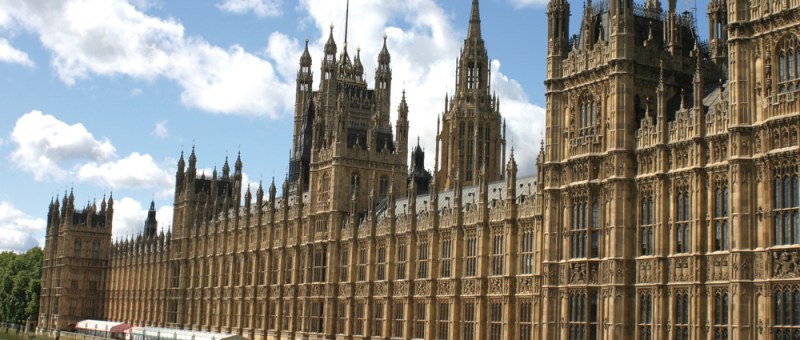
During the third year of my PhD, I applied for and was awarded a POST fellowship. The Parliamentary Office of Science and Technology (POST) is the UK Parliament’s in-house source of scientific advice, providing parliamentarians with balanced and accessible analysis of policy issues related to science and technology. POST runs several fellowship schemes funded by various Research Councils, charities and learned societies, which allow PhD students to spend three months working as POST fellows. Most fellows research, write and publish POSTnotes, which are four-page briefing papers summarising public policy issues, based on reviews of literature and interviews with academic, government and industry stakeholders.

My experience of working in Parliament during my PhD was very enjoyable and rewarding. It was refreshing to be able to take a step back from my PhD research, and focus on researching a different topic, using different methods in a different environment. That ‘break’ was beneficial because when I went back to writing my thesis, I had a fresh perspective and was able to utilise the skills I had developed to improve my thesis. Having to condense a lot of information into a four-page document that had to be accessible to non-scientists helped me develop my writing and communication skills, which helped in communicating my ideas better in my doctoral thesis.

Aside from the renewed vigour, clarity and focus that can be derived from an internship, there are added benefits such as CV development and networking opportunities. These may sound like a cliché, but they are rather important. My fellowship at POST was the most significant piece of work experience I had on my CV while I was a student, as the other jobs on my CV had been mainly casual student jobs at University, as well as some voluntary work. I should mention that these were by no means a waste of time, as my interview for the POST fellowship demonstrated as some of the questions were focused around my casual and voluntary roles.

However, having the POST fellowship on my CV has meant that I can use the range of transferable skills I gained in demonstrating how I meet the person specification when applying for jobs. Furthermore, the POSTnote counts for me as a publication which is not only satisfying and something to be pleased about, it is also a good career plus! Keep in mind that internships also serve as a point of discussion in job interviews as my experience shows.

During my fellowship, I interacted with various people, including other POST fellows and staff, and got to take part in various events within and outside Parliament, all of which served to broaden my horizons and expand my networks. As a POST alumnus, I have been invited to attend POST events, and I get informed of job opportunities within the field of science policy. My experience at POST has also directly or indirectly availed me of opportunities to attend other events in Parliament, such as Parliamentary Links Day, Voice of the Future, and SET for Britain. Networking at one of such events has led to me being involved in an annual international youth science conference, as a speaker and as a poster judge!

The networks built during internships could turn out to be the most significant networks for the early stages of your career after graduation. Employers often write references for interns in support of job applications, or may inform interns of vacancies within their companies or in other companies. Networking is definitely not just about who you know, but about who knows you.

Internships provide opportunities for students to put themselves out there, in professional environments, so that they get noticed by those who matter, in addition to gaining valuable knowledge and experience. Doing an internship could also inform students of the various career options available to them in their subject disciplines. In my case, the POST fellowship revealed other career options for scientists, outside of academia and industry.

Internships and work placements are a great way to enhance employability upon graduation. I highly recommend students to take up such opportunities, be they short-term or year-long (sandwich) placements.

Finally, how did I find out about my internship? I got to know about the POST fellowship as a result of being a member of the society that sponsored my fellowship! Thus, membership of relevant professional bodies or learned societies can be useful in securing an internship or placement. This I highly recommend as professional bodies and learned societies are a great source of incredibly useful resources, information and support.

If you would like to find out more about internships and how to take advantage of them, please contact us. In addition, if you have questions for Dr Amund about the POST fellowship, you can email us for details or better still, find him on LinkedIn. If you enjoyed reading this article, please share and follow! We would love to share your stories in The Hub as well so do get in touch – info@aspiringprofessionalshub.com.  

So You Want to do a PhD? – Your Survival Guide (Part II)

il_fullxfull.526482391_iox2Despite the fact that more PhD candidates are successfully completing within the allocated time, a significant proportion of PhDs do not graduate. We were overwhelmed by the response and feedback to the first part of this guide where Amara discussed some pointers to support current and prospective PhD candidates in navigating the journey towards successful completion. In this article, she shares more food for thought that can help you to not just survive your PhD but enjoy and enhance your experience.

Begin with the end in mind – You’ve committed or are committing the next few years of your life to undertaking extensive research on a specific subject in order to make an original contribution to knowledge within your discipline. Having a mental picture of what the ‘end point’ of your research study looks like will help you persevere through the tough times. On a personal note though, what does completing your PhD look like? What do you want to get out of completing a PhD? A specific job title? A career? A great salary? Improved skill set? Recognition within your discipline etc? All the above? How does this fit in with your life and career goals?

Avoid viewing a PhD as just an end but more as a means to an end. Embarking on a PhD with a personal end point in mind will enable you keep the next few years in perspective of the big picture of your life and career goals. Furthermore, you will recognise opportunities outside the sphere of your research study that can fast-track your progress.

Write now, write better! – Writing is an essential skill you need in your PhD survival toolkit. It isn’t a PhD if it isn’t written up! Regardless of discipline or research topic, all PhD candidates are de facto writers. You will be writing research proposals, progress reports, journal articles for publication and the mother of them all – the thesis. Writing is unavoidable, so how do you feel about it? “But I’m not a natural writer and I find writing difficult.” Welcome to the club. Even international best-selling authors find writing difficult sometimes.

The most important thing to do if you can’t write is to…write! I cringe when I look at some parts of my PhD thesis. Hindsight is always 20/20! I am a better writer today because I have continued to write. There is no magic potion, you get better at writing by writing. Just like learning to drive or swim. You can attend writing sessions and be given all the tips in the world but you still have to write. In my academic writing coaching sessions, I am constantly telling my students that – ‘It needs to be written not perfect.’ No one can edit a blank page. If you are not happy with your writing skills, do something about it. Do not leave writing to the final year, this is a recipe for unnecessary stress. besides writing and submitting small pieces of work to your supervisory team enables you to create more opportunities to get feedback on your writing which you can learn from. If you are on Twitter follow #acwri and #amwri for more writing tips

Who’s on your team? – We all know about the isolation that occurs while undertaking PhD research so please do not underestimate the value of a support network. I would not have made it without my team which consisted of mentors, colleagues, family and friends. It may be emotional, academic or financial but at some point, you will need some support. I was speaking to some international PhD students who shared their struggles of managing their research workload in a new country without friends or family. If you are in a similar position, find out from your Graduate or Research Office if there are any peer support networks for PhD candidates and get involved. If there isn’t one, why not start one yourself? I have discussed the importance of mentorship in career success and the same is true for PhD candidates. I would advise that you choose wisely though.  Be careful about the people who you allow into your private space and learn to differentiate between critical thinkers and critical people.

Take time off – This may come as a shock but you are allowed to have some time off. One of the best proverbs I have ever read goes –

‘Using a dull ax requires great strength, so sharpen the blade.’

Plan ‘breaks’ into your research plan or programme. After submitting my first draft of the final chapter of my thesis to my supervisor, she told me to take a holiday. That was her polite way of saying it was crap. I was stressed and broke and simply tired of writing. I am a perfectionist and totally ignored my advice in the preceding paragraph. My friend took me on a week’s holiday and I came back sharper and ready to face what was coming next. I rewrote the chapter from scratch and her comment was ‘Welcome back.’ Do not ignore the goose that lays the golden eggs. There must be a balance between production and production capability – the P/PC balance as described by Stephen Covey. Doing a PhD is one of the toughest challenges in academic life so give yourself permission to take a break when you need it. I have seen too many stressed, burnt out PhDs who either do not complete or worse still develop more complicated problems. Don’t let that be you.

P.h.D does not translate J.o.b! – This is an area where I wish someone had told me what I am about to share with you. Having a PhD should be an advantage in getting a job, it just doesn’t entitle you to one! I believe this holds true, regardless of whether you stay in academia or leave. The points we make in our article regarding graduate employment are valid whether you’ve achieved a BSc. or a PhD. Majority of PhD candidates will not work in academia – keep breathing! –  as there is a shrinking proportion of openings for full time and permanent posts. However, a significant proportion of PhD candidates are unaware of the full range of career options available to them after earning their degrees.

I was unemployed for over six months after completing my PhD because I had not given any thought to what came next. My ‘begin with the end in mind’ map was very limited to ‘working in academia.’ Oh, that I knew then what I know now! If academia was not an option, what would your career alternatives be? How can you leverage your PhD in the job hunt? What are you doing today that will be of benefit to potential future employers? A friend of mine has just landed her dream job in science policy even before submitting her thesis. She decided early in her PhD that academia was not for her and started doing research for her dream job. She prepared for employment during her PhD – she didn’t just hope for the best.

HeadshotAbout our writer – After completing a PhD in Microbiology and Food Science,  Amara is developing her career in academia – providing teaching and learning solutions in UK FE and HE Institutions as well as conducting research in Food Microbiology. Amara believes in the combined power of education, mentoring and productive relationships as essential tools for building successful careers. ‘Ignorance can hurt more than sticks and stones.’

If you enjoyed reading this article, please share and subscribe to our network! Would you like to share an article in The Hub? We would love to hear from you. Please get in touch – info@aspiringprofessionalshub.com


Reflections: The Emotional stages of a Research Journey

EmotionsReflection can be defined as the act of giving serious thought or consideration to something. It is amazing how many powerful lessons we can learn from ‘reflection on action.’ Sharing these lessons can help others currently going through what we have deal with the situations they find themselves in. We are so grateful to our guest writers for sharing their stories with us.  In this ‘Reflections’ article, Nadia Anwar discusses emotions associated with the different stages of a research journey.

Every research project passes through eight important phases: Euphoria, Realisation, Shock, Disillusionment, Acceptance, Depression, Revival, and Completion. The following narrative is dedicated to all my friends, colleagues, and students who are currently engaged with some kind of research – be it an MPhil dissertation, PhD thesis or monograph writing and are struggling to comprehend the volatility and psychological diversity of changing scenarios which come natural to any research process.

Euphoria is characterised by passionate involvement of a researcher with his/her research. This stage presents an idealistic vision of what one can achieve with hard work and commitment. At this initial stage all ideas seem original, all propositions unprecedented, and all perspectives fool proof. Very soon, however, it dawns upon the researcher that despite his or her unquestionable trust in the quality and potential of his/her research and supervisors’ initial approbation, there are fault lines which if not bridged in time can create serious obstacles in the research process. More often than not, students associate this problem with a lack of understanding on the part of their supervisors or with issues that exempt them of any fault on their part. However, the burden of this realization – of faults in the perfect proposal – can be too heavy and leads to a state of shock. In cases where the researcher possesses prior expertise or/and experience in teaching or guiding other people, the realisation of one’s deficiencies and ignorance can sometimes be extremely intolerable and emotionally painful.

At this stage disillusion sets in. The initial euphoria evaporates in the air like steam and the researcher is left with plenty of work, no sense of direction, anger, and annoying fear of failure and subsequent embarrassment. These feelings continue to haunt the researcher for some time, triggering eonian internal dialogues, which if ever come to an end makes the researcher blame everything and everyone else associated with the research rather than one’s self. John Burroughs thoughts neatly sum up implications of such scapegoating: ‘A man can fail many times, but he isn’t a failure until he begins to blame somebody’. Human mind, nevertheless, cannot nurture the same feeling for long. Besides, the critic that sits inside the researcher’s mind soon begins to argue about the practicality and reality of his/her narcissist thought processes, compelling him/her to conduct a thorough self-analysis.

At this stage, the researcher realises that s/he has been overly and unduly justifying her/himself. This is termed as the acceptance stage.  It is important to note that by this time the researcher should have already integrated him/herself in the dynamic research environment, establishing useful links with peers and imbibing the subtle but helpful suggestions coming from senior researchers. Therefore, the feeling of being an active member of a research community infuses a new spirit and taking full advantage of this new state of awareness the researcher formulates new research strategies, revise ideas, and starts working with overhauled vigour.

This newly conceived exuberance helps the researcher achieve plenty in terms of research and writing up – preliminary drafts are made, previous notes are updated, and fresh perspectives are formulated. As a general rule, every emotionally elevated stage, however, heralds a period of depression. After some productive and useful time the researcher too starts feeling low, unable to figure out how and when his words will become mature enough to go straight into the final draft. This is a crucial and emotionally dangerous stage. The researcher may also experience psycho-somatic symptoms such as palpitations, fluctuating blood pressure, and sinking heart along with feelings of futility, inadequacy and worthlessness of all s/he has remained involved with during her/his research journey. I would strongly advise my friends not to get upset by the appearance of these symptoms for there is nothing physiologically wrong with them. These are actually auspicious signs helping a researcher regain lost energy levels and boost creative thinking. Besides, in a more general sense this state is an ostensible evidence of how far and with how much effort you have covered your research journey. These apparently negative feelings are blessings in disguise for they emotionally prepare you to experience a wonderful sense of achievement in the times to come.

Struggling with one’s emotions is hard but after each effort one becomes stronger than before. The autoimmune capacity of the researcher gradually works to revive passion in research that helps the researcher swim through the troubled waters of psychological depression. Coming back to active and engaging research life has its own benefits as it sheds new light on the meaning and vicissitudes of life per se. This revival stage is imbued with fear, nervous expectations and excitement all at the same time. I used to get butterflies in my stomach during the final wrapping up of my thesis. Perhaps I was in love with my research the way people fall in love with human beings.

That feeling when you see yourself printing out the final draft or sending the final email to your supervisors or reviewers! The very act of submission gives you a fresh lease of life, a new hope for future and a wonderful sense of completion. The final count-down that entails waiting for viva after submission or for feedback on research is hard and demands plenty of patience. However, all hard times are forgotten once results are announced and glory is achieved.

Kudos to all my friends who have remained steadfast during all the stages of their respective research journeys. All the best.

About our writer – Dr Nadia Anwar has a PhD in Nigerian drama from the University of Northampton, UK. She is a Senior Lecturer in English at the Education Department in Pakistan and is a visiting faculty member at the University of Management and Sciences. Her primary areas of interest are African literature in general, specifically focused on Nigerian theatre and drama.

If you enjoyed reading this article, please share and subscribe to our network! Would you like to share an article in The Hub? We would love to hear from you. Please get in touch – info@aspiringprofessionalshub.com

Reflections – Attending my first international conference

I have always loved attending conferences because they provide opportunities to network with other scholars, publicise my research activities, as well as build my research profile. I have attended some conferences in the UK and when I got the email that my paper has been accepted for presentation at the American Marketing Association (AMA) Winter Education Conference, I was excited and started looking forward to it.

Attending an international conference requires good preparation. The conference organiser was very helpful with providing travel information, especially regarding obtaining a visa. All that was required by the American Embassy was my invitation letter in addition to a student confirmation letter from my University. I was amazed at how simple the process was.

Before I knew it, I was off to San Antonio, Texas. The immigration officials seemed surprised that I was only visiting for a few days for a conference. The Conference had a very different atmosphere to conferences I had attended in the UK – this could be due to the fact that Americans were by far the biggest nationality present!

There are some things I found particularly interesting:

Early Riser – I am used to the first session of each day starting between 9:00 and 10:00 in the morning but sessions started as early as 8:00 am! Each day was fully packed with events but it was great to have the opportunity to explore different sessions and meet lots of people.

Networking – Though I was quite reserved in my networking approach, I used every opportunity to network. I chatted to people I sat with in sessions or met during lunch. In relaxed atmospheres, it is easier to start conversations and get to know people. Interestingly too, I was able to network with people I had met on Twitter before the conference.

The PhD Process: US vs. UK – I learnt about the differences between how PhDs are structured in the US and the UK. In the US, PhD candidates can spend at least 5 years working towards their PhD. A lot of work (and time) is spent grooming candidates for research and academia, which I find to be very different from how the PhD process occurs in the UK. There were also indications that a large proportion of American Marketing research is quantitative – developing and testing models – this means researchers heavily rely on statistical packages and tools. Candidates are taught to use these tools as an integral part of their PhD.

The Job market – I learnt that you can use ‘one stone to kill two birds’ while attending the AMA Conference.  Apart from presenting your research and networking, you could probably leave with a new job and start preparing for life as an Assistant Professor! This requires a lot of planning though as you would need to have applied long before the conference. The point to note however, is the fact that it has been incorporated into the conference. Universities know they can recruit at the conference and students are well prepared for the fact that they could be interviewed during the conference.

The Socials – Unfortunately, there was no social event as I would have expected. Typically, UK conferences are for three days; Wednesday to Friday; with socials being held on the penultimate night. Socials provide a good opportunity for conference delegates to ‘let their hair down’ and socialise in an informal atmosphere. I decided to entertain myself by visiting some key landmark sites in San Antonio.

Overall, it was a wonderful experience, I did enjoy myself, meet nice people and develop some productive relationships. Most importantly, it was a challenging, thought provoking opportunity to see how I could best improve myself, in terms of developing my research skills, publications and getting ready for the job market. I plan to attend the Summer AMA in 2016 as I will be more than ready to explore opportunities USA has got to offer.

Emmanuel Mogaji is a member of the Centre for Advances in Marketing, Business and Management Research Institute at the University of Bedfordshire Business School. His research interests are on the design and development of marketing communication for service providers, universities and charity organisations. He is currently working on his PhD, focusing on advertising strategies by UK financial service providers. He tweets @e_mogaji.

Please share your stories with us, we would love to hear from you. Contact us @ aspiringprofessionalshub@gmail.com or @AspProfHub