#StartUps – Just Plain Charming!

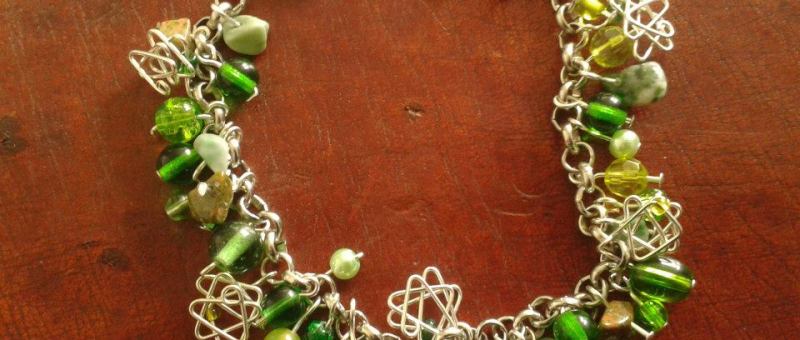
Nina Gizzie is the founder of Just Plain Charming – designing , making and selling handmade and bespoke jewellery. She is a creative individual who started her jewellery business while studying for a degree in Biomedical Science, talk about enhancing your academic experience! She has been able to successfully blend her love for both microbiology and jewellery by designing exquisite microbiology themed pieces…taking her ‘bugs’ outside the petri dish. In this article, Nina shares how she converted her hobby into a business, her inspiration and advice for budding entrepreneurs who are thinking of starting something of their own.

Aspiring Professionals Hub: Please can you tell us about your educational and professional background?

I graduated with a degree in Biomedical Science from University of the West of England (UWE) in 2014. My main employment is as a Graduate Assistant Researcher in Microbiology completing small research projects in collaboration with an industrial partner. I also have part time employment as a Climbing Instructor and Duty Manager.

APH: What was the inspiration behind Just Plain Charming?

I have always loved crafts and the sense of achievement that comes from making something yourself. I dabbled in all sorts of creative hobbies previously such as knitting, sewing and baking but first got the inspiration to make jewellery at the Bristol Harbourside festival. I was perusing all of the wonderful stalls and one with copper/bronze jewellery caught my eye. After buying a lovely copper beaded bracelet I asked the seller how long she had been in the business. She said it had started as a hobby but she ended up with so much stuff and had to start selling things. I just had a little passing thought of ‘I wonder if I could make this kind of stuff’ and that is how it all started. A few days later, I bought some items to play with such as beads, chains, and charms. The more I studied different techniques and designs, the more I found to do with different materials and it just keeps on growing! The inspiration for most of my products just comes from looking at existing creations and playing around with them to make them my own. The microbiology themed jewellery I do was inspired by my career path and although it may not have wide-spectrum appeal, I like how different and quirky they are.

I would like to say that the name just came to me naturally but it took weeks of juggling different names. I chose this one as all my products were based on using charms and I thought it was a cute play on the words. Only about half my current products now contain charms but the name still applies to the remainder of products being charming…well at least I think it does!

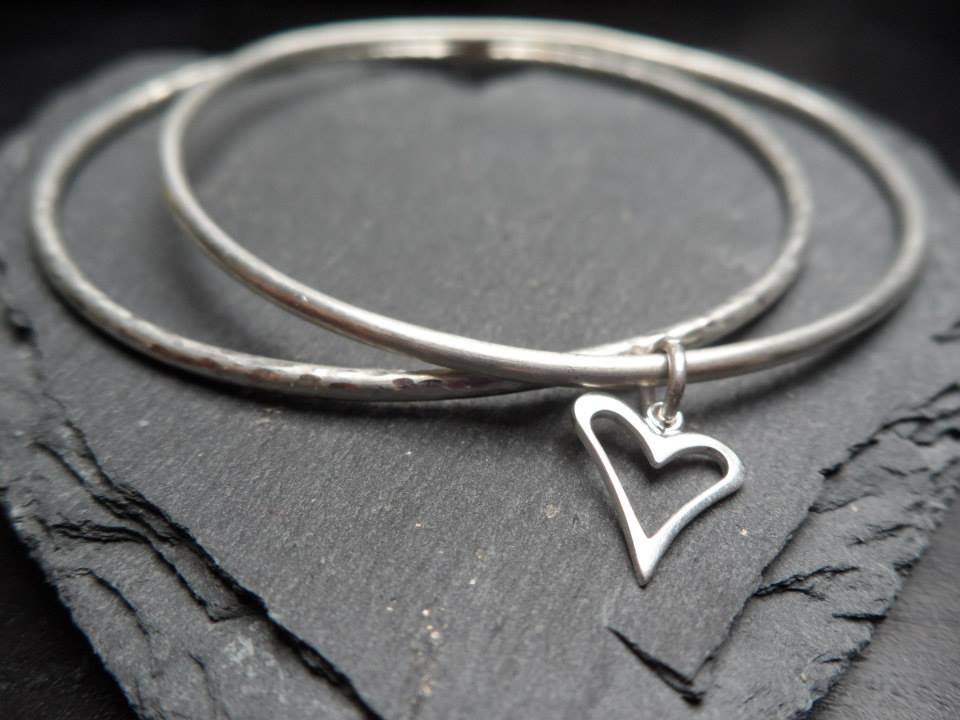
994491_257074564416848_3536252274484044814_n 10488240_279281205529517_7420010244780610882_n (1)

Images courtesy of Nina Gizzie. Please do not use without permission.

APH: How important has social media and networking been to your business?

It has been crucial. To start with, social media was the only place I could showcase my products and is where I made my first load of sales. Although I now sell primarily at markets and don’t push sales as much on social media, I still show off items I have made on there to my current followers to get their views and opinions.

APH: What are the challenges, if any, you face?

When I first started out, it was fronting the initial cost. In the 8 months I have been in business, I have spent around £2000 which is a big cost, especially for a student. I have earned most of my start-up capital back with sales but with my more recent pieces being sterling silver and precious metals/gems these upfront costs have increased. It was much easier and simpler with cheaper products but I like the challenge and taking up opportunities to further expand my business.

Another factor is time. I currently have 4 jobs and one of them is full time so having the time to make anything or run stalls is limited, I enjoy my jobs so quitting isn’t really an option. I would still like to further my career in Microbiology so for now this venture is about making money from something I love! Finding the balance can sometimes be an issue.

You also have to make a lot of stock which you may or may not sell leaving you with products that have cost money and time which no one wants. This cost is amplified when using semi-precious metals as you could be sitting on many unsold pieces of jewellery that may cost £20 or more each! It is annoying but unavoidable!

 APH: Have you made any mistakes and what lesson(s) did you learn?

I have a habit of getting carried away with hobbies putting everything into them and rushing ahead. In all honesty you can say I did the same with this…bought A LOT of stuff, some I have still never used. I am also quite impatient so practising is not something I like to take time with so I have wasted material in failed attempts. I have also lost money buying the wrong items. However, when it came to playing around with the precious metals, some sense kicked in and I invested in a 6 week course so I could develop my skills and I am glad I did! I would like to say I have learned to be patient and not so carried away but I could still do with some work!!!

APH: Who are your business role models, if any?

Cliché as it sounds the ‘Dragons’ (from Dragon’s Den) give me inspiration, especially Duncan Bannatyne. I have a lot of respect and admiration for those that have made their way by coming up from nothing such as him. He started off with no wealthy family, having many odd jobs all the way up to his 20’s and not particularly excelling in anything. He then bought an ice cream truck, building up his business into an empire that includes his famous health clubs. I find this inspiring because it means that no matter who you are or your background…if you find something you want to do…then do it!

APH: Finally, what advice would you give aspiring entrepreneurs?

Just do it! Give it all! Start off simple and don’t get ahead of yourself (like I do), test the waters if it works build on it. It may not be perfect but if you give it time, effort and passion you can build something amazing.

Contact details – 

www.facebook.com/PlainCharming

If you enjoyed reading this article, please share and subscribe to our network! If you have an article you would like to share with our readers, please get in touch – info@aspiringprofessionalshub.com.
#StartUps – SoNecessaryNG.com

businessWhat do you think when you hear the word entrepreneur? Do you think about people like Oprah Winfrey, Bill Gates, Aliko Dangote or Richard Branson? Do you think about yourself? Have you always felt that you were cut out for more than the 9 – 5 and would like to put your skills and abilities into developing your own business? Entrepreneurship is about developing your ideas into a profitable business. This is easier said than done but we can learn from those who have ‘been there and doing that.’ In our #StartUps section, we chat with budding entrepreneurs and share their stories which we can all learn from. This week we had the opportunity to interview Yuddie, the CEO of So Necessary based in Lagos, Nigeria on following her dream not only to start a business but in a country she hadn’t lived in for about a decade!

Could you tell us about your educational and professional background?

I completed a BSc. in Business Information Systems from London Metropolitan University and an MSc in International Business and Management from Westminster University. I worked in Customer Service for a large retail company in the United Kingdom while studying and for two years after graduation.

What was the inspiration behind So Necessary?

My mum is my inspiration I guess. She owned a bookshop where I worked as a teenager. I discovered that I enjoyed selling to customers and going the extra mile to meet their needs. I decided to go into the Fashion Retail sector to draw on my retail experience and because I sensed a gap in the market. Most of us love to look good but we also have to do it on a budget! I wanted to start a business where people could access quality items but at affordable prices. I started with women’s fashion because it was a market I believed I knew better. From a young age, I always knew that at some point, I would start working for myself. I like having a job but I believe in multiple streams of income and not just being dependent on a salary at the end of the month.

How were you able to raise capital to start?

I had saved up some money while working and I borrowed the rest from family members.

What were the challenges you faced?

The biggest challenge I have faced in this business is Logistics. I ship in my products from outside Nigeria and though you get good companies who can ship in within a few days, the charges can sometimes be more than the cost of the total goods you are bringing in! When importing goods, you have to deal with Customs (insert groan). We have been affected by Custom Officers going on strike, introducing further delays in delivering to our customers. The other challenge I have faced is that when you work in fashion retail, trends switch as fast as you can say ‘cheese’… Lol… This week, there are a lot of enquiries about bags, you bring them in and suddenly it is shoes they want. One has to constantly follow market trends on a regular basis, sometimes even weekly. You must know your business.

What was a mistake you made and what did you learn from it?

Hmm, I guess one mistake I made was not fully researching my market before taking the plunge to buy some items. I purchased some items which I believed would storm the market and invested heavily. Talk about…HUGE mistake. When you assume, you may make a fool of yourself. Some of those items are still in storage. It taught me that before taking a leap, research, ask questions, read, seek advice and pray.

What advice would you give aspiring entrepreneurs?

There are many things you need to run a business but personally, I have found three things to be most important. God, patience and determination. You need God to strengthen you for the other two; you need patience because the most beautiful things can take a long time to develop. Do not expect that the $10 you plunged into the business today will return in double fold tomorrow. You may lose a lot before you gain a lot. You will make mistakes. Be patient, it will come. Finally, if you have no determination to see through what you know is your dream, you might as well just close shop now. People will ask you questions, friends and foes will laugh at you, you may not have customers for long periods of time. Stay determined. God never gives a dream that will die. The plan will surely come to pass.

Who are your business role models?

I know this may sound cliché but Richard Branson, Steve Jobs and Bill Gates are some of my greatest role models. I am not a bookworm but reading their autobiographies taught me that acquiring degrees are not the only way to learn what you need to know to succeed. Having an education is very important but think about what you enjoy doing and your passion. Everyone is great at something, all you have to do is invest yourself in it. God is a great business role model. His word says He gives us the power to create wealth. When we tap into what He says on wealth and add that to hard work, there is nothing one cannot achieve.

Contact details

I can be reached on:

BBM: 530B1775

WhatsApp/Contact Number+234 817 940 9447

Facebookwww.facebook.com/SoNecessary13

Twitter & Instagram@sonecessary13

Websitewww.sonecessaryng.com

If you enjoyed reading this article, please share and subscribe to our network! If you have an article you would like to share with our readers, please get in touch – info@aspiringprofessionalshub.com.

#UniAdvice: How to create a winning CV!

Having recently organized a successful CV workshop at an international conference for early career scientists, we became aware of the need for an article on writing CVs. This article will highlight some of the key elements of what is important in a CV and also important tips to consider when designing your CV.

A key element of a job application process is the CV. So what exactly is a CV and why is it so important? Careerplanning.about.com describes a CV as ‘a written description of your work experience, educational background and skills.’ Whilst this is a good definition, I prefer to describe the CV in a more personal way as – ‘the reflection of your professional self on paper representing you in front of a potential employer’. Thus, what should be documented on your CV should be what you would be happy to show to a potential employer and also what you can objectively defend if necessary.

So what should be included in your CV? Firstly, generic identifiers such as your name, address, email and phone contact details. In some countries, other identifiers are usually found on the CV such as age, date of birth, state of origin and a photo. In the UK and other countries with strong employment and anti-discriminatory laws, identifiers such as age and place of origin are not required on the CV.

Next, write a short profile that clearly states the objective of your CV. An example of this could be ‘Highly numerate accounting and finance graduate with experience working in an international finance company. I am seeking a career in financial planning.” The profile section should be tailored to suit the job or company you are applying to.

#CareerChat – The ‘nuts’ and ‘bolts’ of transferable skills

3-skill-wordsPicture this. You get onto a bus and see a gentleman selling health supplements. In an effort to sell his wares, he sparks the interest of his target market by sounding knowledgeable and intelligent about the constituents of his products. His witty and humorous communication style engages the audience and by the time he mentions that he is selling at ‘a one day special reduced rate’, they no longer need convincing. Within a few minutes, he has convinced a bunch of strangers to part with their money.
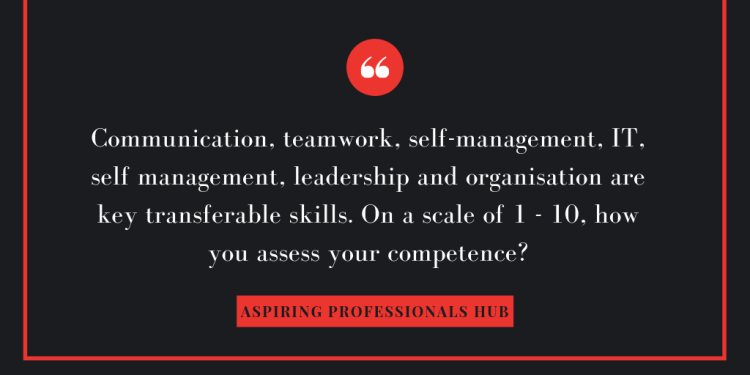
Alongside ‘knowledge’ of his products (subject specific skills), the gentleman has demonstrated other skills such as: communication, research, literacy, self-awareness, presentation and confidence. A more introspective look at the mentioned skills and you will note that these skills are used in almost every job type or sector including; hospitality, academia, finance, management, media etc. These generic skills are known as transferable skills and differ from subject specialist skills which are specific to a particular profession. The clue in the name being that that these are skills you can ‘transfer’ from one professional field to another.

Transferable skills are skills and abilities that are relevant across different areas of life; professionally as well as socially.

Note that as important as the sales man’s knowledge about the product was, it was his ability to connect with the audience that enabled him succeed in selling his wares. Similarly, your transferable skills set can be the ‘extra’ that differentiates you from other candidates and enables you succeed in getting your dream job

The good news is that we all already have transferable skills because we start developing them as early as when we are in school. Were you a school prefect? You were already developing leadership and problem solving skills. Were you a part of the debating society? You were already developing communication, team work and research skills.

So what are these skills? The UK transferable skills framework provides the following list;

  • Communication
  • Teamwork
  • Self-management
  • Digital (IT)
  • Problem solving and decision making
  • Planning and organising
  • Research and analysing
  • Leadership and supervising
  • Resilience, adaptability and drive

Now let’s reflect. Which of these skills do you have? Where have you displayed these? Have you highlighted them in your CV?

If no, what are you waiting for?

2. TransferableAn awareness and understanding of transferable skills enables one recognise and therefore take opportunities where these skills could be developed. Skill profiles are increasingly being used by employers to identify suitable employees. Graduates come a dime a dozen these days, so make yourself unique by developing an unmatched skills profile.
How can you develop transferable skills? First, identify the gaps between your skill set and what potential employers are looking for. Take every opportunity to utilise these skills both professionally and socially. We learn and develop by doing.   Remember this quote from Thomas Edison that ‘opportunity is missed by most people because it is dressed in overalls and looks like work.’

Opportunities to develop key transferable skills.

Communication – Writing articles, reports, dissertations, and minutes of meetings. Giving presentations and lectures, participation in a debating society.

Team work – Membership of a sports team, committee responsible for organising an event, being part of the Student Union, any responsibility that requires team effort.

IT and digital skills – Proficient use of word processing, blogging, data analysis, presentation programmes and use of the internet.

It is essential to take the initiative and start developing transferable skills that you have recognised as being key in your chosen field.  Evidence showing how you have utilised transferable skills must be well articulated in your CVs, personal statements as well as in interviews. Experience doesn’t have to be everything!

Success is a process and not a destination so keep working at it. All the best!

If you enjoyed reading this article, please share and subscribe to our network! If you have an article you would like to share with our readers, please get in touch – info@aspiringprofessionalshub.com.

#CareerChat – How to identify and articulate your skills when preparing your CV!

Skill (noun) 1.special ability or expertise. 2. something requiring special training or expertise. (Collins English Dictionary).

‘The unexamined life is not worth living.’ (Socrates)

SkillsTo succeed in any field of discipline, it is imperative that one identifies and develops relevant skills to excel in that specific area. More often than not, employers will choose a more skilful applicant over a more experienced one. Like my friend who is a Human Resources consultant said ‘there is a difference between experience and expertise, I am constantly seeking the latter.’ Developing one’s skills makes all the difference but that will be the subject of another post.

How you present your skills profile in your CV can be the difference between progressing to the next phase of a job application or not; regardless of your education or work experience. Identifying and communicating your skills will always set your apart from other applicants. However, you cannot communicate what you haven’t identified! Furthermore, the ability to identify all the skills you have can make you more aware of your different career options. It can also alert you to any skills or knowledge gaps that can be addressed with further training.

Skills by definition involves a special ability or expertise. Do not let the terms ‘special ability’ and ‘expertise’ throw you. We all have skills, whether they be generic transferable skills such as communication and teamwork or more specialist skills such as electron microscopy and credit control! Job skills are a broad term that are used to cover a wide range of abilities and skills that you have built up during your education and career.

So now we all agree that preparing your skills profile by making a complete and relevant list of your skills is a worthwhile task, how do we go about it? We move from ‘knowing’ our experience to ‘identifying’ our expertise via reflection.

First, look at your employment history and prepare a list of every single job you have done, it doesn’t matter if it is voluntary or paid employment, skills can be developed in either. If you have just graduated from school or University and are thinking about your first job, scrutinise what you have done over the last few years to achieve your degree award. Skills are not only developed in a work environment. Do you have any hobbies? Include them on the list too.

Next, for every job, hobby or training, identify and write down the tasks associated with each activity. Finally, note what you have learnt from carrying out these tasks. What abilities do you now have that you didn’t before? You’ll be surprised at how many skills you have developed over the years.

Undertaking tasks lead to experience, developing experience = developing skills in that area. For example, a final year student undertaking a research project in Microbiology is developing skills; in the subject area (techniques being used); IT (data analysis, preparing reports); organisational and project management (managing submission deadlines); communication (writing dissertation and defence/viva) etc.

Now that your skills profile is ready, the job application process becomes somewhat easier as you can compare the person specification in any job advertisement with your personal and unique skills list and choose the relevant items. You can also see what skills are important to employers in your area of expertise and fill in the gaps where necessary.

1. CVIdentifying your skills is an ongoing process in the journey of personal development. As one advances along a career path, our capacity to improve our skill set increases. However, unless we are aware of and documenting our advancement, it can be difficult to communicate this progress to prospective employers.

Why take all the time to find and communicate your skills? The end result is something that sets you apart and makes you stand out. Remember that you don’t even have to be the most qualified and or experienced candidate, but by showcasing your skills you can grab the attention of the employer and demonstrate instantly how you will fit into the job role perfectly and add value to the company. So get started.

Good luck!

If you enjoyed reading this article, please share and subscribe to our network! If you have an article you would like to share with our readers, please get in touch – info@aspiringprofessionalshub.com.