The Entrepreneur’s Corner – Graduate Rejects

When you think about the term ‘entrepreneur’, what comes to mind? Major business oligarchs? Wealthy business moguls? Well think again! The idea of entrepreneurship is no longer a forlorn and unachievable dream. In the United Kingdom, there is a major drive to embed entrepreneurship into University curricula. In today’s post, we had the pleasure of interviewing Derek and Keara Mafohla, founders of ‘Graduate Rejects’, a social enterprise with the aim of improving educational standards for young children in Zimbabwe.

APH: Can you tell us about your educational and professional background?

DM& KM: The founders of Graduate Rejects are siblings Derek and Kearabiloe Mafohla. Derek is currently an undergraduate student at the University of Greenwich studying Computer Science whilst Keara Mafohla is a final year student at the University of the West of England studying Biomedical Science.

Can you give an overview about your business or enterprise?

Initially we formed Graduate Rejects as a charity in November 2011 but in January 2013 we adopted the social enterprise model.

Photo Credit: Nelson Vinod Moses

Photo Credit: Nelson Vinod Moses

When we began, we concentrated on a small community in Tshabalala, Bulawayo the second largest city in Zimbabwe. We noticed that there was little educational activity within the community which left children and young adults engaging in drinking and other activities that made no contribution to a successful future. We (Graduate Rejects) decided to donate books to local schools and libraries with the hope of developing and encouraging a reading culture within the community.

What was the inspiration behind your business?

Our love for children and knowledge of the poor education systems they were exposed to were our biggest inspiration. Some schools in Zimbabwe have outdated educational systems and infrastructure. The resulting impact is that children fall into a cycle of attending school for a minimum of 11 years but failing to study further or achieving good grades. We are of the belief that if we are able to encourage proper and more modern ways of studying, children who cannot afford a good education can adopt self-study techniques. Importantly, we embrace the importance of a holistic approach to meeting the educational needs of children.

How important has social media and networking been to your business?

Interestingly for the past year we have been trying to raise money to build a website for our enterprise. We greatly acknowledge the importance of social media as it has helped us promote our work. Twitter, Facebook and Instagram have been our social media platforms of choice since they are free and easy to set up. We engage with a lot of people whenever we write any posts but also we are constantly seeking to learn from others who are interested and willing to share with us.

What are the challenges, if any, you face?

We come from a politically volatile country and whatever form of business or charity you choose, you have to bear that in mind. Shipping costs for the books we donate has always been and remains our biggest challenge. We find that many people are willing to donate books to us but the costs to ship the books are often prohibitive. We are self-funded and that also presents its own challenges. We also think finding the right model for children and adults to get actively involved to further improve study is often tricky but we are dynamic and open to ideas on how to actualise this.

Have you made any mistakes and what lesson(s) did you learn?

Expecting things to work accordingly! It is important to remember that things do not always go to plan but to remember that obstacles do provide an opportunity for personal development and learning.

Finally, what advice would you give aspiring entrepreneurs?

In our experience so far, we suggest that if you are considering starting a business or social enterprise, keep a journal and document all your activities. This provides ‘fodder’ for reflection which is a useful learning tool. Finally, don’t give up when you are faced with challenges.

Please can you share your contact details

We can be reached on:

Facebook: Graduate Rejects Enterprise
Reflections – Attending my first international conference

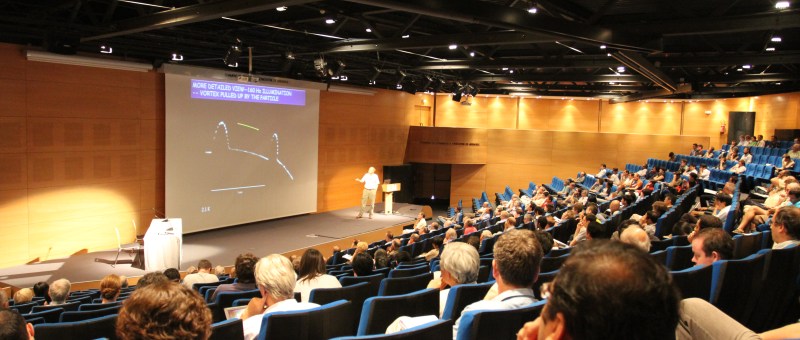
I have always loved attending conferences because they provide opportunities to network with other scholars, publicise my research activities, as well as build my research profile. I have attended some conferences in the UK and when I got the email that my paper has been accepted for presentation at the American Marketing Association (AMA) Winter Education Conference, I was excited and started looking forward to it.

Attending an international conference requires good preparation. The conference organiser was very helpful with providing travel information, especially regarding obtaining a visa. All that was required by the American Embassy was my invitation letter in addition to a student confirmation letter from my University. I was amazed at how simple the process was.

Before I knew it, I was off to San Antonio, Texas. The immigration officials seemed surprised that I was only visiting for a few days for a conference. The Conference had a very different atmosphere to conferences I had attended in the UK – this could be due to the fact that Americans were by far the biggest nationality present!

There are some things I found particularly interesting:

Early Riser – I am used to the first session of each day starting between 9:00 and 10:00 in the morning but sessions started as early as 8:00 am! Each day was fully packed with events but it was great to have the opportunity to explore different sessions and meet lots of people.

Networking – Though I was quite reserved in my networking approach, I used every opportunity to network. I chatted to people I sat with in sessions or met during lunch. In relaxed atmospheres, it is easier to start conversations and get to know people. Interestingly too, I was able to network with people I had met on Twitter before the conference.

The PhD Process: US vs. UK – I learnt about the differences between how PhDs are structured in the US and the UK. In the US, PhD candidates can spend at least 5 years working towards their PhD. A lot of work (and time) is spent grooming candidates for research and academia, which I find to be very different from how the PhD process occurs in the UK. There were also indications that a large proportion of American Marketing research is quantitative – developing and testing models – this means researchers heavily rely on statistical packages and tools. Candidates are taught to use these tools as an integral part of their PhD.

The Job market – I learnt that you can use ‘one stone to kill two birds’ while attending the AMA Conference.  Apart from presenting your research and networking, you could probably leave with a new job and start preparing for life as an Assistant Professor! This requires a lot of planning though as you would need to have applied long before the conference. The point to note however, is the fact that it has been incorporated into the conference. Universities know they can recruit at the conference and students are well prepared for the fact that they could be interviewed during the conference.

The Socials – Unfortunately, there was no social event as I would have expected. Typically, UK conferences are for three days; Wednesday to Friday; with socials being held on the penultimate night. Socials provide a good opportunity for conference delegates to ‘let their hair down’ and socialise in an informal atmosphere. I decided to entertain myself by visiting some key landmark sites in San Antonio.

Overall, it was a wonderful experience, I did enjoy myself, meet nice people and develop some productive relationships. Most importantly, it was a challenging, thought provoking opportunity to see how I could best improve myself, in terms of developing my research skills, publications and getting ready for the job market. I plan to attend the Summer AMA in 2016 as I will be more than ready to explore opportunities USA has got to offer.

Emmanuel Mogaji is a member of the Centre for Advances in Marketing, Business and Management Research Institute at the University of Bedfordshire Business School. His research interests are on the design and development of marketing communication for service providers, universities and charity organisations. He is currently working on his PhD, focusing on advertising strategies by UK financial service providers. He tweets @e_mogaji.

Please share your stories with us, we would love to hear from you. Contact us @ aspiringprofessionalshub@gmail.com or @AspProfHub

So you want to do a PhD? – Your survival guide…Part 1

For most PhDs, successfully completing their degree will rank in the top 3 of the greatest challenges they have faced in their lives up to that point. PhDs stretch you on all levels, not just mentally but physically, emotionally and even financially. In the first part of ‘The Survival Guide’, Amara discusses important points for reflection by prospective as well as current PhD candidates.

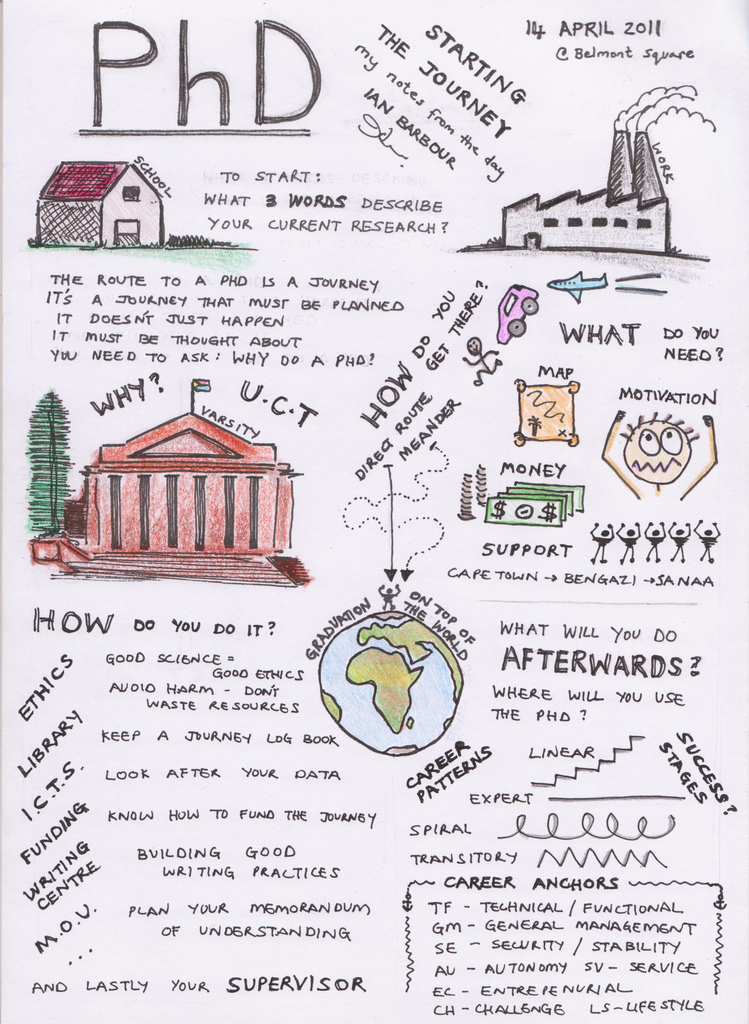
“So you want to do a PhD?” – Why do you want to do a PhD? Write down your answer, memorise it and make it your mantra. There will be moments when you’ll ask yourself “Why did I do this?” Remember that only crazy ‘special’ people decide to do a PhD. Most of our more ‘intelligent’ friends headed straight into the world of full time employment after completing their degrees but we decided to stay back at University to ‘do’ research. Some of us left reasonably well off jobs for the penury uncertainty of PhDs. Others still, went for the part time PhD (a myth!) route combining it with full time employment. These are my all-time stars!  As a PhD candidate you provoke both awe and pity among the ‘general population.’ Your why is your personal truth so remember that not everyone will respect, understand or support your decision. A PhD is not something you do to fulfil other people’s ambitions, that is almost a recipe for failure – so really ‘Why do you want to do a PhD?’

Brace yourself – We are yet to come across anyone who found their PhD easy. My mantra is ‘A PhD is not just about intelligence but perseverance.’ A PhD is difficult and that’s ok. Embrace the challenge. Truth be told, what is worth achieving that isn’t challenging? You are going down a ‘road less travelled’, making an original contribution to your discipline, solving a problem or creating a product, allowing the world understand something just that much better. Begin with the end in mind. Create a token of what the results of your work mean. It could be a picture from your field study, an incomplete signalling pathway, a diagram of your incomplete theoretical model, the incomplete equation of your predictive model. This is something you are creating and bringing into this world. Something new. It should be difficult. Persevere.

‘No pain, no gain.’

To thyself be true – PhD candidates are unique, there is no one type of student.  You’ve decided (against all wisdom…lol) to study for a PhD. You know your why but deal with the Who? The road ahead is long…so to thyself be true. What are your strengths and weaknesses? Every day you will take both to the job with you.  What are the things that may limit you? No one is perfect but you must utilise your strengths and make allowance for your limitations. If you know you can’t deal with pressure and love the ‘que sera sera’ lifestyle, consider if a PhD is for you. What did you enjoy most about your undergraduate and postgraduate degree? A good qualification is simply not enough. Can you bear to work alone for long periods on end? Are you a committed procrastinator? Are you in a relationship? Is your partner supportive? Do you have young children? Do you plan to have children during your studies? Are you a 9 – 5 sort of person? Do you have a support network? Do you like lab work but hate writing or vice versa? What are your finances like? Will you have to work and study? Can you? What are three things you need to successfully complete that you do not have right now? How can you get them? You cannot change what you do not know. No one starts their PhD knowing it all but embracing an ‘inside-out’ approach can help identify skill and knowledge gaps and seek help.

Photo Credit: Ian Barbour https://www.flickr.com/photos/barbourians/
Photo Credit: Ian Barbour

Is s/he the One?  – No, not your significant other but your supervisor. Is s/he the one for you? This is probably going to be the most important relationship successfully completing your PhD depends on. What is your supervisor’s management style? I appreciate that it is difficult to gauge how the relationship will go but do some homework. What do their former and current students say about them? I (Amara) had an awesome supervisor who was a mentor, coach and all round superstar. My PhD was lab based and so we saw each other almost every day – difficult when you can’t stand each other. We had a great working relationship not because she told me what I wanted to hear but what I needed too. She encouraged and critiqued in the same breath. If it was bad, she said so but when it was good, she praised. Sometimes PhD candidates make the mistake of going for a big name over getting a good mentor. We hope to do a post on managing the supervisor relationship in coming weeks so stay posted. Your PhD supervisor is not supposed to be your friend – but it helps if they are friendly. Of all the PhD candidates I know did not complete, 7 out of 10 times it had to do with a breakdown in the student – supervisor relationship.  I have read, observed and heard of some horror stories. Please don’t let that be you.

Murphy’s law aka ***t happens – You’ve studied the protocol, you’ve harassed your supervisor got the equipment, its D-day and you notice your cell culture is contaminated. Five days prep has just gone down the drain. *Hugs* Or you travel for a conference and have your bag stolen, complete with your laptop containing important data (Dropbox is your friend). Despite your well laid plans, there will be setbacks. It could be your fault (you are allowed to make mistakes you know) or due to circumstances totally out of your control like your supervisor deciding to move on to pastures new in a totally different continent! Your Gantt chart has become a distant memory as you bemuse your naiveté when you thought that activity was going to take you 3 weeks but it has actually taken you three months. Your project proposal looks like a relic from times past. A friend lost antibodies worth thousands of pounds simply because someone turned off the wrong switch and shut down his freezer over the weekend!  Things may not always go to plan but remember you are a project manager and a key transferable skill you are developing is that of problem solving. So dig your heels in and keep going. Acknowledge there is a problem but don’t dwell on it, solve it!

HeadshotAbout our writer – After completing a PhD in Microbiology and Food Science,  Amara is developing her career in academia – providing teaching and learning solutions in UK FE and HE Institutions as well as conducting research in Food Microbiology. Amara believes in the combined power of education, mentoring and productive relationships as essential tools for building successful careers. ‘Ignorance can hurt more than sticks and stones.’

If you enjoyed reading this article, please share and subscribe to our network! Would you like to share an article in The Hub? We would love to hear from you. Please get in touch – info@aspiringprofessionalshub.com


CareerChat – Science careers; Thinking outside the lab coat!

MicroscopeFinal exams…check, dissertation and viva…check…graduation…loading! What’s your next step? For recent graduates and undergraduates, are you aware of the varied career options available to you? In today’s job market, it is important to know what employment ‘doors’ your degree can open for you. It isn’t always what you think though. In today’s article, Gabriele Butkute, discusses non-lab based career options for science graduates.

If you are a final year student, you will be familiar with the question “so, what are you doing after you graduate?” You are getting frustrated just by reading that, aren’t you? Some people have known what they want to do since their first day at University and have never changed their minds. However, most of us aren’t that lucky (?) – we have a vague idea of our future career, but as our studies progress we see the picture in our head change, often causing a fair bit of anxiety because you had it ‘all figured out’ and now you feel lost.

It has been almost a year since I graduated. I might not be totally sure of what I am supposed to be or who I am supposed to become (which are very different things). Currently I am working as a Marketing and Student Enterprise intern within a Science Faculty at a University. Prior to that, I worked as an Events Assistant at a Learned Society. Both jobs have been very interesting and I believe that is the direction I would like to further my career in.

Occasionally, when I tell somebody that I studied Biomedical Science but I don’t fancy working in the lab, they look at me like I am crazy, or worse, they pity me, thinking that I am a failure (I did get a first class degree though!). These preconceptions hurt your confidence and create self-doubt, but also might tempt you to try and get a job in a setting that you don’t like, just to “fit in your degree title”. Not everybody will understand. It’s ok. Just move on and do your thing. Don’t let anyone tell you what you should do – it something feels off, it probably is.

Universities often also (subconsciously) contribute to the prejudice by not talking openly about all career options for science students. Many, or maybe even most, people enter a science degree hoping to work in a research environment, particularly medical and biological sciences. However, what often gets left out is the fact that the skills you have developed at university can be used in more than just one discipline.

Image courtesy of Gabriele Butkute

Not all of us are made for lab work and it doesn’t mean we love science any less. Some people simply want to explore other career options where scientific knowledge and skills are crucial or at least desired, but doesn’t involve directly working in a lab. Even if you do love the hours pouring agar, counting bacterial colonies or running gel electrophoresis, you might want to look a bit broader, just in case. The job market is tough, data collected and published by Higher Education Careers Service Unit (HECSU) makes this much clearer. The average science graduate unemployment in 2012/13 was 7.3%, which is higher than UK average, 6%. Biology graduates faced 9.4% unemployment, and 21.9% of those who did manage to get a job worked in retail, catering or as bar staff.

Thinking more broadly will stop you from limiting yourself and will help identify your true skills and strengths. How about a career in intellectual property law? This niche area of commercial law might be just right for people who want to pursue a science career in a more commercial, legal setting. Think of it as protecting creativity. All new biological inventions, such as therapies, assays or devices need patenting, licensing and commercialising and scientific knowledge comes into play.

For the ‘less commercial’ souls, it might be worth looking into teaching or science communication sector. Teachers themselves call it the best job in the world. It will surprise you how many educational charities there are that could use your enthusiasm alongside the knowledge of science. Science communication is such a broad field, that you can certainly find something that would make you want to get up in the morning and go to work: from outreach and policy to journalism and publishing (and many things in between).

You might be wondering how to get those jobs. From personal experience at an interview for an Events Assistant role at a Learned Society, they didn’t seem to concentrate on the grades I got (although I am sure if they had been bad, there would have been no interview to begin with). It’s the extra bits and pieces that count, now more than ever. Maybe you were a part of a student society, did some volunteering or wrote for a student newspaper. For example, in addition to my current job, I also started a blog for interns of my Faculty where I work. I love blogging. I get a kick out of checking out all the different layouts, colours and making it all look neat. I have also blogged about the Enterprise Educators UK conference I attended and they shared my blog posts on their webpage and social media. It’s great experience. And when I get asked about my writing and social media skills during an interview – here’s one more thing I can say.

The kind of competition that we have out there, just being good at your job and doing a nine-to-five probably won’t be enough. It’s just not the culture we have anymore. You are supposed to be passionate (just don’t use that word in a cover letter, huge cliché). Finding a job that is fulfilling, pays enough, has career prospects and ticks all other imaginary job requirement boxes might take a while. It probably won’t be your first, or second or even third job. But if you figure out what you want and systematically work towards it, it will come eventually (or at least that’s what I am telling myself).

You are a product and you need to sell your skills. One career pathway isn’t better than the other, it’s about finding what suits you and being open minded about changing your own preconceptions about yourself.

Gabriele B HeadshotAbout our writer – Gabriele graduated with a first class degree in Biomedical Science from London Metropolitan University. She previously worked as an Events Assistant for the Society of Biology. She currently works as a Marketing and Student Enterprise intern within the Faculty of Life Sciences, London Metropolitan University. She writes at gabrielebutkute.com.

If you enjoyed reading this article, please share and subscribe to our network! Would you like to share an article in The Hub? We would love to hear from you. Please get in touch – info@aspiringprofessionalshub.com.

#MyPhDStory – A Journey of Self Discovery

Self awarenessStudying for a PhD can be a lonely process, however the thoughts you have and the emotions you feel are shared by others in your ‘small’ PhD student community. In today’s ‘Reflections’, Miriam Madziga, a third year PhD candidate at the Institute of Energy and Sustainable Development (IESD), De Montfort University shares some thoughts on her PhD experience so far.

My PhD journey started long before I made my application, it started in my mind, as I gave some thought to why I wanted to pursue a PhD.  I am curious and inquisitive by nature, always wanting to know ‘how’ and ‘why’ things worked the way they did. I also loved writing, which combined with a love for research would serve to my advantage. I knew I wanted to pursue a PhD but did not know what my topic area would be or what doing a PhD entailed. There were more than a thousand questions that flooded my mind. So I did what I do best when trapped in a mentally overwhelming situation, I go on holiday!

I also knew I wanted my topic area to be connected to my previous academic background/ field of ‘Environmental Economics, Waste & Resources Management’ as well as relevant to the world and society at large. I then decided to focus my research on ‘water.’ ‘What about water?’ was my next logical reasoning. I found tons of information and previous research conducted on water generation, production, treatment, supply and remediation; all from ground and surface water sources but very little on production of water from atmospheric water sources. So, I decided to look at the ‘unobvious’ aspect of water where there was very little attention and this was what gave birth to my research topic: Water from air!

Another important factor is the relevance of my PhD research to society today, water is  an element in its abundance on the Earth and yet faces global persistent challenges around the world – this led me to asking the question ‘Why’ and then to ‘Finding out what I could do about this’. My research is investigating the use of condensations systems to extract clean drinking water from air’ and I have decided to apply this especially to poor communities.

What has my PhD experience been like? It has been unlike any other thing I have ever experienced. When I first started, I felt like an octopus on skates trying to keep my balance while navigating through new territory. Nothing really prepares you fully for a PhD like doing one. Where I seemed lacking in skill or knowledge, I quickly sought assistance and applied myself. The transition onto my PhD was made smoother because my University provided doctoral training courses which gave me a better understanding of what the process was like and what skills I needed to develop to succeed.

My PhD journey has been one of self-discovery, especially of new skills and abilities I did not know I had. I have developed excellent organisational skills; planning is very crucial to enable me progress with my PhD as well as have a life outside of it! I set weekly and monthly goals for my research and look forward to rewarding myself with adventure trips such as: skydiving, scuba diving, hiking, or snowboarding.

My time keeping has significantly improved. As an undergraduate student, I recall being late so often to lectures that I was mandated to take a ‘time keeping’ session – to which I arrived late! However, the contrast between who I was then and now has been huge and I am pleased to see the transformation in my research as well. I can tell you to some degree of precision what my calendar is like from today even up to the end of the year – all a credit to planning management.

I suppose my mental preparation was what paved way to the resilient spirit which kept pushing me through tough times, challenges and setbacks. The biggest challenge of all for me was funding as I am self-funded. This meant that being a PhD candidate was akin to working a regular job with no income for a minimum of 3 years while simultaneously sourcing funds to enable me conduct my PhD research.

A sustaining factor was the desire within me to pursue a PhD despite all odds. Call it kismet, but suddenly opportunities began to emerge to aid me along the way. Assistance in form of business consulting opportunities, networking and monetization through my blogging platform and sales of products I had made and books I had published. I took advantage of every opportunity that came my way. This in turn opened up more connections and networking opportunities with people, industry and other Universities.

My PhD journey has also been sustained by the self-motivation that I continue to generate within myself. When the going gets tough; I find comfort in the place of prayer and meditation, laughter and joy amongst friends. I build endurance, clarity and stamina at the gym and while playing roller derby with my team Roller Derby Leicester, and most importantly the love and support of my family and loved ones.

So, if you aspire to elevate yourself to the league of extraordinary researchers, develop new skills, make new connections and progress in your career, I will most definitely say ‘YES’! Go for a PhD!!