In today’s #MyCareerStory, the APH had the opportunity to interview Dr Douglas Okor. Douglas is a brain surgeon in the UK and Fellow of the Royal College of Surgeons of Edinburgh (the oldest Surgical College in the World).. In this insightful interview Douglas offers his perspective about life as a neurosurgeon and demystifies this pathway for aspiring surgeons. Enjoy!
APH: Can you tell us a little more about yourself?
I am Douglas Emeka Okor, Nigerian born, in Benin City in Nigeria. I am a brain surgeon and a passionate Nigerian health sector advocate and an entrepreneur. I grew up in Nigeria and had my education in Nigeria. I saw there was a significant gap in the healthcare space in Nigeria hence my decision to become a brain surgeon.
APH: Can you tell us about the different stages of your educational career to date?
Douglas: I had my nursery, primary and secondary education in Nigeria. I went to a grammar school in Benin City and the University of Benin where I graduated in 2002. I worked for a couple of years in Nigeria then left for the UK where I spent 8-9 years training to become a brain surgeon. In the last year I started my sub-specialist training in two areas – skull based and vascular neurosurgery.
APH: When did you decide you wanted to become a medical doctor?
In today’s study chat, Amara shares her discussion with Cynthia Ochoga, the President Elect of the Student Union at the University of Salford. Cynthia shares from her perspective as an international student and offers advice on managing the opportunities and challenges within Higher Education to maximise your experience. Enjoy!
APH: Can you tell us about your educational and professional background?
CO: My educational pursuit began at Home Science Nursery and Primary School, Ikoyi Lagos. In 1998, I moved on to Queens’ College Lagos for my secondary school education.
In 2006, I attended the University of Lagos where I undertook a diploma in Cell Biology and Genetics. By second year it became apparent to me that science was not a field I wanted to pursue and then left Nigeria to Middlesex University (MDX) Mauritius campus in 2010 and studied Psychology and Counselling. In 2014, I went to Oxford Brookes University and did a conversion to Law degree (GDL) as my 2nd degree and in September 2015, I came to University of Salford for my MSc in Media Psychology and I’m half way through it at the moment.
I have worked in a number of different roles too. My first job was a three-month internship at Action Health Incorporated. In 2010, prior to moving to Mauritius, I followed my passion in journalism and worked as an intern at a radio station in Nigeria.
While studying at MDX, I was elected president of the International Students’ Society for Mauritius campus. I also joined AIESEC, an international youth development organization and rose to become Vice President of External Relations which I did simultaneously with my role as President. In the final year of my undergraduate degree, I worked for a month with the Mauritius Institute of Directors as part of a team that delivered an international conference.
After graduation, I went to Nigeria to participate in the NYSC programme. Since then, I have worked with BBC Media City as a research assistant for Mozfest 2015. I have also worked in a customer services role for Doddles Parcels in Manchester. I recently resigned to take some time out to prepare to take on my new role as the President of the Student Union at the University of Salford.
You started out your Higher Education journey in the Biological sciences, what spurred the switch to Psychology? Was it a smooth transition?
I have observed a few cases where PhD candidates either not completing or failing at viva stage. A common theme was a major breakdown in the relationship between the candidate and their supervisor(s). In this article, I share four ideas, from my experiences as a former PhD candidate who’s now learning the ropes of PhD supervision that I hope can help prospective and current PhD candidates manage this very important relationship.
Choose wisely – In the PhD survival guide, I shared why it is important to spend quality time while making this decision. You will have a smoother journey if you have a good working relationship with your supervisor. I decided to join my PhD supervisor’s group after I had spent a year working on my undergraduate project with him. Some people call this luck but I call it choice. I decided to work with him and he decided to work with me.
If your PhD is funded, your PI is usually your de-facto Director of Studies and you may not have much choice in the matter. However just like when you attend an interview, the choice to work with an organisation is still yours. Two or three member supervisory teams are now more common so it is worth asking if there will be some leeway in choosing your other supervisor(s). For self-funded PhD candidates, you have a choice in where you spend your tuition fees, so do not be scared to ask for who you need. A PhD is an apprenticeship not indentured slavery (at least it should be). Invest time in getting information about your supervisor, research group etc. Speak to postdocs. You can find them at conferences and early career researcher networking events. Ask questions;
How many PhD candidates have you supervised?
Who else will be on the supervisory team?
How many successful completions?
How many didn’t complete and why?
Do your students publish during their PhD?
Do not be so ‘hungry’ for a PhD position that you dismiss the information your research pulls up. I know a PhD candidate who left after six months because she could not get on with her supervisor. Successful completion is Win/Win for all parties involved so choose wisely.
Be proactive – After a skill training session I recently conducted, a 2nd year PhD candidate walked up to me and spent about 15 minutes sharing all the issues he was having with his supervisor. Poor communication, poor supervision, dismissive attitude…the works. I let him speak because I could tell he was very distressed and then I told him ‘Be proactive.’ I could tell he was puzzled by my response but I told him that the only part of the equation required for his successful completion that could be modified was his courage, attitude and how he responded to the issues he was having with his supervisor.
Recently, Emmanuel caught up with Dr Loretta Ogboro-Okor, a medical doctor in the UK specialising in Obstetrics & Gynaecology. We have had several discussions around different professions, career expectations, good practice and tools for developing the aspiring professional. I am very glad Loretta has chosen to share her views with APH readers on what it is to be “a professional”
When I was approached by the APH team, I decided to write about something I have often pondered about over the years.
“When aspiring to be a Professional, to what end is it?”
‘Who is the Professional?’
“What does the word professional bring before our mind’s eye when we hear it?”
Why become a professional to start with?
Wikipedia states that a professional is a member of a profession or any person who earns their living from a specified professional activity. The Business dictionary online defines it as – a person formally certified by a professional body for belonging to a specific profession by virtue of having completed a required course of studies and/or practice and whose competence can usually be measured against an established set of standards. These definitions give the impression that Professionals should be elite groups, who have met some certificate requirements, who meet some tick box criteria, who in addition, speak and act in a particular way.
In today’s #MyCareerStory, Amara had the opportunity to interview Gabriele Butkute. Gabriele currently works as a Science Policy Assistant at the Royal Society of Biology and the Biochemical Society and in this insightful interview helps to demystify an often overlooked pathway for science graduates. Enjoy!
APH: Can you tell us about your educational background and career progression to date?
GB – I’m originally from Lithuania, which is where I completed my high school diploma cum laude. Soon after my graduation I came to London, had a gap year working in the hospitality business – which is really what people say when they worked as a waitress/waiter! I then embarked on a BSc Biomedical Science degree at London Met, from where I graduated almost two years ago now. Right after my graduation I got a fixed term job as an Events and Administrative Assistant at the Royal Society of Biology where I was tasked with organising three national Life Science Careers Conferences. Looking back, it seems ironic that I got this job when I didn’t have a clear career plan for myself! My next job was a Student Enterprise and Marketing internship at London Met where I spent seven months developing and integrating enterprise into the science curriculum and encouraging students to develop softer skills and business awareness which are key for a successful career nowadays. Finally, a year ago I started my first science policy job at the Royal Society of Biology and the Biochemical Society, which is where I am now. I believe in internships and placements because I undertook two between completing my degree and starting my current job. My experiences made me feel more comfortable with the career decision I have made.
You obtained a first class degree in Biomedical Science. Did you ever consider a career as a biomedical scientist in the NHS?
 In today’s #MyCareerStory, the APH had the opportunity to interview Dr Douglas Okor. Douglas is a brain surgeon in the UK and Fellow of the Royal College of Surgeons of Edinburgh (the oldest Surgical College in the World).. In this insightful interview Douglas offers his perspective about life as a neurosurgeon and demystifies this pathway for aspiring surgeons. Enjoy!
 In today’s study chat, Amara shares her discussion with Cynthia Ochoga, the President Elect of the Student Union at the University of Salford. Cynthia shares from her perspective as an international student and offers advice on managing the opportunities and challenges within Higher Education to maximise your experience. Enjoy!

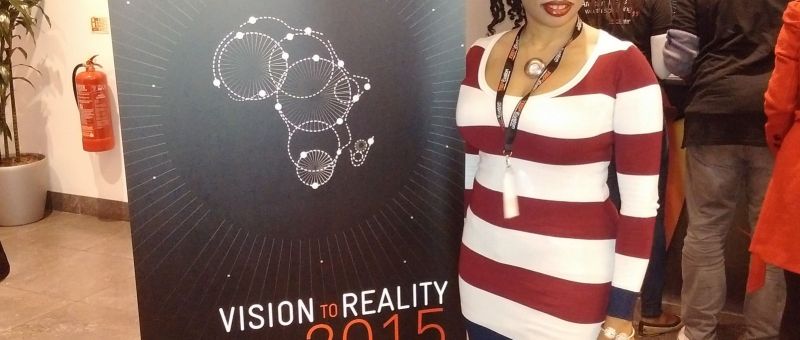
 In today’s #MyCareerStory, Amara had the opportunity to interview
  The Aspiring Professionals Hub