#UniChat – “From the Equator to the North Pole” – Studying Medicine in Ukraine

imagesEvery year, thousands of students leave their countries to progress their education in lands unknown. In recent years, increasing tuition costs in Higher Education Institutions (HEIs) in the UK and US have increased the popularity of seeking education in other countries including non-English speaking countries. In today’s post, Emmanuel caught up with Dr Oge Ezeoke, an intern at a teaching hospital in Nigeria, who completed a medical degree in Ukraine. Oge discusses her experiences and challenges of being an international student in Ukraine and offers some words of advice for anyone considering studying medicine in Ukraine.

APH: Why did you choose to study in Ukraine?

OE: Most people ask me why I went all the way to Ukraine to study medicine. I think the best answer would be, I didn’t. After graduating from high school, I applied to different Nigerian universities without luck and I decided to look outside the country instead of staying at home waiting. I applied to one university in Ukraine and I got accepted.

APH: How were your early experiences and what challenges did you encounter?

OE: I arrived in Ukraine without knowing a single individual. I had no friends or relatives over there. It felt like landing on the moon. At first I was unhappy because I was so far away from home, but I was also afraid because I had never lived on my own. After settling down and completing my registration, I faced my first challenge, the language. My program was taught in English but once I left the classroom, I was on my own. I had to walk around with a translator, usually a foreign student like myself who could speak the language. So let’s say I was independently dependent, and that motivated me to learn the language.

Another challenge was the weather. That was quite a challenge going from the equator to the North Pole.

“Maybe if I had slept in a cold room for a month before going to Ukraine I would have been better prepared for it.”

But my toughest challenge of studying in Ukraine was the racism. At first, I didn’t have a problem with the way people stared at me or my friends, probably because we stared back. But as I began to understand the language, I started to hear the side remarks and the insults. Luckily I was never physically attacked because ladies were told to always walk in pairs and not to stay out late. It was difficult but in a way I appreciated it and after some time it got easier and I learnt how to accommodate it.

APH: Were there any good points?

OE: There were a lot of interesting and new things I enjoyed while I was there. I learnt a new language. I also leant how to cook Indian and East African cuisine. I got to travel and visit new places within the country.

I enjoyed the organization and how orderly things were. I’m not saying things in my country are not organized, it was just nice to have a different feel altogether. A couple of my friends enjoyed the way things were done over there and decided to stay back and further their studies. I thought about it, in fact I almost considered it. But I needed a lot more practical experience and I knew I wouldn’t be satisfied staying back in Ukraine.

My school was good for the theoretical knowledge but not for the practical one. I wanted to believe that was because there were so many foreign students and most of the local patients we interacted with in the hospitals sometimes got “overwhelmed” by our presence in the sense that they weren’t too comfortable with the idea of being examined or touched by a foreigner. I believe this was a general thing in most of the universities in Ukraine. And it affected how much practical skills we got to learn or apply and the effect of that was seen when I got back home for my internship. But I was still grateful for the whole learning process.

APH: What can you say about the occasional negative impression about medical studies in Ukraine?

OE: While I was in Ukraine, I heard a lot of things that were said about people who went to study in Ukraine. There was this general idea that only “spoilt children” were sent Ukraine and all we did was go clubbing and become musicians. Now, that isn’t entirely true. Everyone is free to do what he or she wants to do. If someone decides to go to school and study till they drop, their choice.

Medical students back in Nigeria also felt it was a waste of time studying abroad because the “medicine” was different. This is completely wrong! Practicing back in Nigeria has shown me that medicine is basically the same everywhere. The only difference would be that we tend to pay attention to the diseases or conditions which are most common or have the highest incidence in our own environments.

“…medicine is basically the same everywhere. The only difference would be that we tend to pay attention to the diseases or conditions which are most common or have the highest incidence in our own environments.”

APH: What would you say about other students taking the same route you did?

OE: I know right now most parents wouldn’t want to send their children to Ukraine considering the ongoing tensions and the political crisis in the eastern part of the country. This however did not affect the western part of Ukraine.

APH: Any last words about your experience?

OE; Studying in Ukraine was a wonderful and life changing experience for me. I learnt so many things and I also believe it made me a bit more focused. So if anyone is interested in studying Medicine in Ukraine, I would advise the person to go ahead. It’s not as expensive as other medical schools in Western Europe or Europe as a whole.

If you don’t have a problem with the weather or racism, then it’s ok to study in Ukraine. Plus, if you would like to simply get a degree in Medicine and further your career in a different geographical location then it isn’t a bad idea. The reason is the postgraduate programs in Ukraine, in my opinion presently doesn’t benefit foreigners because of the struggle to acquire practical skills. All in all, it is still a wonderful place to study medicine.

If you enjoyed reading this article, please share and subscribe to our network! To find out more information about studying abroad or choosing a course to study at University, do get in touch with us. If you have an article you would like to share with our readers, please contact us – info@aspiringprofessionalshub.com

Does Intercontinental Relocation Mean Restarting Your Legal Career or Training?

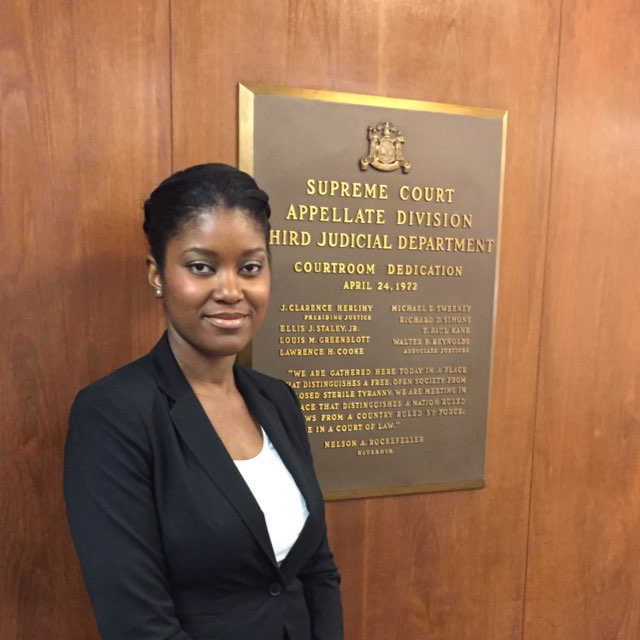
Legal Careers Moving across countries or continents occasionally pose career defining questions and challenges such as the equivalence or transferability of qualifications or certifications. In today’s post, Lola Adekanye shares her experience of a transatlantic legal career and offers practical suggestions on nurturing a legal career across continents.

So, for some good reason you have to be uprooted from one jurisdiction to another in the course of your legal career journey, tossing your plans to go to law school and chart a path on the bench or at the bar up in the air. This is the picture of my career journey thus far; I started my career in England, then I relocated to Nigeria and subsequently to the U.S. While, some lawyers change their career paths completely from law to a different field or discipline. This choice has its own challenges as one would still need to qualify and be employable in the new location and when properly weighed, this was not a very attractive option for me.

In the course of obtaining two law degrees in England,  professional law certificates both in Nigeria and  New York and another law degree in the United States, I have come to the conclusion that a transatlantic legal career can be rich and fulfilling with proper planning.

The two major deterrents to transitioning lawyers or law students are qualifying in the new jurisdiction and employability given the lack of familiarity with the legal systems and structures in the new jurisdiction.

Qualifying  – Legal studies and the process of qualifying to practice law in most jurisdictions is notorious for being grueling and very demanding and the entry requirements vary distinctly from jurisdiction to jurisdiction, so it is important to adequately prepare by conducting appropriate and extensive research.

In addition to research, obtaining first hand information about the jurisdiction is fundamental. Having the right information early on will put you on the right path and save time. The qualifying requirements to sit a Bar entry exam varies widely from jurisdiction to jurisdiction and are usually very specific. For instance some jurisdictions require that a law degree must include specific courses. Thus, current law students are in a good position to prepare to meet those requirements while they are in law school while practicing attorneys can manage their schedules to start making plans to meet the requirements. Practicing attorneys may also find that in some jurisdictions, experience counts as an alternative entry or admission requirement to exam.

A clear road map for qualifying puts things in perspective for lawyers who consider changing career paths due to the challenges of transitioning into a law career in a new jurisdiction. It turns out that changing to a new career path would require a considerable amount of studying which may take equal amount of time or perhaps more time than it would take a transitioning lawyer to sit the qualifying Bar exams.

Employability – My legal counsel during my undergraduate studies enlightened me to the comforting fact that a law degree equips you to function in a variety of capacities order than litigation. This would require that you  obtain at least basic substantive knowledge in another field or additional soft skills in addition to core legal skills such as drafting and research. This is even more true as clients directly or indirectly demand an integrated service of their attorneys and law firms.

 The ability to apply business skills or orientation, operational knowledge, language skills and science knowledge to legal representation is an advantage to landing a job or finding a role within other non-conventional legal positions.

On that note, if you are a current student or aspiring lawyer, it might also be worth considering a combined degree as it can be of great benefit. For anyone studying outside the U.S, taking a minor in another course of interest during their undergraduate year while you major in law would be the way to achieve this. While for students studying in the U.S, going for first degree in any course in order to qualify for admission to law school to earn a Juris Doctor which is a law degree equivalent to a Bachelor of Laws (LLB) in other jurisdictions is advisable.

Finally, keep an open mind to a host of alternative practice areas to litigation.

Lola Adekanye obtained her Master of Laws (LL.M.) in Securities and Financial Regulation from Georgetown University. She operates as a Legal Counsel as well as a Business Risk and Compliance Consultant. Lola enjoys writing as well as sharing her experience in developing a legal career as well as business strategy and international education.

If you enjoyed reading this article, please share and subscribe to our network! If you have an article you would like to share with our readers, please get in touch – info@aspiringprofessionalshub.com

#PhDAdvice – How to ‘survive’ the viva experience!


Are you a researcher, masters, PhD or doctoral candidate with your fated ‘viva/defence’ looming? In this article, Dr Nadia Anwar reflects on her viva experience and shares tips making your viva a positive experience. Good luck!

The term ‘viva’ comes from the Latin phrase viva voce, which literally means ‘by word of mouth’ or ‘with living voice’. It is somewhat surprising that many people, although possess sufficient information about oral examinations and face to face interviews, have no substantial knowledge of the term viva voce and what really goes into preparing for it. The main reason for this is that popular terms used for viva in England are oral examination and post-submission interview or assessment. In countries like India and the US, the word is translated as verbal defence which has pretty much the same connotation as the word viva. The difference is that whereas the former is conducted in a form of seminar or presentation in front of a large group of specialists and non-experts – sometimes including colleagues, friends and family – followed by rigorous Q&A, the latter is done in the privacy of a room and under the critical eye and observation of examiners.

Why you should join a professional society!!

Societies IIOne of the first questions I (Emmanuel) ask when approached by anyone seeking any form of career advice is whether they are members of any professional societies or professional bodies in their subject areas or career interest areas. Just for reference, the terms “professional societies” or “professional bodies” are often used interchangeably.

I have to admit, at times I get a blank look like errrr…and often it tends to be a NO answer and a funny look like my question is a silly one.

Reflecting back a few years, when I worked in industry, I was not an active member of any professional societies thus, I never got involved in any professional activities with my peers outside the work place. This changed when I embarked on a PhD and advice from my wonderful mentors.  Having attended many conferences and society organised events to date, it is clear that society membership and society events are not limited or restricted to professionals from any individual field i.e. it is not only for people in academia or research hence, it is imperative for any student, early career or mid-career professional to take joining societies as a very key element in career development and positioning.

As with everything else, there are usual challenges and sometimes grumbles when people talk about joining societies. In this post, we talk about thing to be aware of when joining a society and the opportunities you can get from being a member.

But there are many societies,  how do I know which to join? – this is often the comment that I get in the discussions about joining societies. Yes! There are indeed several societies in the different subject areas which does create some confusion. In an ideal world, many would be happy getting involved with the different societies, however the reality is different. This is because membership of the societies come at a cost (annual membership or joining fees). This sometimes serves as a deterrent for some to join professional societies however in our experience, the benefits far outweigh the cost implications of membership.

However, think about it like joining a gym, we’d all obviously like gym memberships to be free, but to use the facilities, to have the social interactions and to be part of a group with a common goal of fitness and health you had to pay a membership fee didn’t you? The professional societies obviously do not work like gyms (maybe the worst analogy!!) but they provide helpful and very useful activities and opportunities that members greatly benefit from.

Before you join – to help you decide on what society to join, the first thing we’d advise you to do is look through the pages of the society website. Where there are no functional websites for the society (not a good indicator!!), find someone who is an active member of the society and enquire about the activities and benefits of the society generally and also what the individual has benefited from the group. Keep in mind the interests of people joining these societies are not always the same and tend to be for different reasons. Thus, try and identify what would you would like from the society before forking out membership fees to join any society.

Once you join – now this is the important part, the easiest part is joining the society, the harder part is navigating through the society and having real benefit from your membership. It is important you have an understanding of how the society functions and the different activities as well as opportunities that you can take advantage of as a member.

We will now briefly highlight some of these opportunities……

Conferences and workshops – every functional professional society runs at least one conference annually or two years (dependent on the size of the society as well). Some societies run an annual conference for all members and smaller local meetings and workshops which are open to members in different regions. This is a good place to take advantage of things like discounts on books, new and existing technologies and freebies. For many, this is a chance to unwind whilst interacting with other professionals in their field of expertise. I (Emmanuel) love attending conferences as it not only offers me a chance to showcase my research, I also get to listen to and see new and ground breaking research in my field whilst developing new networks, collaborators and many new friends.

CPD – the added advantage of joining professional societies is the ability to have some level of professional development. These could be in the form of courses or attendance at seminars and conferences and is useful for professional progression or career development.

Career and mentor events – this is fast becoming a key part of the activities of many big professional societies. For example, the American Society for Microbiology at the annual general meetings hold career workshops for students, PhD and Post-doctoral members. At these events, different employers especially those from major organisations including Biopharma, National institutes, Universities, Marketing and Commercial speak to the delegates and offer free advice on careers and offer mentoring which the delegates find incredibly useful.

Collaboration – this is a key part of society activities and active membership. If you are already a member of a professional society then ask yourself this question. How many functional collaborations have you made as a member and how many of those are active? Being part of a professional society means you have better access to different sectors within your field and you should make use of this. If you are a student and seeking opportunities for the next phase of your career then you are in a good position where you also have access to key employers in your field who are always seeking great talents and in our experience comment on the enthusiasm and zest of young individuals who make the effort to attend conferences or engage with them at society sponsored events.

Grants and awards – I tend to refer to this as a “mini lotto”. You pay £2 with the hope of winning millions or at least more than £2 if you have that magical pen. Well professional societies offer grants and awards which enable members attend events, conferences and support members who have ideas or initiatives that are a beneficial and of relevance to other people in that field. Memberships grants could be anything from support for travel costs to thousands of pounds/dollars to attend major events or for international capacity develop activities. Both Amara and I have benefited from some of these grants such as the Society for Applied Microbiology (SfAM) conference studentships which enabled us attend the annual summer conference in different cities in the UK and Ireland for many years.

Committee activities – want to bolster your CV?  Join a committee!! Within the societies, there are usually several committees such as student committees, organising committees for conferences, editorial groups etc. where possible, get involved with a committee within your professional society after you join. This is not only beneficial, it is rewarding and you can develop yourself a lot more than as a by-standing member.

Networking & Friends – We have discussed networking in some detail and would suggest you read our previous posts. Joining professional societies would undoubtedly enlarge your scope for networking and as we mentioned before, the aspiring professionals’ hub was a child of networking at a professional society event from many years ago. Also, in these professional societies, you will find many people like you, looking to interact and engage with others. We have had many contacts that have become friends and we have shared many great times and memories as a result.

So what are you waiting for? Join a society today and reap the benefits that are widely available to you in your field and area of expertise or go make a friend or two.

Would you like to share or discuss your experience with professional societies, please  leave your comments or sending in your reflective pieces to be published here. Please contact us via info@aspiringprofessionalshub.com or@AspProfHub. If you enjoyed reading this article, please share and follow! 

So You Want to do a PhD? – Your Survival Guide (Part II)

il_fullxfull.526482391_iox2Despite the fact that more PhD candidates are successfully completing within the allocated time, a significant proportion of PhDs do not graduate. We were overwhelmed by the response and feedback to the first part of this guide where Amara discussed some pointers to support current and prospective PhD candidates in navigating the journey towards successful completion. In this article, she shares more food for thought that can help you to not just survive your PhD but enjoy and enhance your experience.

Begin with the end in mind – You’ve committed or are committing the next few years of your life to undertaking extensive research on a specific subject in order to make an original contribution to knowledge within your discipline. Having a mental picture of what the ‘end point’ of your research study looks like will help you persevere through the tough times. On a personal note though, what does completing your PhD look like? What do you want to get out of completing a PhD? A specific job title? A career? A great salary? Improved skill set? Recognition within your discipline etc? All the above? How does this fit in with your life and career goals?

Avoid viewing a PhD as just an end but more as a means to an end. Embarking on a PhD with a personal end point in mind will enable you keep the next few years in perspective of the big picture of your life and career goals. Furthermore, you will recognise opportunities outside the sphere of your research study that can fast-track your progress.

Write now, write better! – Writing is an essential skill you need in your PhD survival toolkit. It isn’t a PhD if it isn’t written up! Regardless of discipline or research topic, all PhD candidates are de facto writers. You will be writing research proposals, progress reports, journal articles for publication and the mother of them all – the thesis. Writing is unavoidable, so how do you feel about it? “But I’m not a natural writer and I find writing difficult.” Welcome to the club. Even international best-selling authors find writing difficult sometimes.

The most important thing to do if you can’t write is to…write! I cringe when I look at some parts of my PhD thesis. Hindsight is always 20/20! I am a better writer today because I have continued to write. There is no magic potion, you get better at writing by writing. Just like learning to drive or swim. You can attend writing sessions and be given all the tips in the world but you still have to write. In my academic writing coaching sessions, I am constantly telling my students that – ‘It needs to be written not perfect.’ No one can edit a blank page. If you are not happy with your writing skills, do something about it. Do not leave writing to the final year, this is a recipe for unnecessary stress. besides writing and submitting small pieces of work to your supervisory team enables you to create more opportunities to get feedback on your writing which you can learn from. If you are on Twitter follow #acwri and #amwri for more writing tips

Who’s on your team? – We all know about the isolation that occurs while undertaking PhD research so please do not underestimate the value of a support network. I would not have made it without my team which consisted of mentors, colleagues, family and friends. It may be emotional, academic or financial but at some point, you will need some support. I was speaking to some international PhD students who shared their struggles of managing their research workload in a new country without friends or family. If you are in a similar position, find out from your Graduate or Research Office if there are any peer support networks for PhD candidates and get involved. If there isn’t one, why not start one yourself? I have discussed the importance of mentorship in career success and the same is true for PhD candidates. I would advise that you choose wisely though.  Be careful about the people who you allow into your private space and learn to differentiate between critical thinkers and critical people.

Take time off – This may come as a shock but you are allowed to have some time off. One of the best proverbs I have ever read goes –

‘Using a dull ax requires great strength, so sharpen the blade.’

Plan ‘breaks’ into your research plan or programme. After submitting my first draft of the final chapter of my thesis to my supervisor, she told me to take a holiday. That was her polite way of saying it was crap. I was stressed and broke and simply tired of writing. I am a perfectionist and totally ignored my advice in the preceding paragraph. My friend took me on a week’s holiday and I came back sharper and ready to face what was coming next. I rewrote the chapter from scratch and her comment was ‘Welcome back.’ Do not ignore the goose that lays the golden eggs. There must be a balance between production and production capability – the P/PC balance as described by Stephen Covey. Doing a PhD is one of the toughest challenges in academic life so give yourself permission to take a break when you need it. I have seen too many stressed, burnt out PhDs who either do not complete or worse still develop more complicated problems. Don’t let that be you.

P.h.D does not translate J.o.b! – This is an area where I wish someone had told me what I am about to share with you. Having a PhD should be an advantage in getting a job, it just doesn’t entitle you to one! I believe this holds true, regardless of whether you stay in academia or leave. The points we make in our article regarding graduate employment are valid whether you’ve achieved a BSc. or a PhD. Majority of PhD candidates will not work in academia – keep breathing! –  as there is a shrinking proportion of openings for full time and permanent posts. However, a significant proportion of PhD candidates are unaware of the full range of career options available to them after earning their degrees.

I was unemployed for over six months after completing my PhD because I had not given any thought to what came next. My ‘begin with the end in mind’ map was very limited to ‘working in academia.’ Oh, that I knew then what I know now! If academia was not an option, what would your career alternatives be? How can you leverage your PhD in the job hunt? What are you doing today that will be of benefit to potential future employers? A friend of mine has just landed her dream job in science policy even before submitting her thesis. She decided early in her PhD that academia was not for her and started doing research for her dream job. She prepared for employment during her PhD – she didn’t just hope for the best.

HeadshotAbout our writer – After completing a PhD in Microbiology and Food Science,  Amara is developing her career in academia – providing teaching and learning solutions in UK FE and HE Institutions as well as conducting research in Food Microbiology. Amara believes in the combined power of education, mentoring and productive relationships as essential tools for building successful careers. ‘Ignorance can hurt more than sticks and stones.’

If you enjoyed reading this article, please share and subscribe to our network! Would you like to share an article in The Hub? We would love to hear from you. Please get in touch – info@aspiringprofessionalshub.com