Your Job Search – Who you know matters but who knows you matters even more!

Looking for a job can be challenging and an arduous process. It is easy to feel discouraged when things are not working out but please hang in there! In today’s post,  Dr Genevieve Regan, Laboratory Coordinator at the University of the Sciences, Philadelphia,USA shares some strategies for job seekers focusing on the importance of networking.

I should start this with the disclaimer that ‘I am no expert in job searching, career planning, or ladder climbing.’ I am just a person who, after a year of serious searching, has successfully gotten a new position that is better than my previous position and will hopefully lead to better and better things. I can also say that prior to getting my new job,  those qualifications would be all I needed in an author because job searching is gruelling and having gotten a job means something went right for the writer so I would love to hear what they had to say.

In the last 4 months, I applied to 26 jobs, followed up on my application when I could, went to 4 interviews, and got 0 of the jobs I had applied for. My current job came from being in the right person’s mind when a good opportunity became available. Hence my title, “Who you know matters, and who knows you matters even more”.

There are three main points to my networking strategy that I think worked to my advantage. The first is to have a network. You have to think about who you know. I know I lamented, “But I don’t know anyone” but it wasn’t true. I had former classmates and professors, co-workers, and family.

The second point is to have real relationships with these people. I needed to know them but they also needed to know me. Don’t just cold call people and announce you need a job, connect with them. If they are doing the kind of work you are interested in, find out how they got there, find out what interests them about the work, and find out what you can do to help them. Let them know you are looking for work but don’t be demanding about it, give a good picture of your interests and what is going on with yourself. A good relationship needs sharing between both parties.

This leads to the last point; be memorable. People remember people who help them. It doesn’t have to be helping them out with big things, just be a friend or good colleague. Things like sharing an article you think they would like, volunteering to help out on a project or event, or being a sounding board when they need one all can help your relationships.The overriding theme to the strategy would be not to treat it like strategy.  Be the kind of person you would legitimately help to find a job and people will want to help you find a job. They will think of you when they hear of an opportunity the same way you might think of someone else you know when you hear of one. There is an added benefit to my non-strategy strategy. You are connecting with people, and that should be fun. Going for coffee, meeting up at a happy hour, having discussions about topics you both are interested in, these should be fun. In all the job search stress you need fun, so consider it to be part of the process.

If you find networking challenging, you are not alone. Please check out our articles on Networking here and here. If you would like to share an article in The Hub, feel free to contact us @ aspiringprofessionalshub@gmail.com. Follow us on Twitter @AspProfHub.

#CareerFocus – Getting into Medicine

How did you decide on your current career? Did you nurture a dream from a young age and see it through? Did you decide in school when you realised that you had an aptitude for certain subjects? Did you choose a course at University, thoroughly hate it, graduate and decide to do something else? In our latest addition to The Hub, ‘Getting Into – ’ we share information regarding getting into specific careers from professionals in the discipline. In this article, Chidi Amadi, a medical student shares information about getting into Medicine in the UK.

APH: What is your current role?

CA: I am a final year medical Student at King’s College London (from August 2015).

When did you realise you wanted to be a doctor and what steps did you take to get there?

I realised I wanted to be a doctor when I was 16, after my GCSE results (10 A*s and 5 As). I was informed by my school that I was the only student to gain 3 A*s in Triple Science. I combined this outcome with parental guidance, my love for science and a desire to enter a prestigious challenging career … and the passion for medicine was born. The journey to getting into Medicine starts from your GCSE’s and not just A’ Levels.

The steps I took to get here were choosing my A levels appropriately. Chemistry is compulsory, Maths and Biology are desirable – I strongly recommend those three. Your fourth should preferably be a humanities (geography, history or economics) or a language. Getting into medical school is highly competitive, so realistically, you should achieve A’s and A*’s in your A’ Level subjects.

Secondly, I arranged work experience early (hospital, GP and care home). Thirdly, I made sure I was in close contact with those ahead of me i.e. medical undergraduates at the time, newly qualified doctors as I realised that they were best placed to advise me. This was particularly important in preparing for the interview.

How would you answer the question ‘Why would you like to study Medicine?’ Most prospective medical student’s response to that question relates to wanting to care for sick people but you could also do that as a nurse or pharmacist. This is where the advice of those in the profession can prove invaluable. More information on preparing for interviews can be found here.

In your opinion, what are the important skills and personal attributes to succeed in Medicine?

Medicine is a long course and an even longer career to embark upon so you must be ready for the challenge. It needs dedication, consistency and the ability to think laterally. Working as a doctor involves problem solving, often using an indirect and creative approach. Beyond subject knowledge, to succeed in the medical profession, you must also have excellent communication skills – especially listening. Further information about skills required can be found here.

Can you describe a typical working day?

9-12: Ward round (presenting patients’ cases to Consultants and seniors as they review them)

12-1: Lunch break

1-4: Clinics with consultants, teaching with seniors or self-directed ward activity

What do you like the most and least about your job?

Like the most – the diversity of what needs to be learnt.

Like the least – I can’t remember when I slept before 1am.

What do you wish someone else had told you before you embarked on your academic/professional journey?

That I should be prepared to be challenged beyond my preconceived limits.

What advice would you share with anyone interested in studying Medicine and how can one get in?

Motivation – If you want a title, money, or fame then please do not study Medicine. You will save yourself a lot of time, effort and save patients a lot of headache which come from unenthusiastic doctors. Assess your interest in studying Medicine and ensure it is genuine – a real interest with a primary focus. Medicine has to be something that you really want to do.

Preparation – I would advise also that you start your journey early! Prepare a strong personal statement, get some work experience and start your UK Clinical Aptitude Test (UKCAT) and Biomedical Admissions Test (BMAT) revision even before the start of your AS level exams. ‘The early bird catches the worm.’

For more information on getting into Medicine in the UK, please visit the Medical Schools Council guide for students.

Chidi Amadi is a final year medical student at the GKT School of Medical Education, King’s College London.

We hope you have found this article useful. If you have any more questions or career pathways you would like to see profiled, please send us an email @ aspiringprofessionalshub@gmail.com.


#CareerChat – How to prepare and perform well at interviews

This is usually the time of year when current students start seeking placements and soon-to-be graduates think about graduate employment. Whether looking for part -or full time job opportunities, prospective employees must face a cycle of job applications and interviews. In this article, we discuss how to prepare and perform well at interviews. We hope this will be useful for students as well as early career professionals who still struggle at interviews or would like some tips for their first interview.

Prepare – Firstly, if you have been invited to an interview, congratulations! At this stage, there are a number of things to consider. Ensure you confirm the venue, date and time of the interview. This might sound funny but you’ll be amazed how many people call up organisations on the day of the interview to ask for where the company or interview venue is. To an employer, this suggests you are poorly prepared, not very organised and unreliable. Read the invitation letter several times and be familiar with its contents. Will you be interviewed individually or as a group? Will you have to give a presentation or participate in psychometric tests? Have you responded to confirm your attendance? Remember that every contact you have with this company counts towards your interview.

Know your USP – We have talked about the unique selling point (USP) in a previous article. Before turning up at your interview, it would be important to be able to articulate what makes you unique. Have you identified all your skills? While the ability to open beer cans without using your hand might be a fun YouTube trick, it is probably not relevant during your interview. What is it about your skills and personal attributes that is valuable to this employer? Interviews are about knowing the ‘person’ behind the application. They like you ‘on paper’ but want to see a side of you which your CV might not demonstrate.

Try and anticipate what questions will be asked during the interview. It may sound like common knowledge but reflect on your answer to ‘Why do you want to work for us/in this role?’ Ask a friend to do a mock interview and practice the answers to the list of questions you anticipate being asked. I (Amara) particularly recommend this as I have found this to be a useful way to prepare for interviews. ‘Practice makes perfect’ as well as helping improve your confidence. You are less likely to be nervous if you are asked a question you have a ready answer to.

 Poor preparation usually equates poor performance.

The next phase of your preparation is to do your research about the organisation or employer. Go back over the job advertisement and study the person specification. Focus on the attributes and skill set that will be determined during the interview. You must show sound knowledge of the organisation you want to work for. This is a very crucial part of the interview process. We would advise preparing a ‘dossier’ of your potential employer; their strengths, the scope of their work; what you consider to be their main challenges (present and future) and importantly, how you fit into their organisation.

Perform – Once you are ready for your interview, there are some simple general things to be aware of. Simple things like planning ahead so you are there on time. It is advisable to be there at least 15 minutes before. Your interview starts once you present yourself at reception. Be professional in your presentation – smile, it doesn’t hurt to say hello to the other candidates too!

Dress appropriately in formal attire. We have spoken to people who have been interviewed for research jobs and some suggest you do not need to be formal as some of the interviewers do not care about the formal nature of the process. We do advise however to be formal…play it safe “Better safe than sorry” right?

Connect with the interview panel – Panels are now more common than one to one interviews. Having two or more people on the other side of the table may be nerve-wracking but remember your interviewers are people too. They already like you so try not to worry too much. If you do know who will be on the interview panel, it wouldn’t hurt to do some research there as well. This is important if you’re applying for a summer placement or an internship. What was the last paper published by the Professor whose lab you want to work for six weeks this summer? Don’t know? You’re not fully prepared then. Be engaging and show you have a sense of humour but no crass jokes. Sit up in your chair, maintain eye contact with all interviewers and project confidence.

Show enthusiasm – This is so important! I (Emmanuel) remember two recent interviews which ended with none of the interviewees getting the job. On one occasion, the interviewer stated the reason he did not recruit anyone among the interviewees was because they did not show enthusiasm. Be hungry and show it. Ask yourself this question, can you remember any interview you have attended where you have not shown much enthusiasm? Also, would you employ yourself if you are an employer and are looking for the best candidate? If yes, well done! If no then why not?

You have probably heard this before but after fielding questions from your interviewers, it is important that you have a good question to ask your interviewers at the end. Please avoid the “How much am I getting paid?” question but be prepared for ‘How much do you want?’ Questions such as where you might fit within the company, what type of training will be offered and the career progression pathways for someone in your role are useful questions.

Finally, we know interviews can often be tough and daunting but it is possible in some cases to feel very relaxed and comfortable. A word of warning though, when you feel too relaxed, you may get a false sense of security and behave like you are among friends. Please avoid this. Throughout your interview, maintain a positive and professional attitude.

We hope you have a stress-less interview. Please feel free to share your tips on how you prepare and perform at interviews. We would really love your feedback so if you find this article useful, please let us know. Leave a comment or email us – aspiringprofessionalshub@gmail.com.

The Entrepreneur’s Corner – My Scents-ible Fragrances

We recently caught up with Hugo, founder and owner of an online beauty, fragrance and cosmetics retail store.  After completing an MSc in information systems technology, Hugo started a cosmetics and fragrance business. Hugo’s business started as an SME but has grown into a company that currently trades across Europe, Asia and the Americas and has attracted the interest of major vendors in retail cosmetics services. In today’s Entrepreneur’s Corner, Hugo shares how he transformed an idea into a business. He also gives advice to budding entrepreneurs looking to delve into the business world.

Aspiring Professionals Hub: Please can you tell us about your educational and professional background?

I am an MSc graduate in Networks and Systems Security from the University of Kent and a BSc graduate in Computing systems from the University of Northampton. I have extensive experience in systems architecture and security, network design and specification, programming and telephone and mobile computing and technology. I now provide IT solutions and services for major organisations as part of a large organisational network in the South of England.

What was the inspiration behind Just you business?

My mum was the biggest inspiration and the drive behind the business. As a child, I always liked perfumes; not just the scent, but the psychological effects and the structural design of perfume bottles. I remember my efforts as a young boy to create what I presumed would be the ‘perfect scent’ spending all my hard earned pocket money on fragrance oil…sadly it ended badly. However, I refused to be discouraged, my passion remained and now I can proudly say that I not only create great perfumes but I am also able  to recreate scents that are unique and appeal to a knowledgeable clientele too.

How important has social media and networking been to your business?

I would say it has been very important to my business. As an online retail store, the core of the business is driven by online traffic. The impact and contribution of social media is immeasurable as new products and special offers are driven and publicised using this platform.  I also find it gives my customers a feeling of clones and direct association with the business especially a business that caters for personal items like perfume and beauty products.

What are the challenges, if any, you face?

Starting out in any business can be a challenge especially having an understanding of the type of products and all the paper work that might be required, for example,  legal documentation. In this type of business there are some specific challenges such as trying to gauge or anticipate customers’ tastes. I also found gaining access to the best suppliers in the market another challenge as atimes some of these suppliers work directly with other competitors in the market hence finding these suppliers and building a good working relationship with them is important. And the other thing, pricing!! Knowing what sort of pricing strategies and what the best prices in the market are, especially prices that beat the bigger competitors in the market.

Have you made any mistakes and what lesson(s) did you learn?

This is an interesting question. One mistake I can clearly remember is underestimating the size of the market and the amount of capital needed to get the business starting out and running effectively. Two key lessons I learnt in this business are: knowing when to stock certain products and at the right seasons as this can prevent non-performance of some products and loss of capital. The second lesson is also very important: conducting regular market research and running regular product performance analysis.

Who are your business role models, if any?

I never had any role models in the business world. I just had my interest and I followed it really.

Finally, what advice would you give aspiring entrepreneurs?

Think of what you love and genuinely have an interest in and go for it not what you think will make you money. Except if you are not planning on investing much of your time in the business.

Contact details

For more details on the online fragrance store, purchasing your own specially scented perfumes or creating your own business, contact Hugo on  +44 (0)  7821441313

#MyPhDStory – Attending my first conference

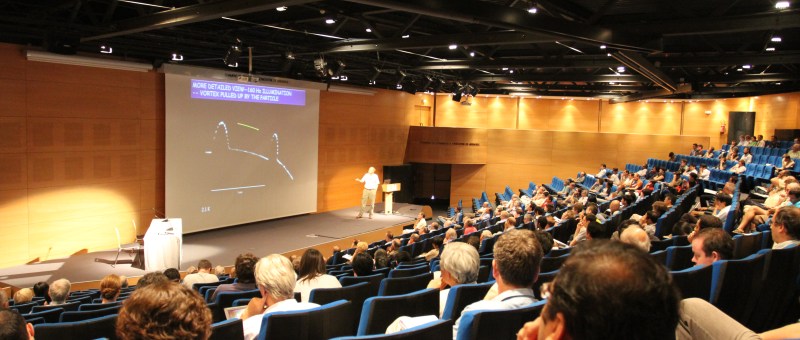
QFS2010-photo-ENSS_2179Conferences provide a good opportunity for academics –early career researchers in particular – to present their work and develop valuable contacts in their field. Preparing for your first conference can seem daunting as you do not know what to expect, especially if you will be presenting! In today’s Reflections post, Nina, a research assistant at the University of the West of England, shares her experience of attending an international scientific conference for the first time.

A few weeks ago, I had the opportunity to present my first poster at the Koninklijke Nederlands Vereniging voor Microbiologie (KNVM) Microbiology Spring Meeting held in Arnhem, Netherlands.  I had never been to a conference before so I hope sharing my experience will help other conference newbies.


Day 1

Monday (AM)

So…I’m not a great sleeper but I woke up quite tired, probably because I was so excited about the trip. It was a short journey from Bristol to Amsterdam – only an hour on plane. When I got to Amsterdam, it took a little while to figure out how the public transport system worked to get to Arnhem. I managed to get on the right train, the right bus and even get off at the right stops. In the end, travelling was easy as everyone spoke English and I arrived in one piece although knowing basic Dutch may have been of some benefit but hindsight is a great thing. The double decker trains blew my mind!

Monday (PM)

The hotel was lovely and I caught up with my industry sponsors and had dinner. This provided a good opportunity to settle in before being swept the official start of the conference. I would highly recommend getting in a day early if you can.

Day 2

Tuesday (PM)

I didn’t sleep terribly well but I think I was just nervous. Breakfast was so good, I forgot about my nerves for a while. I arrived at the conference early to give me enough time to set up my poster. Seeing my poster amongst the others gave me an overwhelming sense of pride and achievement. All the time I spent working on it was so worth it. My sponsors introduced me to a few people after which I attended some plenary sessions. There were about 500 people in the audience and I felt honoured to be among them. I used lunch as an opportunity to mingle with the crowd which was a bit daunting at first as everyone around me was speaking Dutch! I overcame my nerves and introduced myself to people, thankfully, everyone spoke English.

Tuesday (PM) – Poster time

After a few breakout sessions, it was time for the official conference dinner. I was sitting alone at a table and just kept hoping someone would sit with me. Luckily, three lovely Dutch professors sat at my table and we have a very good conversation about our respective countries, academia and loads more. It was so good, I almost forgot that it was time for me to present my poster! In case you were wondering, yes, the poster was presented at night time – after drinks!

I went to stand by my poster and made eye contact with a gentleman whose poster was next to mine. He explained that he was also presenting for the first time and was nervous. It was nice to talk to someone on the same level as I was and this helped me relax. Most attendees just walked by, having had a quick scan, moving on before I could say anything to them. Eventually, one by one, a few people came to ask questions. The questions were not as difficult as I expected e.g. ‘What is your poster about?’, ‘Why is this relevant to us?’ etc. I felt I answered confidently and accurately, overall, it went very well.

Day 3 – Homeward bound

I slept much better as the nerves had finally gone. I attended the morning meetings in the most relaxed state I had been since Monday. Unfortunately, I had to miss the second part of the day’s programme to enable me catch my flight. Overall, it was a great experience and I wondered why I was so nervous in the first place!

I would not call myself an expert on attending conferences but these are a few things I learnt from my experience –

Just be brave and talk to people…it was hard for me at first but I found everyone I spoke to really friendly and engaging.

If presenting a poster, wear something smart but comfortable because you want to be as relaxed as you can be.

Take some work with you, you’ll be amazed how much work you can get done during the commute and with less distractions to boot!

Bring business cards. I didn’t have any but everyone else seemed to. A business card enables people remember you and projects professionalism. If you are going to spend all that time networking, it is important your new contacts can remember your name!

Pace yourself. It can be a long day, especially if you have late night presentations. Try to get settled in a day early to adjust to your new surroundings.

If abroad where English is not the first language, learn basic terminology (Hello, Please, Thank you); it just seems more polite.

Keep your poster, it’s a nice memento of the good work you have done. You can also find somewhere to put it up in your University.

A practical one for the ladies – do not pack new shoes or heels! You’ll be surprised how long you will be on your feet!

As a final thought, just remember that everyone was once in the same boat as you. There is nothing to be afraid of, if anything, this conference proved to me just how fun and relaxed it can be.

Thanks Nina. Please feel free to share your thoughts in the comments section. If you would like to share your experience(s) with us, contact us on aspiringprofessionalshub@gmail.com.