CareerChat – Science careers; Thinking outside the lab coat!

MicroscopeFinal exams…check, dissertation and viva…check…graduation…loading! What’s your next step? For recent graduates and undergraduates, are you aware of the varied career options available to you? In today’s job market, it is important to know what employment ‘doors’ your degree can open for you. It isn’t always what you think though. In today’s article, Gabriele Butkute, discusses non-lab based career options for science graduates.

If you are a final year student, you will be familiar with the question “so, what are you doing after you graduate?” You are getting frustrated just by reading that, aren’t you? Some people have known what they want to do since their first day at University and have never changed their minds. However, most of us aren’t that lucky (?) – we have a vague idea of our future career, but as our studies progress we see the picture in our head change, often causing a fair bit of anxiety because you had it ‘all figured out’ and now you feel lost.

It has been almost a year since I graduated. I might not be totally sure of what I am supposed to be or who I am supposed to become (which are very different things). Currently I am working as a Marketing and Student Enterprise intern within a Science Faculty at a University. Prior to that, I worked as an Events Assistant at a Learned Society. Both jobs have been very interesting and I believe that is the direction I would like to further my career in.

Occasionally, when I tell somebody that I studied Biomedical Science but I don’t fancy working in the lab, they look at me like I am crazy, or worse, they pity me, thinking that I am a failure (I did get a first class degree though!). These preconceptions hurt your confidence and create self-doubt, but also might tempt you to try and get a job in a setting that you don’t like, just to “fit in your degree title”. Not everybody will understand. It’s ok. Just move on and do your thing. Don’t let anyone tell you what you should do – it something feels off, it probably is.

Universities often also (subconsciously) contribute to the prejudice by not talking openly about all career options for science students. Many, or maybe even most, people enter a science degree hoping to work in a research environment, particularly medical and biological sciences. However, what often gets left out is the fact that the skills you have developed at university can be used in more than just one discipline.
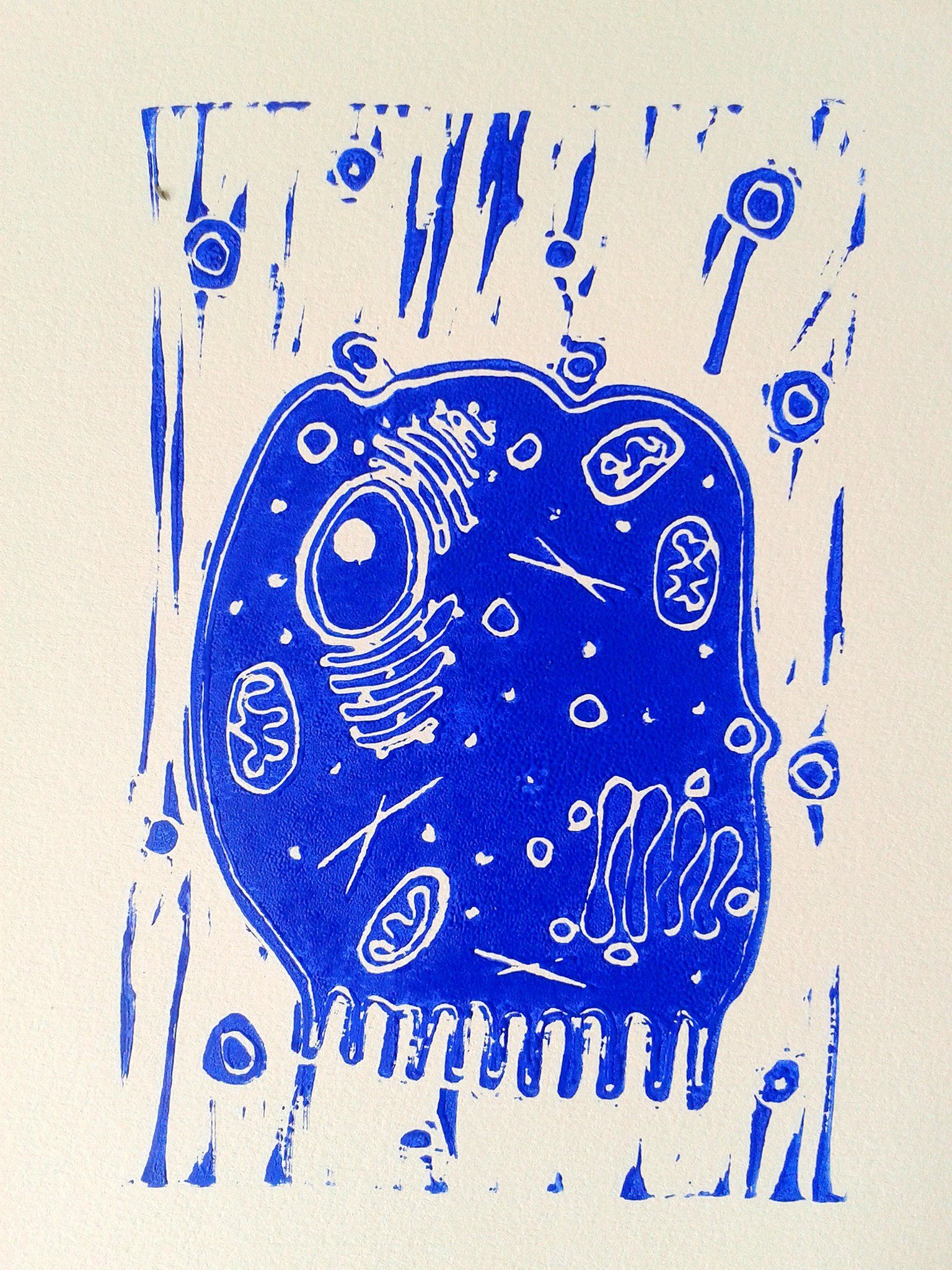
Image courtesy of Gabriele Butkute

Not all of us are made for lab work and it doesn’t mean we love science any less. Some people simply want to explore other career options where scientific knowledge and skills are crucial or at least desired, but doesn’t involve directly working in a lab. Even if you do love the hours pouring agar, counting bacterial colonies or running gel electrophoresis, you might want to look a bit broader, just in case. The job market is tough, data collected and published by Higher Education Careers Service Unit (HECSU) makes this much clearer. The average science graduate unemployment in 2012/13 was 7.3%, which is higher than UK average, 6%. Biology graduates faced 9.4% unemployment, and 21.9% of those who did manage to get a job worked in retail, catering or as bar staff.

Thinking more broadly will stop you from limiting yourself and will help identify your true skills and strengths. How about a career in intellectual property law? This niche area of commercial law might be just right for people who want to pursue a science career in a more commercial, legal setting. Think of it as protecting creativity. All new biological inventions, such as therapies, assays or devices need patenting, licensing and commercialising and scientific knowledge comes into play.

For the ‘less commercial’ souls, it might be worth looking into teaching or science communication sector. Teachers themselves call it the best job in the world. It will surprise you how many educational charities there are that could use your enthusiasm alongside the knowledge of science. Science communication is such a broad field, that you can certainly find something that would make you want to get up in the morning and go to work: from outreach and policy to journalism and publishing (and many things in between).

You might be wondering how to get those jobs. From personal experience at an interview for an Events Assistant role at a Learned Society, they didn’t seem to concentrate on the grades I got (although I am sure if they had been bad, there would have been no interview to begin with). It’s the extra bits and pieces that count, now more than ever. Maybe you were a part of a student society, did some volunteering or wrote for a student newspaper. For example, in addition to my current job, I also started a blog for interns of my Faculty where I work. I love blogging. I get a kick out of checking out all the different layouts, colours and making it all look neat. I have also blogged about the Enterprise Educators UK conference I attended and they shared my blog posts on their webpage and social media. It’s great experience. And when I get asked about my writing and social media skills during an interview – here’s one more thing I can say.

The kind of competition that we have out there, just being good at your job and doing a nine-to-five probably won’t be enough. It’s just not the culture we have anymore. You are supposed to be passionate (just don’t use that word in a cover letter, huge cliché). Finding a job that is fulfilling, pays enough, has career prospects and ticks all other imaginary job requirement boxes might take a while. It probably won’t be your first, or second or even third job. But if you figure out what you want and systematically work towards it, it will come eventually (or at least that’s what I am telling myself).

You are a product and you need to sell your skills. One career pathway isn’t better than the other, it’s about finding what suits you and being open minded about changing your own preconceptions about yourself.

Gabriele B HeadshotAbout our writer – Gabriele graduated with a first class degree in Biomedical Science from London Metropolitan University. She previously worked as an Events Assistant for the Society of Biology. She currently works as a Marketing and Student Enterprise intern within the Faculty of Life Sciences, London Metropolitan University. She writes at gabrielebutkute.com.

If you enjoyed reading this article, please share and subscribe to our network! Would you like to share an article in The Hub? We would love to hear from you. Please get in touch – info@aspiringprofessionalshub.com.

#MyPhDStory – A Journey of Self Discovery

Self awarenessStudying for a PhD can be a lonely process, however the thoughts you have and the emotions you feel are shared by others in your ‘small’ PhD student community. In today’s ‘Reflections’, Miriam Madziga, a third year PhD candidate at the Institute of Energy and Sustainable Development (IESD), De Montfort University shares some thoughts on her PhD experience so far.

My PhD journey started long before I made my application, it started in my mind, as I gave some thought to why I wanted to pursue a PhD.  I am curious and inquisitive by nature, always wanting to know ‘how’ and ‘why’ things worked the way they did. I also loved writing, which combined with a love for research would serve to my advantage. I knew I wanted to pursue a PhD but did not know what my topic area would be or what doing a PhD entailed. There were more than a thousand questions that flooded my mind. So I did what I do best when trapped in a mentally overwhelming situation, I go on holiday!

I also knew I wanted my topic area to be connected to my previous academic background/ field of ‘Environmental Economics, Waste & Resources Management’ as well as relevant to the world and society at large. I then decided to focus my research on ‘water.’ ‘What about water?’ was my next logical reasoning. I found tons of information and previous research conducted on water generation, production, treatment, supply and remediation; all from ground and surface water sources but very little on production of water from atmospheric water sources. So, I decided to look at the ‘unobvious’ aspect of water where there was very little attention and this was what gave birth to my research topic: Water from air!

Another important factor is the relevance of my PhD research to society today, water is  an element in its abundance on the Earth and yet faces global persistent challenges around the world – this led me to asking the question ‘Why’ and then to ‘Finding out what I could do about this’. My research is investigating the use of condensations systems to extract clean drinking water from air’ and I have decided to apply this especially to poor communities.

What has my PhD experience been like? It has been unlike any other thing I have ever experienced. When I first started, I felt like an octopus on skates trying to keep my balance while navigating through new territory. Nothing really prepares you fully for a PhD like doing one. Where I seemed lacking in skill or knowledge, I quickly sought assistance and applied myself. The transition onto my PhD was made smoother because my University provided doctoral training courses which gave me a better understanding of what the process was like and what skills I needed to develop to succeed.

My PhD journey has been one of self-discovery, especially of new skills and abilities I did not know I had. I have developed excellent organisational skills; planning is very crucial to enable me progress with my PhD as well as have a life outside of it! I set weekly and monthly goals for my research and look forward to rewarding myself with adventure trips such as: skydiving, scuba diving, hiking, or snowboarding.

My time keeping has significantly improved. As an undergraduate student, I recall being late so often to lectures that I was mandated to take a ‘time keeping’ session – to which I arrived late! However, the contrast between who I was then and now has been huge and I am pleased to see the transformation in my research as well. I can tell you to some degree of precision what my calendar is like from today even up to the end of the year – all a credit to planning management.

I suppose my mental preparation was what paved way to the resilient spirit which kept pushing me through tough times, challenges and setbacks. The biggest challenge of all for me was funding as I am self-funded. This meant that being a PhD candidate was akin to working a regular job with no income for a minimum of 3 years while simultaneously sourcing funds to enable me conduct my PhD research.

A sustaining factor was the desire within me to pursue a PhD despite all odds. Call it kismet, but suddenly opportunities began to emerge to aid me along the way. Assistance in form of business consulting opportunities, networking and monetization through my blogging platform and sales of products I had made and books I had published. I took advantage of every opportunity that came my way. This in turn opened up more connections and networking opportunities with people, industry and other Universities.

My PhD journey has also been sustained by the self-motivation that I continue to generate within myself. When the going gets tough; I find comfort in the place of prayer and meditation, laughter and joy amongst friends. I build endurance, clarity and stamina at the gym and while playing roller derby with my team Roller Derby Leicester, and most importantly the love and support of my family and loved ones.

So, if you aspire to elevate yourself to the league of extraordinary researchers, develop new skills, make new connections and progress in your career, I will most definitely say ‘YES’! Go for a PhD!!

#UniAdvice – 7 things successful students do

Exam season is now upon us. While third year undergraduates swot over their dissertations and final exams revision (good luck!); prospective undergraduate students are also preparing to start a new phase in their academic journey. Going to University elicits a range of emotions – excitement, anticipation and sometimes anxiety. In this article, we will be discussing tips that can help you adjust to your new learning environment. We believe some of this information is also relevant to current students to enhance their academic experience.

Seek advice – This should start even before you make a final decision on what University to choose.Open days are a great place to start as you have an opportunity to meet students already enrolled on the courses you are interested in applying for. Current students are best suited to provide information not just about the University but advice on accommodation, living costs and social activities you can get involved with. Furthermore, academics are usually available at these events and can provide valuable information about the course; helping you understand the opportunities and potential challenges you may face. Some pertinent questions you can ask have been covered in our previous article –‘Before you choose a course to study at University.’

Embrace the ‘change’ – University is different. There is a reason why it is called ‘Higher Education.’ If you expect it to be different, then you can begin to prepare for it. It is normal for new students to severely underestimate the amount of work that is required at Univer sity. For every hour you spend in a lecture, you may need to invest another 2-3 hours in independent study. Your teacher tells you something in class but expects you to delve even deeper and tell him/her things they do not know. You are expected to think criticially, write more professionally, read academic journals etc. Look out for your University’s Learning support unit – they provide a whole array of support services that will help you embrace the change.

Get mentored – In recent years, we have been lucky to mentor undergraduate and postgraduate students who have gone on to develop exciting careers. Many Universities now have mentoring schemes providing peer mentor support for first years provided by second and third year students. It is unfortunate that many students do not utilise these even though they are of great value. For second year students, contact your Careers service and see if they have an employability mentoring scheme, where you can be mentored by a professional in your field. We have both benefited greatly from having mentors who invested time and effort to shape our careers and support us through some parts of our university experience. Lecturers can also be a valuable source in developing professional relationships especially if they have worked in the field.

Volunteer – It is great to see more students are starting to value volunteering as a way not only to develop their transferable skills but also as a way to make friends and have a social network whilst at University. Remember that having a degree, even a good one, simply is not enough to keep you ahead. Your experience and skills are things that will set you apart from other candidates when you go for jobs. The idea for this website was born at a volunteering event and we have made a lot of friends through volunteering too. Apart from what you get out of it, just think about the significant contribution you are making to the organisation you are volunteering for.

Apply for an internship – View internships as a valuable contribution to your education. Final year students tell us how they view life outside University with some anxiety as they do not understand how the ‘world of work’ works. An internship can help with that. I (Emmanuel) employed an intern last summer and the experience of carrying out innovative projects with my intern has given me the desire to employ more interns this year. If you would like to go into research, why not ask a research active lecturer if s/he will be taking on any interns. See your Careers adviser for more information. Apart from honing your skills, internships provide the opportunity to develop valuable contacts in your area.

Sign up for a sandwich degree – Should I study for 3 or 4 years? We get this question often from students and parents alike. While it seems like a silly question as 3 is obviously shorter than 4 years, the 4 year sandwich degree is definitely worth considering – taking cost implications into consideration. The sandwich degree offers you the opportunity to be placed at a company or organisation working (mostly paid) for a year. Students who take up these placements usually return better equipped for their final years due to all the experiential learning taking place. In a good number of cases, students are offered jobs by their work placement companies after their degrees provided they attain good grades (a very good incentive we think!!)

Join a professional society – Most courses are affiliated with a professional body.  Majority of them offer student membership at significantly reduced rates or even for free. We benefitted greatly from our membership of the Society for Applied Microbiology and Voice of Young Scientists. Attend events organised by your Society and use them as networking opportunities to develop relationships within your discipline.

Earlier we mentioned going to your Careers department, this is important even if you do not know what you want from them, just go in, say hello and ask what they do! Careers consultants are usually friendly and supportive and will shape up your CVs and guide you through applying for internships, work placements etc.

We would advise you ‘not to give up any extracurricular talents or skills you have before going to University.” A lot is usually said about Universities and employability and less about entrepreneurship. Universities should be the building grounds for you to blossom and let your creativity shine. Please check out our Entrepreneur’s Corner for more inspiration.


If you enjoyed reading this article, please share and subscribe to our network! If you have an article you would like to share with our readers, please get in touch – info@aspiringprofessionalshub.com.

#MyPhDStory – Attending my first conference

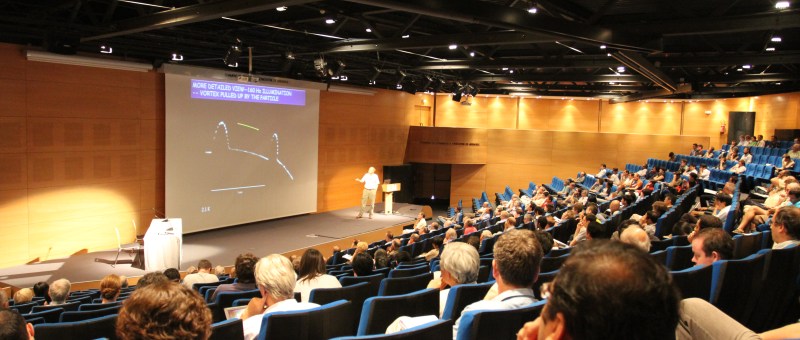
QFS2010-photo-ENSS_2179Conferences provide a good opportunity for academics –early career researchers in particular – to present their work and develop valuable contacts in their field. Preparing for your first conference can seem daunting as you do not know what to expect, especially if you will be presenting! In today’s Reflections post, Nina, a research assistant at the University of the West of England, shares her experience of attending an international scientific conference for the first time.
A few weeks ago, I had the opportunity to present my first poster at the Koninklijke Nederlands Vereniging voor Microbiologie (KNVM) Microbiology Spring Meeting held in Arnhem, Netherlands.  I had never been to a conference before so I hope sharing my experience will help other conference newbies.


Day 1

Monday (AM)

So…I’m not a great sleeper but I woke up quite tired, probably because I was so excited about the trip. It was a short journey from Bristol to Amsterdam – only an hour on plane. When I got to Amsterdam, it took a little while to figure out how the public transport system worked to get to Arnhem. I managed to get on the right train, the right bus and even get off at the right stops. In the end, travelling was easy as everyone spoke English and I arrived in one piece although knowing basic Dutch may have been of some benefit but hindsight is a great thing. The double decker trains blew my mind!

Monday (PM)

The hotel was lovely and I caught up with my industry sponsors and had dinner. This provided a good opportunity to settle in before being swept the official start of the conference. I would highly recommend getting in a day early if you can.

Day 2

Tuesday (PM)

I didn’t sleep terribly well but I think I was just nervous. Breakfast was so good, I forgot about my nerves for a while. I arrived at the conference early to give me enough time to set up my poster. Seeing my poster amongst the others gave me an overwhelming sense of pride and achievement. All the time I spent working on it was so worth it. My sponsors introduced me to a few people after which I attended some plenary sessions. There were about 500 people in the audience and I felt honoured to be among them. I used lunch as an opportunity to mingle with the crowd which was a bit daunting at first as everyone around me was speaking Dutch! I overcame my nerves and introduced myself to people, thankfully, everyone spoke English.

Tuesday (PM) – Poster time

After a few breakout sessions, it was time for the official conference dinner. I was sitting alone at a table and just kept hoping someone would sit with me. Luckily, three lovely Dutch professors sat at my table and we have a very good conversation about our respective countries, academia and loads more. It was so good, I almost forgot that it was time for me to present my poster! In case you were wondering, yes, the poster was presented at night time – after drinks!

I went to stand by my poster and made eye contact with a gentleman whose poster was next to mine. He explained that he was also presenting for the first time and was nervous. It was nice to talk to someone on the same level as I was and this helped me relax. Most attendees just walked by, having had a quick scan, moving on before I could say anything to them. Eventually, one by one, a few people came to ask questions. The questions were not as difficult as I expected e.g. ‘What is your poster about?’, ‘Why is this relevant to us?’ etc. I felt I answered confidently and accurately, overall, it went very well.

Day 3 – Homeward bound

I slept much better as the nerves had finally gone. I attended the morning meetings in the most relaxed state I had been since Monday. Unfortunately, I had to miss the second part of the day’s programme to enable me catch my flight. Overall, it was a great experience and I wondered why I was so nervous in the first place!

I would not call myself an expert on attending conferences but these are a few things I learnt from my experience –

Just be brave and talk to people…it was hard for me at first but I found everyone I spoke to really friendly and engaging.

If presenting a poster, wear something smart but comfortable because you want to be as relaxed as you can be.

Take some work with you, you’ll be amazed how much work you can get done during the commute and with less distractions to boot!

Bring business cards. I didn’t have any but everyone else seemed to. A business card enables people remember you and projects professionalism. If you are going to spend all that time networking, it is important your new contacts can remember your name!

Pace yourself. It can be a long day, especially if you have late night presentations. Try to get settled in a day early to adjust to your new surroundings.

If abroad where English is not the first language, learn basic terminology (Hello, Please, Thank you); it just seems more polite.

Keep your poster, it’s a nice memento of the good work you have done. You can also find somewhere to put it up in your University.

A practical one for the ladies – do not pack new shoes or heels! You’ll be surprised how long you will be on your feet!

As a final thought, just remember that everyone was once in the same boat as you. There is nothing to be afraid of, if anything, this conference proved to me just how fun and relaxed it can be.

Thanks Nina. Please feel free to share your thoughts in the comments section. If you would like to share your experience(s) with us, contact us on aspiringprofessionalshub@gmail.com.

#PhDAdvice – So you want to do a PhD? Busting the Myths!

5. PhD Survival 1Our latest addition to the Hub is ‘For PhDs’ – here we will discuss a range of issues regarding the doctoral process. We will be sharing from our personal experiences as well as reflective pieces from current PhD students and graduates. The aim is to provide a realistic picture of the process for prospective students and also to equip current students with tools to enhance their academic experience. In this article, we will be discussing some common misconceptions about the PhD process.

What is a PhD?

Before dealing with the myths about PhDs, we would like to briefly discuss what a PhD actually is. PhD is an abbreviation for Doctor of Philosophy (also shortened to DPhil at some institutions) and is the highest level degree that can be achieved by a student. It is a postgraduate research degree and is awarded for an original and significant contribution to knowledge in a chosen field after an extensive research study. Majority of PhD entrants (UK) possess a postgraduate degree (MA, MSc, MRes) but it is possible to register for a PhD after completing an undergraduate degree with a first class or second class upper. Typically (In the UK), the PhD lasts for three or four years full time and between four to six years part time.

In recent years in our roles as academic advisors and lecturers, we have come across many students who have enquired about applying for PhD opportunities for a variety of reasons. Some people view the PhD as an opportunity to stay back at University and continue studying until they decide what or where they would like to be in their future careers. Others seem to be fulfilling other people’s (e.g. family) ambitions, others see it a required step to get to the next level in their careers. Whatever your reasons are, it is important that you are aware of what you are getting yourself into when you decide to do a PhD.

Let’s discuss some common misconceptions about studying for a PhD…

You should be very knowledgeable about everything – The whole point of a PhD is to discover or learn something new. You will become an expert in your research area but definitely not at everything! It is actually more likely that the more you know about your topic, the less you know about other things, so do not count on us during a pub quiz! If you do not know everything about your topic when you start, welcome to the club! One thing we found humbling was the realisation of how much we did not know at the beginning of our PhDs compared to having spent three years investigating our respective topics. We sincerely believe that successfully completing a PhD is not as much about intelligence as it is tenacity and  perseverance.

It is just another course – To answer this we’ll say NO it is not! During your undergrad and master’s degrees you would have experienced a range of teaching and learning activities including lectures, tutorials, seminars, independent learning and group work. Some people are surprised and often unprepared for the structure of a PhD. Your PhD should be seen as an independent project where you are the Project manager reporting to your superiors (supervisors) about how you manage resources (time, money) to achieve pre-defined objectives (research aims) to a given deadline (thesis submission). Regardless of discipline, studying for a PhD can often be a solitary process. To make an original contribution to your field, you will be carrying out research that has not been done before. While supervisors can support, the day to day management of your project is your responsibility. Approach your PhD like a job as well as studying for a degree.

It is like a 9 – 5 job – Having said to view your PhD like a job, it is much more than your regular 9-5. PhD students often joke about how much I (Emmanuel) call the PhD ‘a life choice’. At a certain point, your PhD will consume your life because not too long after you start your PhD you realise how little time you have for friends, family and personal enjoyment. I (Amara) remember conducting experiments overnight in the lab…asking myself over and over again why I ever thought a PhD was a good thing! Non-laboratory based PhDs are not left out, conducting research and writing it up takes time, especially when you do it well. To this end we say if you are looking for a PhD which is akin to a 9-5 job, whilst it is not impossible, it is very unlikely.

It will automatically lead to a job (or a better job) – Sometimes we have seen many PhDs surprised at what they consider the lack of jobs available to them after graduation. Getting a job after the PhD is not a given and is definitely not automatic. Becoming employed still requires you shine throughout the whole application process – including a strong CV and personal statement etc. Depending on what you want to do next, having a PhD may even be viewed as at best having no benefit and at worst a hindrance! If you are looking at staying in academia, more often than not, everyone else will have a PhD too. If you would like to go into industry or another discipline, it may be even more challenging.  Please look out for future articles on this theme of PhD employment as we discuss these issues in more detail.

PhDs are for nerds and loners – The renowned Liverpool football club theme “You’ll never walk alone” comes to mind at this point. Several PhD candidates have either failed to complete their PhD because they assume doing a PhD does not require other interpersonal skills such as the ability to communicate and interact with others, be it supervisors or other researchers in their field of study. Yes, a PhD can have solitary moments but see yourself as an ‘independent, team player.’ Many UK institutions have structured processes which allow for regular interaction with supervisors and other academics and co researchers such as recorded supervisor meetings, researcher’s conferences and other graduate school events. You can have fun during your PhD, just probably in small doses. Ensure you network effectively, even if just within your research group, sometimes an encouraging word can go a long way when things are not going well.

If you enjoyed reading this article, please share and subscribe to our network! If you have an article you would like to share with our readers, please get in touch – info@aspiringprofessionalshub.com.