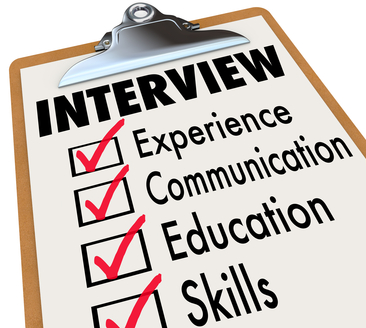
#CareerChat – How to prepare and perform well at interviews

This is usually the time of year when current students start seeking placements and soon-to-be graduates think about graduate employment. Whether looking for part -or full time job opportunities, prospective employees must face a cycle of job applications and interviews. In this article, we discuss how to prepare and perform well at interviews. We hope this will be useful for students as well as early career professionals who still struggle at interviews or would like some tips for their first interview.

Prepare – Firstly, if you have been invited to an interview, congratulations! At this stage, there are a number of things to consider. Ensure you confirm the venue, date and time of the interview. This might sound funny but you’ll be amazed how many people call up organisations on the day of the interview to ask for where the company or interview venue is. To an employer, this suggests you are poorly prepared, not very organised and unreliable. Read the invitation letter several times and be familiar with its contents. Will you be interviewed individually or as a group? Will you have to give a presentation or participate in psychometric tests? Have you responded to confirm your attendance? Remember that every contact you have with this company counts towards your interview.

Know your USP – We have talked about the unique selling point (USP) in a previous article. Before turning up at your interview, it would be important to be able to articulate what makes you unique. Have you identified all your skills? While the ability to open beer cans without using your hand might be a fun YouTube trick, it is probably not relevant during your interview. What is it about your skills and personal attributes that is valuable to this employer? Interviews are about knowing the ‘person’ behind the application. They like you ‘on paper’ but want to see a side of you which your CV might not demonstrate.

Try and anticipate what questions will be asked during the interview. It may sound like common knowledge but reflect on your answer to ‘Why do you want to work for us/in this role?’ Ask a friend to do a mock interview and practice the answers to the list of questions you anticipate being asked. I (Amara) particularly recommend this as I have found this to be a useful way to prepare for interviews. ‘Practice makes perfect’ as well as helping improve your confidence. You are less likely to be nervous if you are asked a question you have a ready answer to.

 Poor preparation usually equates poor performance.

The next phase of your preparation is to do your research about the organisation or employer. Go back over the job advertisement and study the person specification. Focus on the attributes and skill set that will be determined during the interview. You must show sound knowledge of the organisation you want to work for. This is a very crucial part of the interview process. We would advise preparing a ‘dossier’ of your potential employer; their strengths, the scope of their work; what you consider to be their main challenges (present and future) and importantly, how you fit into their organisation.

Perform – Once you are ready for your interview, there are some simple general things to be aware of. Simple things like planning ahead so you are there on time. It is advisable to be there at least 15 minutes before. Your interview starts once you present yourself at reception. Be professional in your presentation – smile, it doesn’t hurt to say hello to the other candidates too!

Dress appropriately in formal attire. We have spoken to people who have been interviewed for research jobs and some suggest you do not need to be formal as some of the interviewers do not care about the formal nature of the process. We do advise however to be formal…play it safe “Better safe than sorry” right?

Connect with the interview panel – Panels are now more common than one to one interviews. Having two or more people on the other side of the table may be nerve-wracking but remember your interviewers are people too. They already like you so try not to worry too much. If you do know who will be on the interview panel, it wouldn’t hurt to do some research there as well. This is important if you’re applying for a summer placement or an internship. What was the last paper published by the Professor whose lab you want to work for six weeks this summer? Don’t know? You’re not fully prepared then. Be engaging and show you have a sense of humour but no crass jokes. Sit up in your chair, maintain eye contact with all interviewers and project confidence.

Show enthusiasm – This is so important! I (Emmanuel) remember two recent interviews which ended with none of the interviewees getting the job. On one occasion, the interviewer stated the reason he did not recruit anyone among the interviewees was because they did not show enthusiasm. Be hungry and show it. Ask yourself this question, can you remember any interview you have attended where you have not shown much enthusiasm? Also, would you employ yourself if you are an employer and are looking for the best candidate? If yes, well done! If no then why not?

You have probably heard this before but after fielding questions from your interviewers, it is important that you have a good question to ask your interviewers at the end. Please avoid the “How much am I getting paid?” question but be prepared for ‘How much do you want?’ Questions such as where you might fit within the company, what type of training will be offered and the career progression pathways for someone in your role are useful questions.

Finally, we know interviews can often be tough and daunting but it is possible in some cases to feel very relaxed and comfortable. A word of warning though, when you feel too relaxed, you may get a false sense of security and behave like you are among friends. Please avoid this. Throughout your interview, maintain a positive and professional attitude.

We hope you have a stress-less interview. Please feel free to share your tips on how you prepare and perform at interviews. We would really love your feedback so if you find this article useful, please let us know. Leave a comment or email us – aspiringprofessionalshub@gmail.com.


#CareerChat – Dealing with Rejection

1-rejectionDear Dr A 

Thank you for attending the interview for the above position. Regretfully I am now writing to inform you that, on this occasion, you have been unsuccessful.  I would like to take the opportunity to thank you for your interest in working for our organisation. We appreciate the time and care that you have given in submitting your application and attending the interview, and would be happy to receive a further application from you for any future suitable vacancy. I wish you every success in the future. 

Yours sincerely,

HR

It could come by letter, email or face to face but the emotions you experience are the same. It feels like some of the air has been let out of your lungs leaving you feeling like a deflated balloon. If you live long enough, work hard enough and take enough risks, at some point(s) in your career journey, you will experience rejection. In the last few years, especially since the recession, the employment market has been particularly difficult with new graduates bearing the brunt of it. We cannot count the number of times we have read in the newspapers or watched on television where new graduates discuss their inability to get a job despite incredible effort.  I (Amara)  heard about a lady who applied for over a hundred jobs and was not called to a single interview! Technology has made applying for jobs so much easier, however, this comes with the  increased chance of being rejected.

Rejection does not just apply to employment – it could be a manuscript you submitted to a journal or editor, an application you made to your first choice University or a grant application to fund your great big idea. Regardless of where it comes from, rejection can severely dent confidence as we often tend to equate it with failing and being a failure. However, rejection does not have to be such a negative thing. It can actually become a useful learning tool in our personal and professional development journey. So, when you face rejection, what can you do differently?

Keep things in perspective – You may have failed at something but that does not make you a ‘failure’. An interview result is not an indication of your personal worth. No one likes to experience rejection. The rejection letter you see above was one I (Amara) received  and remember how bad I felt when I read it.  I had been excited to make it to the last 4 out of about 100 applicants to be interviewed. The interview had gone really well (in my opinion) but a few days later, I found out I didn’t get the job. After a few days of reflecting, I chose to see the whole process as a positive not negative experience. No, I did not get the job but I had made it to the last 4 out of 100. The top 5%. This meant that there was something about my CV, covering letter, personal statement and application form that had appealed to the employer. Maybe I just wasn’t a right fit for them. Maybe they made a mistake! Interviewers are human after all. Choose to see being invited to an interview as a plus, regardless of whether you get a job or not, at least, they like you on paper! When you experience rejection, try and think objectively. Choose to see failure as an event and not an identity. 

To thyself be true – This calls for some ‘reflection-on-action.’ Think over your application process again? If you have applied for 100 jobs without a single response, then in our opinion there is a problem somewhere. Are you using the ‘scatter-gun’ approach to your job search? Is there a mismatch between your skills profile and the jobs you are applying for? Do both your CV and personal statement match the person-specification in the advertisement or are you just sending the same documents to everyone? Are there any technical or subject specific skills you lack that could improve your chances at success? Did you follow the journal submission instructions to the letter? Does your manuscript fit the scope of the journal where you submitted it? Do you meet the entry requirements to get on the course you have applied for?

Deal with the issues – When it is difficult to know where things are going wrong, seek expert help. A careers adviser can look at your CV and provide information that can be the difference between getting a job or not. A mentor who is knowledgeable of a field that you are trying to get into can provide invaluable advice or know someone who knows someone who needs someone? Do you find yourself really nervous at interviews? So do most people!  Just try to avoid letting your nerves get the upper hand. This might sound like cliché but Practice does make perfect.  If your CV has looked the same for the last 2 years, is there a course that can help you update your skills profile?

Embrace feedback – When you do receive feedback, please remember it is not personal (at least most of the time!). If someone, has in good faith, taken their time to provide that information, see it as them investing in you. They most likely would not do it, if they did not see something positive in you or your work that needs improvement to make it better. Feedback can be difficult to take but if you can be dispassionate about it, you will find it is essential for your personal development. When you find yourself in a situation where you have not done as well as you hoped, seek feedback. Send a follow up email after an interview when you did not get the job. You will learn and grow from it.

Never give up – You never know how close you are to that Yes! Read the biography of any successful person you admire and you will undoubtedly find a rejection story among its pages. A colleague who evaluates grant applications for the EU shared that sometimes the difference between ‘accept’ and ‘reject’ can be 1 or 2 marks out of 100. She has had to reject a grant application that scored 95 out of 100, simply because another one scored 97! Another colleague had a manuscript rejected four times but finally got her work published in an international journal. The biggest surprise was that it got published in the journal she had sent it to in the first place! Each time she got a rejection letter, she improved her manuscript based on the feedback and submitted it again. She had enough self-belief in her research not to be put off by a few stumbling blocks. Be that way about yourself too. Have enough self-belief in what your skills can bring to an organisation or what your big idea can bring to the world. Be persistent and tenacious. You just never know.

aa-headshotAbout our writer – After completing a PhD in Microbiology, Amara is building her career in academia. She is grateful for every opportunity to teach and mentor a new generation of scientists, undertake research and develop international partnerships. She believes in the combined power of education and productive relationships in building successful careers. Stay connected on Twitter – @amaratweets

 If you enjoyed reading this article, please share and subscribe to our network! If you have an article you would like to share with our readers, please get in touch – info@aspiringprofessionalshub.com.

#UniAdvice – Before you choose a course to study at University

We recently attended a series of international Higher and Further education institutions’ education fairs in Nigeria. It was great to meet very enthusiastic prospective students as well as their parents! We did however identify an area of concern regarding ‘course or program choices’ which is something we have also encountered in the UK. The reasoning behind some of the course applications and choice of courses were in some cases worrying while others were alarming! Why did you choose the course you studied (or are currently studying) at University? Are there things you know now but didn’t know then?

Why does course choice matter?

Well if you consider the huge financial commitment required for studying in Higher Education, you will agree it does. Regardless of what part of the world you come from, going to University is an expensive business. This cost often multiplies by several factors if you choose to study in another country as an international student. The importance of course and University choice can therefore not be overemphasised. A colleague with years of experience recruiting international students often asks applicants an important question, “If you are given £30,000 (convert to your own currency), would you or your parents happily pay for the course you have enquired about or chosen? Why? This question provides food for thought and must always be at back of the mind of anyone making an application to study at College or University. Answering this question can allow you reflect on how your course choice fits in with your life/career goals.

In one of our previous articles, we talked about ‘Beginning with the end in mind.’ This is also important when it comes to choosing a course. Would you invest money (insert education costs) into a business which after 3-5 years would yield no profit, no return on investment and require another huge cash injection to ‘hope’ for some level of success? For majority of us, the answer to that question will be a big, fat, No! Perhaps then, what you study should be given the same type of consideration.

For home students in the UK, what is the point of getting into debt (on average £35,000 – £40,000) to fund your education just to find out that you chose a course you actually hate?

Things to consider when making your choice – do your homework!

Prior to applying for and choosing a course to study, it is important to think about the course in careful detail. Seven times out of ten, when we ask Forensic Science students the reason for choosing their course, their response is ‘I love watching CSI! That in itself is not an issue if you enjoy subjects like analytical Chemistry, but if you do not, well, there may be problems on the horizon. Some courses e.g. Medicine or Dietetics have interviews as part of the application process – if you cannot articulate why you want to get on the course, you may not get a place! If you hate Biology and Chemistry and have never done well in them, why do you want to study Medicine?

How would you answer the following questions?

Why go to University in the first place? – Improved earning potential? Pre-requisite for chosen career? Have fun before entering the ‘real world?’ Develop subject knowledge and transferable skills for the future?

Why this course? – What subjects interest me? What are my academic strengths and weaknesses? How does this course fit into my life goals?

What is the course structure? – E.g. what modules/subjects? How many credits?

How will my course be taught – lectures, seminars, tutorials, lab sessions, how many contact hours etc.?

What is the expertise of the staff at the department or faculty that offers the course?

What are the career opportunities after the course?

Is the course accredited or linked to a professional body?

What support (academic or pastoral) do students get on the course or program?

Some of these questions pertain mainly to course choice but others could help you choose a University as well. We would recommend that applicants, their parents or fee paying guardians reflect on the answers to these questions as they navigate the often daunting application process. Use a Careers service e.g. National Careers Service (UK only) or talk to recent graduates.

Oftentimes prospective students as well as parents are uncertain or unsure how much to ask or are scared to ask critical questions when attending an education fair, open days or speaking to college or university representatives. Our advice is to think about that event as going into a BMW showroom to buy a car – you would not spend that amount of money without asking a few questions. University representatives are usually very happy to answer all your questions and provide you with accurate information.

In some cases, we have had students focus more on the night life and the vibrance of the city or town. Don’t get us wrong, these are important aspects too, but quite often, we meet students who at the tail end of the degrees regret the choice or course or are lost as their course choices seem to have limited and often uninteresting career options.

Parental or family influence in choosing

At an education fair we attended, a lady enquired about studying for a PhD and whilst she came across as interested, it soon became evident, upon further discussion,  that she was fulfilling someone else’s desire not to be the only family member without a PhD!

In other cases, parents have insisted their children study courses to meet with a family tradition etc. Coming from an African background, we can relate! Medicine, Law, Engineering, Accounting are the courses that are very dear to our parents’ hearts. From experience, this is due to the fear their children may be stranded without ‘good’ jobs after studying certain degrees.  Providing clear information to parents about what courses consist of, their value and the variety of career paths upon completion of these courses more often than not changes their opinions. This is why it is very important to do your homework!

Get information – A lot of Universities now offer ‘taster’ sessions to provide a glimpse of what studying your course at their University could be like. You may be able to attend a psychology lecture or conduct an experiment in a teaching laboratory! Attend Open Events and Education fairs – the latter being particularly pertinent for international students.

If you enjoyed reading this article, please share and subscribe to our network! If you have an article you would like to share with our readers, please get in touch – info@aspiringprofessionalshub.com.

#APHUniAdvice – 7 Ways to Enhance your University Experience

University studentsWhat thoughts come to mind when you reflect on your time at University? If you could go back in time and start out again, would you do anything differently? For students currently in Higher Education, have you ever thought about what you want to take away from your time at University? 

The answers to the questions posed above are quite revealing. Recent graduates says things like ‘I wish I had focused on identifying and developing, skills, attributes and more importantly, relationships that were necessary to succeed after University.‘ Interestingly, for the most part, current students tell us that they want to finish with a good degree (2:1) and have some fun while doing it. There is nothing wrong with having a good time at Uni, in fact, it is advisable you do! This article is about thinking of ways to make the most of the relatively short time you spend in Higher Education.

Begin with the end in mind – While graduation may seem a long way off in your first year, sooner or later your course will come to an end. Apart from a degree certificate, what else are you going to leave with? ‘Beginning with the end in mind’ is a concept that was first described by Stephen Covey in his best selling book, ‘The Seven Habits of Highly Effective People.’ This is about reflecting on where you want to be at the end of an endeavour before you start out. In other words, throughout your time at Uni, think about what you want to leave with. This allows you to modify your thinking and actions towards SMART goals to get you there. This enables you recognise and  maximise resources at your disposal. How do you want your CV to look on the day you graduate? Start working on it from Day 1!

Experience, experience, experience – If you do not do anything else while at University, try and get some relevant experience. The key word being relevant. If you are studying for a degree in Biomedical Science today in the UK, it will be near on impossible to get into a graduate training position without some laboratory experience. Having a part time job in a bar may provide some much needed funds but just won’t cut it for the type of job you are after. This is because Universities are churning out graduates by the thousands each year and there are just so many jobs. Even if it is an unpaid internship, see it as an investment in your future. Another benefit besides making yourself more employable is that you can decide if that profession is for you or not. Believe us, you do not want to get stuck in a career that you derive no satisfaction from.

Get involved! – You’ve committed the next 3-4 years of your life to your University, you might as well get more out of it than a degree certificate. Join a Society or start one. Become a Peer Mentor, a Student representative for your course or run for the Student Union. Organise a student conference or plan a study trip that can help take your learning outside the classroom. Become a student ambassador and engage with prospective students on Open Days. If you’re that way inclined, sign up for University Challenge! Do something that shows you are able to take initiative and are innovative. Do not just go through your University, allow your University go through you too.

Use your University’s Careers service – We are constantly surprised at the number of students that pass through a University and never speak to a single Careers Adviser! These are specially trained individuals who can provide advice and help you with creating a CV, personal statement, filling in application forms, interview preparation and so much more. Most importantly, the service is free! A number of Universities now organise Career fairs and events, providing opportunities to network with prospective employers. We advise making an appointment with a Careers advisor at least once each academic year. This allows you review what you have done in the past year and identify skill gaps. You can then set goals to fill in any ‘gaps’ for the next year. It can sometimes be difficult to see the link between work experience and skills developed. A good Careers Advisor can help with that and help you enhance your CV.

Join a relevant professional body or Learned Society – Most disciplines are associated with a professional body. If you are in your 2nd or 3rd year at University and do not know which body is relevant to your discipline…there are no words! There are many advantages to joining a professional body including – careers advice tailored to your discipline, information about conferences which provide networking opportunities, grants to support you attending a conference etc. Many of these organisations offer reduced rates for students (sorry not free) but are definitely value for money.

Develop key horizontal and vertical relationships – So you want to be a lawyer, accountant or dietitian? How many professionals in your field do you know? Is it possible to ask one of them to mentor you? Mentoring (vertical upwards) relationships are very powerful in opening doors and getting a leg in. You can only get so much information online. Mentors come with a breadth and depth of experience that cannot be obtained from lectures or textbooks. What about you? You can develop mentoring relationships (vertical downwards) with students just starting out. Tell them what you wish someone had told you when you were starting out. Maintain a good relationship with your peers (horizontal). They are the future of your profession and you never know when you will need their skills and expertise.

Do your homework – What do you want to do when you finish? Get a job, start your own business, maybe both, maybe neither? Know what is required for your next step. Will professional certifications put you at an advantage? What are the main skills and attributes employers are looking for in your sector? Where are you now and what do you need to get where you want to be?

This is by no means an exhaustive list and we may do a follow up post soon. We would love to hear your thoughts too so please join the conversation by clicking the comments button.

aa-headshotAbout our writer – After completing a PhD in Microbiology, Amara is building her career in academia, teaching and supporting a new generation of scientists as well as undertaking research. Amara believes in the combined power of education and developing productive relationships as essential tools for building successful careers. She tweets @amaratweets.

If you enjoyed reading this article, please share and subscribe to our network! If you have an article you would like to share with our readers, please get in touch – info@aspiringprofessionalshub.com.

#CareerChat – 5 keys to effective networking

networkingPreviously, we wrote about taking the  first steps into networking and we received a lot of positive feedback making the second blog article on this theme even more challenging to write! If you have taken the baby steps, get ready, it’s time to run!

In the first article, we talked about five steps into networking. If you have read the first article and are now thinking about what you will do at your next event, read on.

Have a business card – We know what you are probably thinking… Why do I need a business card? Well, the person you meet at a conference or workshop needs to remember you.  You may have an awesome smile or an impressive handshake but your new contact needs to remember your name. A business card not only provides your contact details but projects professionalism.  We encourage final year undergraduate as well as postgraduate students to take business cards to networking events. Business  cards are relatively easy to design and will not break the bank. There are now free templates available online. Keep the design simple and be sure to include all your professional contact details.

Set yourself a target of cultivating at least one new relationship at every event you attend. 

Keep an open mind – The tendency to gravitate towards people who look, sound and act like you is natural. However, when you think about it, you have that in your everyday life already. The opportunity to engage with people of diverse backgrounds and disciplines is one that can enrich your experience in more ways than you can imagine. Regardless of what rung you are on your career ladder, there are people who are interested in engaging with you and would like to share their knowledge and expertise with you. Why not take the chance and move out of your comfort zone?

On a personal note, we have benefited from keeping an open mind and our individual and collective network comprises people we would have never crossed paths with. For example, we have international musicians (Like seriously), actors (oh yes!!), teachers, business owners, politicians and most importantly GREAT FRIENDS in our network. All of these relationships started with a ‘Hello, my name is…’ For postgraduate researchers, we advise attending networking events outside of your subject especially if you don’t want to stay in academia.

Stay focused – Previously, we mentioned the importance of being prepared before approaching potential contacts. The next thing to keep in mind is not to make a fool of yourself! Surprised? Well we’ll explain. Usually at events of a professional nature there are other competing activities such as FREE flowing wine or alcohol, canapés and without question, smart and gorgeous looking people ahem! ahem! Whilst all these things are part of the niceties of attending events, several people usually fall into this trap and get carried away. If you want to have a great, fun time at your event, great! But then it might be wise not to let people know who you are!

Knowing when to stop the waiter(s) pouring more and more wine into your glass might just be the personal attribute that will land you a job with a potential employer. Also, displaying chauvinistic, lecherous or any inappropriate behaviour is definitely not the type of impression you want to leave behind. To be honest, we have observed a lot of incidents before! The point to remember here is poor, loud and indiscreet behaviour is a sure recipe for NEGATIVE perception and often irreparable public image. Remember, we live in a world where poor or bad behaviour always gets greater publicity.

At professional events, what happens in Vegas may not stay in Vegas! Stay focused.

When it doesn’t go well  – Sometimes in the process of making or engaging with a contact, you might get the cold shoulder or an unfavourable response. We have all been there. Sometimes when it happens it can be a little embarrassing but hey, nothing good comes easy right? It’s like the toss of a coin, you’ll either get heads or tails and unless you are a sorcerer you cannot predict the outcome. That goes for networking too. You cannot predict the outcome before you start speaking to a stranger at an event but you will surely learn from the experience. We have many personal experiences where we have been rebuffed, given the cold shoulder and all sorts (you can contact us for these stories if you want at a price….just kidding)! At the same time, we have had the best and some of the greatest people in our world, connect with us. So remember, whatever happens, don’t give up, and keep at it.

Follow up – A senior colleague suggests to always ask if you can contact the individuals you meet at these events at a later date when speaking to them. More than anything else always make a point to re-engage with your contacts after the events – which is the purpose of networking. You have already made the effort to speak to the individuals in the first instance, why not take the extra step to develop a productive relationship. Many of the people you might speak to at these events have been where you are now and understand what it takes to get to where you need to be. It does not have to be anything over-elaborate in your contact email. A simple “Hello, it was nice to meet you at…..” can go a long way in changing your career and your future.

As a matter of fact, this blog is a product of networking at a microbiology research conference in Manchester six years ago which shows what you can achieve when you take that bold step….So, hopefully you are ready to build your network and again you are welcome to connect with us on LinkedIn and Twitter as we are always happy to engage with you.

If you enjoyed reading this article, please share and subscribe to our network! If you have an article you would like to share with our readers, please get in touch – info@aspiringprofessionalshub.com.