The Professionals: The Art of Acting

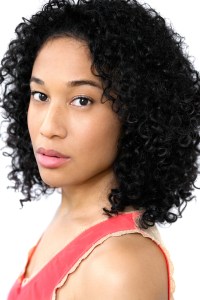
ShaunaBlaize_Headshot
Image – Shauna Blaize

Interested in acting and dreaming of glamorous nights on the red carpet, a big award speech and champagne flowing parties? Getting into the movie industry or television requires careful planning, grit and a huge dose of business sense. In this two part series, Shauna Blaize, an accomplished model, budding actor, producer and writer, shares her opinions about the art of acting as well as the reality which budding actors may encounter and should prepare for.

When I say actor, I don’t mean the A list celebrities that we see on the red carpet. That is a level that many of us (let’s be honest) won’t get to see. In this business, you are lucky enough to just be a ‘working actor.’ To be a working actor it means that your income comes from acting-you don’t need to waitress, work in a fast food restaurant, basically you don’t need to do any side job(s) and/or mind-numbing work that allows you to eat while going on auditions.

I live in New York and to meet a true actor…it doesn’t happen very often. I meet tons of actors (as a matter of fact who isn’t an actor in this city?) but rarely do I meet any that actually earn their living from acting. So here we are, the “non-working” actors consistently looking for acting work while working that dead end job. Now this is the day to day that you don’t read about too often when you Google “how to be an actor.”

Most people think you take a few classes, get a manager, then a talent agent and then boom! you are on your way. Well not exactly. When you graduate from an acting program at a well-known school like Julliard or NYU for example, they have showcases where agents and managers can come to see you perform and you may get a bite off that. Those of us who did programs at conservatories/studios that are not Ivy League (and for those who didn’t get signed on the spot at a showcase), we have to hit the pavement.

I won’t tell you how to go about getting representation because Lord knows I am not in any position to share the secret as I myself am not privy to it! Also, the truth is that even if you were to obtain representation, your job doesn’t end there. An agent/manager’s job is not exactly to get you a job so much as to put you closer to it. YOU still need to book it. Also keep in mind that you are not the only client your representation has. Even if you are with a boutique agency that has a smaller roster of clients, you still need to have the mind of a hustler. You still need to wake up every day with an intention. You cannot sit down and wait for a call. To be an actor is to be an entrepreneur. There is no boss giving you a “to do list” or a desk where you sit down every day, open up Excel, and then find what your responsibilities are.

Acting is a business with a lot of grunt work and many of us don’t realize how much of that type of work is involved. Many of us focus on the creative side but there is absolutely no getting around the need of having a business savvy mind. You hear it all the time but to actually live it; to get up every day and push yourself when there is no one standing there managing you or telling you that you will be fired if your work is not completed, is a different thing.  Any work, pay checks, professional and personal fulfilment will all be generated by you. The truth is, you can’t have the creative mind without the business smarts.

“You can be creative from your head to your big toe but if you do not have the drive or the savvy to sell yourself, you will not get far”

In a business that people think involves a lot of “pretending” or “faking” you actually need a lot of truth.  According to the late Sanford Meisner, “acting is being truthful under imaginary circumstances.” You want to be truthful in your work of course but you also need to be truthful with yourself-brutally honest to be exact. You need to be able to ask yourself if a life of uncertainty (that can stretch for years with no visible end in sight) is something you can deal with.

“You need to ask yourself if you can motivate and light a fire under your feet when you are tired and there is no immediate or obvious consequence should you decide to skip a day-or two or three”

You also need to be truthful in what you are in this industry and that is the most personal and I think the most important thing I can share with you.

APH: Many thanks to Shauna for sharing this great post with us and we look forward to sharing the second part of the “Art of Acting” with our readers in December.

About the Writer: Shauna was recently in the off-Broadway play The Girls of Summer and last month she produced and starred in her self-written short film Winning.

If you enjoyed reading this article, do share and subscribe to our network! Please join the conversation by leaving a comment. If you have an article you would like to share with our readers, please contact us – info@aspiringprofessionalshub.com

#MyCareerStory – A passionate curiosity for information!

DolapoImage
Image – Dolapo Oni

Have you ever wondered what a career as a research analyst looks like? What do research analysts do? What exactly is being researched and analysed? To provide some more insight into developing a career in Research, Amara interviewed Dolapo Oni, Head of Energy Research at Ecobank Capital – a subsidiary of EcoBank.

APH: Can you tell us about your educational and professional background? 

DO: I studied Economics at undergraduate and postgraduate level at the Universities of Uyo and Ibadan, Nigeria.  After my undergraduate degree, I worked as a staff writer for a company that published a magazine called ‘Networth.’ My real work started after my Masters when I joined Agusto & Co. Ltd, a credit ratings and research firm. This is where I really started my affair with research. Although my role as a staff writer had kicked things off in the right direction, I discovered my passion for information gathering, analysis and reporting. I was with Agusto for about four and a half years before joining Ecobank’s Research team. I am currently the Head of our Energy Research desk and have been with the bank for about 4 years.

I know there are different kinds of research analysts – marketing, decision support, business data – please could you shed some light on what a research analyst does? 

#CareerChat – Simple and Effective Tips for Success at the New York Bar Exam.

LegalIn a previous article, Lola discussed the challenges and potential benefits of intercontinental relocation on developing a legal career. In this she reflects on her experience of undertaking the New York Bar exam and shares some tips to enable prospective candidates succeed.

 “In an increasingly globalized legal marketplace, and with increasing numbers of United States practices – particularly New York based – opening in Britain, it makes sense for UK-based lawyers to be dual qualified.” – BPP

Studying for any bar exam can be intimidating for most candidates, especially for foreign trained lawyers who are unfamiliar with the basic legal concepts. A healthy level of anxiety is better than an unhealthy level of confidence. The key is to channel your anxiety towards diligent preparation and these tips for success will go a long way to help you prepare. 

#PhDChat : ‘Athena Swan – Quest for Change or Another Tick Box Exercise?’

pregnant
Image – Jason Corey

‘Opinion’ is our latest addition to The Hub. This is a space where writers can share their personal opinions about topical issues. In today’s article, a current PhD candidate* discusses her experience of becoming pregnant during her lab-based PhD. Should PhD candidates be treated as students (tax exempt stipend, no benefits) or staff (pay tax on salary, employee benefits e.g. maternity pay)?

I’ve been contemplating this post for a while – to write or not to write, to share or not to share. After careful consideration, I believe the story should be shared so that this issue can be debated by and with a wider audience. Perhaps this post can resonate with the collective experiences of others who found themselves in my position.

Women’s rights, equality for women and now promoting more women in science are hot topics today. But is it just another tick box exercise or an honest quest for change? What is the reality on the ground?

In 2005, the Equality Challenge Unit (ECU) established the Athena Swan Charter to – ‘encourage and recognise commitment to advancing the careers of women in science, technology, engineering, maths and medicine (STEMM) employment in higher education and research’. A statement on the ECU website reads: ‘We support universities and colleges to build an inclusive culture that values the benefits of diversity, to remove barriers to progression and success for all staff and students, and to challenge and change unfair practices that disadvantage individuals or groups’.

Since its inception, many universities have signed up to adopt the charter and have put measures in place so women in the profession are better supported such as flexible working hours, Job shares and scheduling events during core hours (10 am – 4pm).

#UniChat – “From the Equator to the North Pole” – Studying Medicine in Ukraine

imagesEvery year, thousands of students leave their countries to progress their education in lands unknown. In recent years, increasing tuition costs in Higher Education Institutions (HEIs) in the UK and US have increased the popularity of seeking education in other countries including non-English speaking countries. In today’s post, Emmanuel caught up with Dr Oge Ezeoke, an intern at a teaching hospital in Nigeria, who completed a medical degree in Ukraine. Oge discusses her experiences and challenges of being an international student in Ukraine and offers some words of advice for anyone considering studying medicine in Ukraine.

APH: Why did you choose to study in Ukraine?

OE: Most people ask me why I went all the way to Ukraine to study medicine. I think the best answer would be, I didn’t. After graduating from high school, I applied to different Nigerian universities without luck and I decided to look outside the country instead of staying at home waiting. I applied to one university in Ukraine and I got accepted.

APH: How were your early experiences and what challenges did you encounter?

OE: I arrived in Ukraine without knowing a single individual. I had no friends or relatives over there. It felt like landing on the moon. At first I was unhappy because I was so far away from home, but I was also afraid because I had never lived on my own. After settling down and completing my registration, I faced my first challenge, the language. My program was taught in English but once I left the classroom, I was on my own. I had to walk around with a translator, usually a foreign student like myself who could speak the language. So let’s say I was independently dependent, and that motivated me to learn the language.

Another challenge was the weather. That was quite a challenge going from the equator to the North Pole.

“Maybe if I had slept in a cold room for a month before going to Ukraine I would have been better prepared for it.”

But my toughest challenge of studying in Ukraine was the racism. At first, I didn’t have a problem with the way people stared at me or my friends, probably because we stared back. But as I began to understand the language, I started to hear the side remarks and the insults. Luckily I was never physically attacked because ladies were told to always walk in pairs and not to stay out late. It was difficult but in a way I appreciated it and after some time it got easier and I learnt how to accommodate it.

APH: Were there any good points?

OE: There were a lot of interesting and new things I enjoyed while I was there. I learnt a new language. I also leant how to cook Indian and East African cuisine. I got to travel and visit new places within the country.

I enjoyed the organization and how orderly things were. I’m not saying things in my country are not organized, it was just nice to have a different feel altogether. A couple of my friends enjoyed the way things were done over there and decided to stay back and further their studies. I thought about it, in fact I almost considered it. But I needed a lot more practical experience and I knew I wouldn’t be satisfied staying back in Ukraine.

My school was good for the theoretical knowledge but not for the practical one. I wanted to believe that was because there were so many foreign students and most of the local patients we interacted with in the hospitals sometimes got “overwhelmed” by our presence in the sense that they weren’t too comfortable with the idea of being examined or touched by a foreigner. I believe this was a general thing in most of the universities in Ukraine. And it affected how much practical skills we got to learn or apply and the effect of that was seen when I got back home for my internship. But I was still grateful for the whole learning process.

APH: What can you say about the occasional negative impression about medical studies in Ukraine?

OE: While I was in Ukraine, I heard a lot of things that were said about people who went to study in Ukraine. There was this general idea that only “spoilt children” were sent Ukraine and all we did was go clubbing and become musicians. Now, that isn’t entirely true. Everyone is free to do what he or she wants to do. If someone decides to go to school and study till they drop, their choice.

Medical students back in Nigeria also felt it was a waste of time studying abroad because the “medicine” was different. This is completely wrong! Practicing back in Nigeria has shown me that medicine is basically the same everywhere. The only difference would be that we tend to pay attention to the diseases or conditions which are most common or have the highest incidence in our own environments.

“…medicine is basically the same everywhere. The only difference would be that we tend to pay attention to the diseases or conditions which are most common or have the highest incidence in our own environments.”

APH: What would you say about other students taking the same route you did?

OE: I know right now most parents wouldn’t want to send their children to Ukraine considering the ongoing tensions and the political crisis in the eastern part of the country. This however did not affect the western part of Ukraine.

APH: Any last words about your experience?

OE; Studying in Ukraine was a wonderful and life changing experience for me. I learnt so many things and I also believe it made me a bit more focused. So if anyone is interested in studying Medicine in Ukraine, I would advise the person to go ahead. It’s not as expensive as other medical schools in Western Europe or Europe as a whole.

If you don’t have a problem with the weather or racism, then it’s ok to study in Ukraine. Plus, if you would like to simply get a degree in Medicine and further your career in a different geographical location then it isn’t a bad idea. The reason is the postgraduate programs in Ukraine, in my opinion presently doesn’t benefit foreigners because of the struggle to acquire practical skills. All in all, it is still a wonderful place to study medicine.

If you enjoyed reading this article, please share and subscribe to our network! To find out more information about studying abroad or choosing a course to study at University, do get in touch with us. If you have an article you would like to share with our readers, please contact us – info@aspiringprofessionalshub.com