

#CareerChat – Finding Your Creative and Innovative Spark


make_innovation_happen
Image source – http://www.wethinq.com

To raise new questions, new possibilities, to regard old problems from a new angle, requires creative imagination and marks real advance in science.

 Albert Einstein

Creativity and innovation are key tools integral in growth of any business which has a long term strategy. In my consultancy roles for small, medium enterprises (SMEs) I quickly learned how cut-throat the business world is and how much creativity and innovation is needed for the businesses to thrive or even survive. The ability to create and innovate whilst integral to business is at the core of science and informs the everyday research and scientific developments we have observed through time.

In the UK, the government has identified innovation as an important factor in growth and sustainability and as a result has created several schemes to encourage creativity and innovation. These schemes are meant to link businesses with each other or with academic institutions to harness ideas and turn them into marketable products. Examples include the Knowledge Transfer Partnerships (KTP), Invention for Innovation (i4i) and from a global perspective, the Global Innovation Fund aimed at providing grants to transform the lives of people living in poverty. For anyone looking for innovative projects, I often recommend the KTP as it is a superb route to innovative funded postgraduate degrees which also gives experience working with an industrial partner.

What I find particularly odd and often worrying however, is that in the sciences we are always expected to create or innovate (in the eyes of the external “real” world) but more often than not, innovation or enterprise is not a core part of the curriculum. Even more mind boggling is the expectation that PhD candidates are expected to create something novel from their research or add something new to the body of existing knowledge. Going with the quote from ol’boy Einstein above, they are expected to be innovative without giving them the tools to be able to enrich or harness that creativity.


#MyUniStory – Developing a Career in Creative Product Design

e7cde70c-4ade-4aa7-b352-4c2de31180aa.jpgWe do not often get to hear about the experiences and challenges of undergraduate students and new graduates. In #GraduateStories, we share the ‘behind the scenes’ stories of recent graduates and hoping their journeys and experiences are beneficial and to motivational to current students. In the first of  our #GraduateStories, Robert Sampays, recent  graduate (class of 2016) from the UWE Bristol, UK shares the motivations and journey to success. Enjoy reading!
Since a young age I have always been fascinated with products and the way they work, it was this inquisitiveness that stemmed my passion for design. I find inspiration in the work I produce knowing I have the chance to help people and make their lives easier. It was the notion of being able to make this a reality that made me study Product Design and is still the reason behind my work ethic today.

I was taught to draw by my aunt during family visits to her house in South Wales; being an artist she had both the patience and the skill to teach me various techniques that would later serve as one of my main attributes as a designer. I furthered my interests at school where I studied art alongside graphic design and resistant materials. Product design at A-Level allowed me to bring all 3 of these disciplines together, I was sold in an instant and made this one of my main subjects to study at college. 

#CareerFocus – Neurosurgery

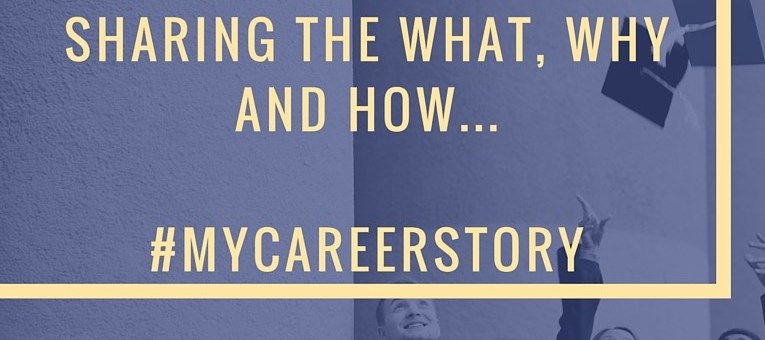
1. NeurosurgeryIn today’s #MyCareerStory, the APH had the opportunity to interview Dr Douglas Okor.  Douglas is a brain surgeon in the UK and Fellow of the Royal College of Surgeons of Edinburgh (the oldest Surgical College in the World).. In this insightful interview Douglas offers his perspective about life as a neurosurgeon and demystifies this pathway for aspiring surgeons. Enjoy!
APH: Can you tell us a little more about yourself?

I am Douglas Emeka Okor, Nigerian born, in Benin City in Nigeria. I am a brain surgeon and a passionate Nigerian health sector advocate and an entrepreneur. I grew up in Nigeria and had my education in Nigeria. I saw there was a significant gap in the healthcare space in Nigeria hence my decision to become a brain surgeon.

APH: Can you tell us about the different stages of your educational career to date?

Douglas: I had my nursery, primary and secondary education in Nigeria. I went to a grammar school in Benin City and the University of Benin where I graduated in 2002. I worked for a couple of years in Nigeria then left for the UK where I spent 8-9 years training to become a brain surgeon. In the last year I started my sub-specialist training in two areas – skull based and vascular neurosurgery.

APH: When did you decide you wanted to become a medical doctor?

#MyCareerStory -Science Policy

Career2In today’s #MyCareerStory, Amara had the opportunity to interview Gabriele Butkute. Gabriele currently works as a Science Policy Assistant at the Royal Society of Biology and the Biochemical Society and in this insightful interview helps to demystify an often overlooked pathway for science graduates. Enjoy!

APH: Can you tell us about your educational background and career progression to date?

GB – I’m originally from Lithuania, which is where I completed my high school diploma cum laude. Soon after my graduation I came to London, had a gap year working in the hospitality business – which is really what people say when they worked as a waitress/waiter! I then embarked on a BSc Biomedical Science degree at London Met, from where I graduated almost two years ago now. Right after my graduation I got a fixed term job as an Events and Administrative Assistant at the Royal Society of Biology where I was tasked with organising three national Life Science Careers Conferences. Looking back, it seems ironic that I got this job when I didn’t have a clear career plan for myself! My next job was a Student Enterprise and Marketing internship at London Met where I spent seven months developing and integrating  enterprise into the science curriculum and encouraging students to develop softer skills and business awareness which are key for a successful career nowadays. Finally, a year ago I started my first science policy job at the Royal Society of Biology and the Biochemical Society, which is where I am now. I believe in internships and placements because I undertook two between completing my degree and starting my current job. My experiences  made me feel more comfortable with the career decision I have made.

You obtained a first class degree in Biomedical Science. Did you ever consider a career as a biomedical scientist in the NHS?

#CareerAdvice – Developing your resilience gap!

In our journey as aspiring professionals, we will face a lot of challenging situations. How do you deal with the pressure that comes with achieving your personal as well as professional goals?  Do you react impulsively or respond resiliently. We stumbled across this article by Uche Ezichi and he has graciously given us permission to share it here. I believe this is an important lesson to us all.

When I left my investment banking career, I was thrilled to join the Goldman Sachs (GS) HR team. Considering their performance, what better place to start my new career of developing leaders. So what went wrong? Nothing really changed with GS. My team remained the same, 100% dedicated to their job and willing to give 120%. The issue was with me.

Isn’t it funny how when we are not happy about our situation, we sometimes complain and expect our organisation or team we joined to change for us?