Does Intercontinental Relocation Mean Restarting Your Legal Career or Training?

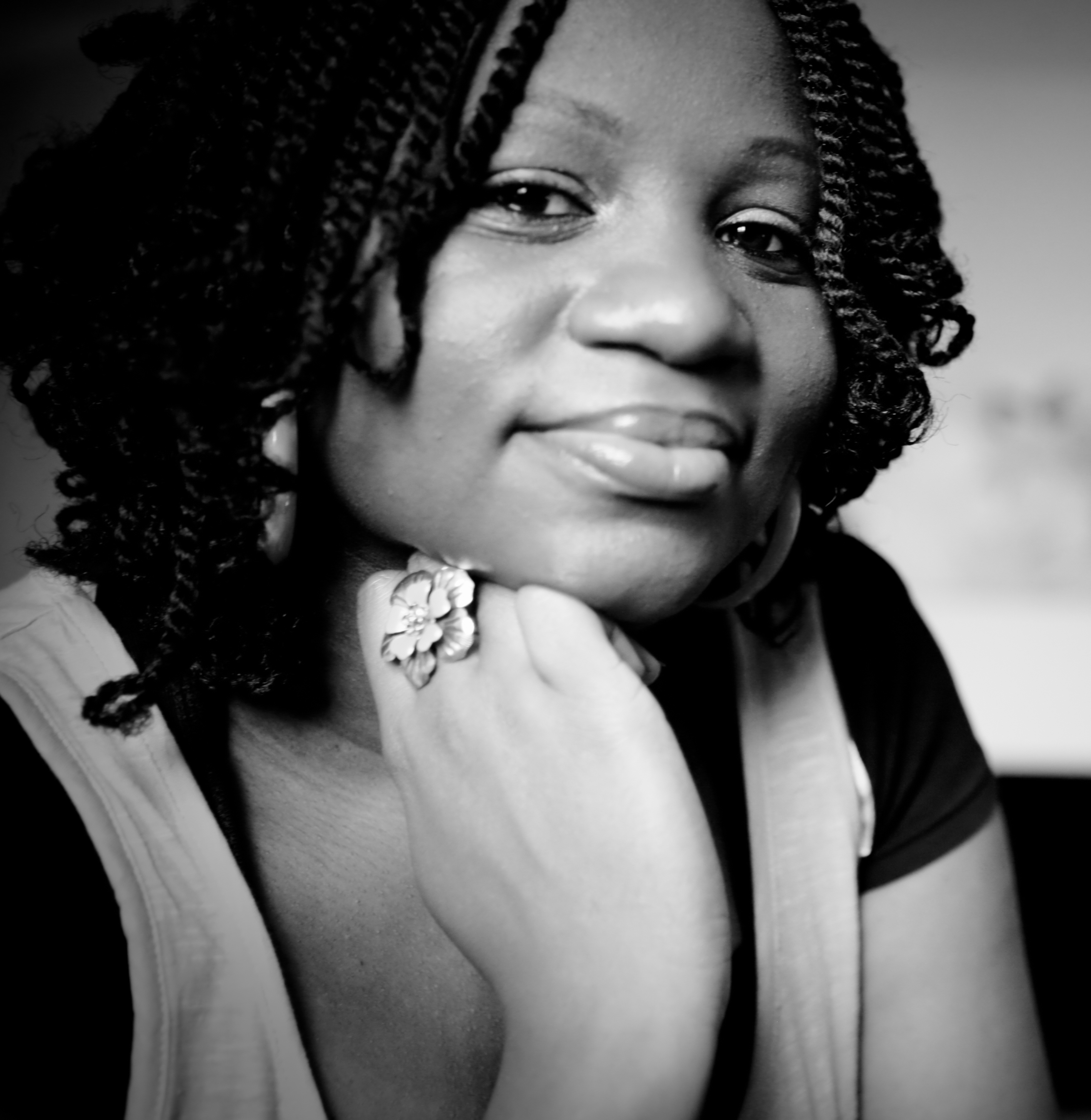
Legal Careers Moving across countries or continents occasionally pose career defining questions and challenges such as the equivalence or transferability of qualifications or certifications. In today’s post, Lola Adekanye shares her experience of a transatlantic legal career and offers practical suggestions on nurturing a legal career across continents.

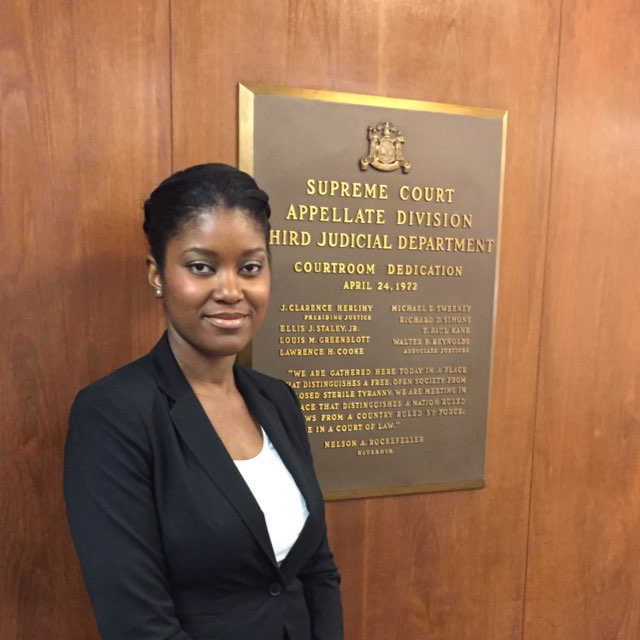
So, for some good reason you have to be uprooted from one jurisdiction to another in the course of your legal career journey, tossing your plans to go to law school and chart a path on the bench or at the bar up in the air. This is the picture of my career journey thus far; I started my career in England, then I relocated to Nigeria and subsequently to the U.S. While, some lawyers change their career paths completely from law to a different field or discipline. This choice has its own challenges as one would still need to qualify and be employable in the new location and when properly weighed, this was not a very attractive option for me.

In the course of obtaining two law degrees in England,  professional law certificates both in Nigeria and  New York and another law degree in the United States, I have come to the conclusion that a transatlantic legal career can be rich and fulfilling with proper planning.

The two major deterrents to transitioning lawyers or law students are qualifying in the new jurisdiction and employability given the lack of familiarity with the legal systems and structures in the new jurisdiction.

Qualifying  – Legal studies and the process of qualifying to practice law in most jurisdictions is notorious for being grueling and very demanding and the entry requirements vary distinctly from jurisdiction to jurisdiction, so it is important to adequately prepare by conducting appropriate and extensive research.

In addition to research, obtaining first hand information about the jurisdiction is fundamental. Having the right information early on will put you on the right path and save time. The qualifying requirements to sit a Bar entry exam varies widely from jurisdiction to jurisdiction and are usually very specific. For instance some jurisdictions require that a law degree must include specific courses. Thus, current law students are in a good position to prepare to meet those requirements while they are in law school while practicing attorneys can manage their schedules to start making plans to meet the requirements. Practicing attorneys may also find that in some jurisdictions, experience counts as an alternative entry or admission requirement to exam.

A clear road map for qualifying puts things in perspective for lawyers who consider changing career paths due to the challenges of transitioning into a law career in a new jurisdiction. It turns out that changing to a new career path would require a considerable amount of studying which may take equal amount of time or perhaps more time than it would take a transitioning lawyer to sit the qualifying Bar exams.

Employability – My legal counsel during my undergraduate studies enlightened me to the comforting fact that a law degree equips you to function in a variety of capacities order than litigation. This would require that you  obtain at least basic substantive knowledge in another field or additional soft skills in addition to core legal skills such as drafting and research. This is even more true as clients directly or indirectly demand an integrated service of their attorneys and law firms.

 The ability to apply business skills or orientation, operational knowledge, language skills and science knowledge to legal representation is an advantage to landing a job or finding a role within other non-conventional legal positions.

On that note, if you are a current student or aspiring lawyer, it might also be worth considering a combined degree as it can be of great benefit. For anyone studying outside the U.S, taking a minor in another course of interest during their undergraduate year while you major in law would be the way to achieve this. While for students studying in the U.S, going for first degree in any course in order to qualify for admission to law school to earn a Juris Doctor which is a law degree equivalent to a Bachelor of Laws (LLB) in other jurisdictions is advisable.

Finally, keep an open mind to a host of alternative practice areas to litigation.

Lola Adekanye obtained her Master of Laws (LL.M.) in Securities and Financial Regulation from Georgetown University. She operates as a Legal Counsel as well as a Business Risk and Compliance Consultant. Lola enjoys writing as well as sharing her experience in developing a legal career as well as business strategy and international education.

If you enjoyed reading this article, please share and subscribe to our network! If you have an article you would like to share with our readers, please get in touch – info@aspiringprofessionalshub.com

#PhDChat – 5 Common CV mistakes and how to overcome them!

4. CV Mistakes

Have you applied for positions you believe you have ALL the requirements and skills for but never seem to get past the first hurdle – an invitation to interview? In this article, Dr Jeff McGarvey, identifies common mistakes made on CVs by applicants for job opportunities in his laboratory. Although this article is directed at science graduates, many of the points Jeff addresses are relevant to non-scientific disciplines.

I recently advertised an opening for a microbiologist position in my laboratory with very specific requirements including: minimum education of a BSc. (MSc. preferred), experience working with pathogenic bacteria (Salmonella, E. coli, Listeria etc.), and molecular biology experience (DNA extraction, cloning, PCR, DNA sequencing, etc.). After 3 weeks, I received about 35 CVs from candidates wanting the job. While the majority of CVs were well written, there were a few that did not serve the candidates well. Here are a few of the most common problems I encountered.

#CareerChat: Getting into Writing & Publishing

Tolulope Photo
Image – Tolulope Popoola

Would you leave a relatively secure job that you weren’t passionate about to develop a career in an area that you absolutely loved even though there were no guarantees of how well (or badly) things would go? Is your dream worth the risk of finding out? We have been inspired by Tolu’s career journey – and absolutely in love with her ‘Flash Fiction’ stories – and couldn’t pass up the opportunity to share her story with our readers. Enjoy!

APH: Can you tell us about your educational and professional background? 

Tolu Popoola: I studied Accounting and Business Economics for my first degree, then took a year out to gain some work experience before going back to university to study for a Masters’ degree in Finance and Investment. When I graduated, I started working in an Accounting role while studying for the CIMA professional exams. I was halfway into the professional exams when I decided that I was in the wrong profession and I needed to make a career change.

You are a qualified accountant who now makes a living as a writer. Please can you share the story of your transition? 

It’s a long story, but I’ll try. Towards the end of 2006, I started getting frustrated with my career. Every morning was a struggle to motivate myself to get up and get to work. I wasn’t fulfilled in my job, even though it paid well and the company was a great place to work. I knew I had creative talents that I wasn’t putting to good use and, the more I thought about it, the more I was filled with horror at the idea of working in accounting for the next forty years of my life.

Then, one afternoon, I met a lady who was an accountant and working on a major finance project for her company. Even though it was a Saturday, and we were visiting, she was glued to her laptop, working on some financial data. When I asked her about it, she started telling me about her job, talking about the project she was working on, describing every single detail. She sounded so excited, passionate and enthusiastic. She said, ‘I love accounting, I love finance and I love working on exciting projects.’ In my mind, I was thinking, ‘Wow! She actually loves her job!’

It was eye-opening, because I hadn’t imagined that there were people who absolutely loved what they did for a living. After that meeting, it became clear to me that I didn’t have that same passion for accounting. It was just a profession I trained for and a job to keep some money coming in – nothing more. And, if I was to leave the job, I wouldn’t miss it one bit. So, I started to ask myself: what job could I do that would make me passionate and excited about getting up in the morning? Around that time, I discovered blogging and started writing short fiction as an experiment. The more I wrote, the more I enjoyed doing it. It became clear, before long, that writing was what I was meant to do with my life, not accounting.

In your opinion, what are the important skills and personal attributes to create a career out of writing?

Dedication, persistence and creativity. You have to read a lot, and you have to write a lot to continually improve. You need to be able to handle criticism and receive feedback with grace. You need to be passionate about it because you may get discouraged sometimes, and you need to believe in yourself even if your work gets rejected a few times.

What advice would you share with anyone interested in getting that first book published?

First, write the best book that you can write. Make sure your story is as interesting as you can make it, make sure the plot is intriguing, and you have believable characters. Read it over and over again until you have absorbed every sentence. Then, you need to give it to a professional editor. Many first-time writers make the mistake of thinking that they don’t need an editor but we all do. Once your manuscript has been professionally edited, you will notice the difference in quality. Now you need to decide if you want to try to get published traditionally, or you want to self-publish. Whichever option you choose depends on your goals, but you are first and foremost responsible for writing a great book.

Can you describe a typical working day? What do you like the most and least about your job? 

At the moment, my job consists of writing as well as running my own publishing, consulting and coaching company, so my typical day is quite varied. If I don’t have a client appointment, I usually do the admin stuff in the morning – so that includes responding to emails, updating the company’s website and blogs, reading industry-related materials, keeping my social media accounts updated, bookkeeping, etc. I focus on publishing and creating content for my coaching classes in the afternoons, and then in the evening I do my own writing stuff.

What was the inspiration behind starting your own business – Accomplish Press? 

Becoming a publisher was always something I wanted to achieve when I decided to leave Accounting. When I was researching, I found a lot of things wrong with the traditional publishing industry, things that were so obviously inefficient. I wanted to do something different. Secondly, from my experience, I knew there were not many mainstream publishers willing to take a chance on new writers like me. I had met a few publishers who found my work interesting, but they always said that it wasn’t commercially viable because it was regarded as ‘ethnic fiction’. But, I believe that I have to tell my stories and there are readers who want to read about people like them in books. So, I did a lot of research and decided to take the chance and become a publisher myself. That way, I can reach my audience directly, as well as creating an avenue for other writers like me to get their work published.

What do you wish someone else had told you before you embarked on your professional journey? 

There’s no such thing as an “overnight success” so you have to be patient and consistent with your work. Most people you see who are successful now, have been quietly working in the background for years. Secondly, make sure you are constantly striving to do better.

Do you have any mentors? 

Yes I do. I have many people I look up to for inspiration. I follow their works and I’m inspired by their achievements. Abidemi Sanusi, Joanna Penn, Chimamanda Adichie, etc. I even have a coach who helps me with achieving specific goals.

How important has having a mentor been for you? 

I think it’s very important to have mentors. You need to surround yourself with people who have achieved what you’re hoping to achieve. My mentors are all successful people in their own right. They inspire me, encourage me, motivate me, give me ideas, and help me to see what’s possible.

What achievements are you most proud of? Have you made any mistakes you are happy to share and what did you learn from them? 

I’m proud of every single book I publish for my clients. I still feel a sense of wonder that people trust me with their manuscript, and I help them to turn it into a proper published book.

One of the mistakes I made was when I first published the series ‘In My Dreams It Was Simpler’ through Lulu, which is an online publishing company. It was a fairly straightforward process and I had a lot to learn, but I was fairly impatient, and I didn’t weigh all my options properly. I underestimated the importance of professional editing, properly formatting and typesetting a manuscript. So, I ended up publishing several editions, which was a costly exercise.

How do you maintain a sense of balance while juggling your different roles – both personal and professional?

It’s a constant balancing act, juggling family life, personal goals, and career goals. Most working women and entrepreneurs have to find what works for them. Sometimes I have to put in more hours at work, and sometimes I pull back on work so that I can relax and spend time with the family. It’s not easy and it’s not a static thing. Life changes and life is in stages, we’re always having to adjust.

Tolulope Popoola is an Author, Publisher and Book Writing Coach. She’s the founder of Accomplish Press, and the author of “Nothing Comes Close”, a novel, and two collections of flash fiction stories, “Looking for Something” and “Fertile Imagination”. Tolulope grew up in Nigeria, moved to the UK for her education and early part of her working career. She is passionate about writing, and literature and helping other writers achieve their dreams. She now lives in Nigeria with her husband and two children.

Blog |  Facebook | Twitter

If you enjoyed reading this article, please share and subscribe to our network! If you have an article you would like to share with our readers, please get in touch – info@aspiringprofessionalshub.com.

#PhDChat – From Industry to Academia, A Personal Lesson in Change Management!

ChangeDefined-1024x874

As the popular saying goes, ‘The only constant thing in life is change.’ It is essential as an aspiring professional to develop the capacity to manage change. Navigating through new ‘territory’ comes with challenges but it can provide opportunities for growth too.  In this article, Hephzi, reflects on the first year of her laboratory based PhD and how she is managing her – not so common – move from an industry background into academia.

After 8 years of working in industry, I decided it was time for a different challenge. When I received news of being awarded a studentship to pursue a PhD program, I was obviously overjoyed. I had spent about 2 years searching and applying for a suitable PhD program and I had finally achieved my goal. Interestingly, the offer came with a BUT… The following clause had been included –“As your route to academic studies is a bit circuitous, it would be good if you could write a covering letter that states why you want to do a PhD after your time in industry.”

“How interesting,” I thought. The clause seemed contradictory to what I had heard at various conferences and workshops I had attended over the last few years while carrying out my research to inform my decision to pursue a PhD program.  I had always thought that industry loved academic recruits and that academics would value industrial experience. Since moving into academia, I have come across academics looking to move into industry, with little success. It now seems to me that this is not the reality of the situation. Industry and academia are not necessarily viewed as two sides of the same coin.

#PhDAdvice – How to ‘survive’ the viva experience!


Are you a researcher, masters, PhD or doctoral candidate with your fated ‘viva/defence’ looming? In this article, Dr Nadia Anwar reflects on her viva experience and shares tips making your viva a positive experience. Good luck!

The term ‘viva’ comes from the Latin phrase viva voce, which literally means ‘by word of mouth’ or ‘with living voice’. It is somewhat surprising that many people, although possess sufficient information about oral examinations and face to face interviews, have no substantial knowledge of the term viva voce and what really goes into preparing for it. The main reason for this is that popular terms used for viva in England are oral examination and post-submission interview or assessment. In countries like India and the US, the word is translated as verbal defence which has pretty much the same connotation as the word viva. The difference is that whereas the former is conducted in a form of seminar or presentation in front of a large group of specialists and non-experts – sometimes including colleagues, friends and family – followed by rigorous Q&A, the latter is done in the privacy of a room and under the critical eye and observation of examiners.