Why you need a mentor!

We recently attended a conference themed around inclusion in Higher Education. As students and staff shared their academic and career success stories, a common theme rang through their talks – they all attributed their ‘big break’ to having a mentor. We realised that mentorship was not just an important but an essential ingredient for career success. In this article, Amara discusses how mentoring can make a difference in your journey as an aspiring professional.

Mentorship can be defined as a personal development relationship where a more experienced and knowledgeable person (mentor) teaches or guides a less knowledgeable or experienced person (mentee). A mentor shares their knowledge, experience and contacts with their mentee; empowering the mentee to achieve their career goals. Mentors lead, motivate, inspire, teach and sometimes coach their mentees. If you read autobiographies of people who have made noteworthy achievements, a mentor’s contribution is usually gratefully acknowledged. Sir Richard Branson, founder of the Virgin Group noted that mentorship could be ‘the missing link between a promising businessperson and a successful one.’ Do you have a mentor? Do you think you need one?

What the view like where you are? – The most important thing my mentors share with me is the benefit of their experience. A mentor has been where you are. This is where I separate the terms ‘coach’ and ‘mentor’. A coach does not necessarily need to have your personal experience but a mentor does. A mentor has been ‘in your shoes.’ A career mentor has been in your role, dealt with that issue you’re struggling with, overcome that problem that is currently brewing or failed at a task that is coming up ahead. A mentorship relationship is important because you are given a unique leveraging opportunity to learn from someone else’s knowledge. You can learn from their success as well as their mistakes. By their position of being above you on the career ladder, they have a different view.

A mentor can have a panoramic view where we are tunnel visioned.

The view does matter – mentors can see what is coming ahead of you but crucially, they can also see your blind spots. The decision to undertake a PhD has turned out to be an important turning point in my life/career because it set me on a path which has led to places I never thought possible. My mentor encouraged me to go for a PhD. He saw potential in a bright, shy, confused final year undergraduate student – something I had not even seen in myself. I had many ‘teachers’ but he was a mentor. So I ask again, what can you see?

Highway Signpost

Working hard is essential but is it enough to get you where you want to go? – A few years ago, I applied (unsuccessfully) for a consultancy. I thought I had sent in an awesome CV, personal statement and cover letter but I (apparently) hadn’t done enough to get my foot in. Within 12 months, I was contacted by the same institution to do the same work with them. How? They had been disappointed with the individual they went with and I had a mentor who had a good relationship with the institution put in a good word. Someone who knew my abilities, skills and expertise connected me with an organisation that could benefit from what I had to offer. In today’s interconnected world, everything (well almost) rises and falls on relationships.

I am a hard worker. I believe in putting in the work and being enthusiastic about achieving my career goals but I have learnt that it is not just cliché that who you know – and who knows you – is as important as what you know’ in getting where I want to be professionally. A mentor can open doors that you cannot get through on your own simply because you have not had the time or opportunity to develop key relationships.

Who is your mentor? – Anyone who has something to teach you and is interested in doing so. You can have a mentor for a season or for a lifetime. It is important you recognise potential mentors so you don’t miss out on personal or professional development opportunities. I talk to a lot of frustrated PhD candidates who are angry because their PhD supervisor is unwilling or unable to mentor them. Ever thought about a postdoc in your Department instead? Or a former PhD student who is now in industry. It can be difficult for academics to mentor PhD candidates for non-academic careers when they have been in academia for all of their professional life. Maybe your line manager isn’t interested, so look for someone else! A mentor does not always need to be in a senior position; they could simply have been in the organisation longer. A mentor might not be the person you get on the most with at work but they should be someone who you aspire to be like in whatever area you need mentoring in. If anything, you can learn from their areas of weakness as ‘how not to do’ something. Mentoring is a relationship with another person. Your mentor is human and will have strengths and weaknesses so bear that in mind as you make your choice.

How do I get mentored?Be clear what you want from your mentor and then start developing productive relationships. I previously discussed the importance of using social media as a networking tool. You cannot ask a stranger to be your mentor. Connect first and then nurture the relationship. Find out if there are mentorship schemes you can subscribe to or in your organisation and join them. Universities are now developing their student mentor schemes to help first years with their transition into Higher Education. Read autobiographies of successful people and keep track of what they do. Want to start or grow your business? Read about what people who have accomplished your dream have to say about how they did. Continue to be a part of The Hub and check out our ‘The Professionals’ section. Don’t be put off by negative responses. Keep at it.

Symbiosis and synergy not parasitism – Before approaching someone to ask if they will mentor you, ask yourself what you are bringing to the table. Mentoring requires a lot of effort from the mentor. They will be investing their time in you, they will be introducing you to their contacts – their reputation being on the line if you mess up! If your only interest is getting all you can from them to climb that career ladder as fast as you can, that is a parasitic relationship – where only the parasite you benefits. So bring something to the table. What can you do for your mentor? Do they have a problem you can help them solve? What are their interests? Can you offer your time or skills to help them accomplish their own goals? A wise man told me recently that every leader, manager and mentor loves someone who removes not adds to their burden.

What about you? Who are you mentoring?

Be humble and willing to learn. A mentoring relationship can just be that extra you need in your journey as an aspiring professional. If you enjoyed this article, look out for Part II and share, comment and connect.

‘The Professionals’ – Mathematics…the poetry of logical ideas!

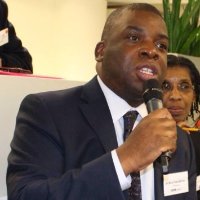
Dr Nira Chamberlain
Dr Nira Chamberlain

‘The Professionals’ is our latest addition to The Hub. Here, we share wisdom and advice from inspirational professionals who have made their mark in their respective disciplines. I (Amara) was privileged to be invited to speak at a STEM Careers Event and I was inspired and challenged by Dr Chamberlain’s enthusiasm for his subject. I wrote the quote below in my notebook and have been applying it to every personal and professional challenge I have come across to date. In today’s article, Dr Nira Chamberlain – listed by the Science Council as one of the UK’s top 100 scientists – discusses his passion for Mathematics and what it takes to excel as a professional mathematician.

“Mathematics is not easy, it isn’t supposed to be easy. It is about being tenacious and working on a problem until you can find a solution, it is about not giving up!”

Nira Chamberlain 

APH: Can you tell us about your educational and professional background?

NC: I am a Professional Mathematical Modeller, Chartered Scientist, Chartered Mathematician and Fellow of the Institute of Mathematics and its Applications. I have a PhD in Mathematics, MSc in Industrial Mathematical Modelling and BSc (Hons) in Mathematics. In addition to this, I am a BBC Expert Voice.

APH: When did you realise you wanted to pursue a career in Mathematics?

NC: When I was 17 years old, I successful solved a Geography field trip problem using mathematical statistics. I had to find the relationship between a river’s depth and its speed. I thought… this is good fun! Four years later, I was informed that I could pursue a career as a Professional Mathematician.

APH: Please could you expatiate on what you mean by “you were informed you could pursue a career as a professional mathematician.”

NC: As I was entering the final year of my Mathematics Degree, I took a Careers book from the Library. I went through this to list all the possible jobs I could do. When I reached the section Professional Mathematician, I closed the book and looked no further.

APH: In your opinion, what are the important skills and personal attributes that are required to succeed as a Mathematician?

NC: In my opinion, to succeed in mathematics you would have to be highly motivated, hard working as well as fiercely competitive but have honour and integrity. You must also be determined to show you are the best in the world but must respect and learn from other highly skilled mathematicians. Finally, you must be absolutely willing to go to heroic lengths to avoid being defeated by a problem. This is how you succeed as a mathematician. The moment you become arrogant or complacent is the time you stop being a mathematician.

APH: You mention being ‘fiercely competitive’ as an important attribute to succeed as a mathematician. Please could you elaborate on this? Sometimes people read ‘competitive’ as ‘combative’ Do you have any wisdom to share on how we can remain competitive but not fall into the ‘win at all costs’ trap?

NC: A mathematician’s competitiveness is driven by the need to solve even more complex problems, in other words, ‘to up my game.’ This is similar to a weightlifter lifting larger weights than before. In order to improve, a mathematician will need other mathematicians to bounce his/her ideas off which may require them to up their game as well. Mathematics is creative not political, you cannot push the frontier of mathematics forward by knocking down your fellow mathematician or stealing their ideas.

APH: Are there any myths about Mathematics & Mathematicians that you come across?

NC:  Some common ones are that the best mathematicians are those who can solve problems in 2 seconds flat, can multiply big numbers in their head, find mathematics easy and never ever make mistakes! This is so far from the truth.

Another myth is that mathematics is boring. It certainly is not! Mathematics is the poetry of logical ideas!

APH:  Can you describe a typical working day? What do you like the most and least about your job?

My day consists of solving the “impossible” and doing the mathematics that scientist and engineers can’t do.  Most days, I am designing a mathematical approach on the whiteboard, then I am working on a computer writing complex mathematical algorithms. What I most like about my job is turning complex real life problems into a mathematical argument and then solving it. On the downside, sometimes due to the nature of my job, I could be away from my family for long periods. However, due to technology advancements this is occurring less and less.

APH: What do you wish someone else had told you before you embarked on your professional journey?

NC: The importance and value of doing a PhD. Seven years into my career I met members  of the Congress of African-American Research Mathematicians. They showed me the importance of adding significant knowledge to the field of mathematics as well as the need of having more Black mathematicians achieving this.

APH: Do you have any mentors? If yes, who are they and how important has having a mentor been to you?

NC: My cousin is a Professor of Economics and is my intellectual inspiration. A Black man who pursued his intellectual passion to the very top of his field   – wow! He gave me advice and encouragement, so he is the nearest thing to being a mentor. I also have an international and domestic network of mathematical friends. We chat and encourage each other. There is a saying, “iron sharpens iron” and this is true. We keep each other mathematically sharp,

APH: What achievements are you most proud of? 

Successfully completing my PhD part time while I was working full time and raising a family at the same time. Being recognized by the Science Council as one of the Top 100 Scientists in the UK. Becoming the first Black Mathematician to make it into the Who’s Who. There are only approximately 30 mathematicians in the Who’s Who and they tend to be the UK’s most top notch mathematicians. To be recognized in this way and to join such an exclusive group, I have to give God the praise.

APH: What advice would you share with parents or guardians about helping their children develop a love for Mathematics? 

Mathematics is really a fantastic adventurous game and should be viewed as such. The British mathematician Sir John Kingman once said,

“Mathematicians are better if they stay a bit childish and play the game as a game. This is the key to teaching mathematics, it’s not to flood people with practical problems, rather it is to say that this is the best game that has ever been invented. It beats Monopoly, it beats chess and it happens that it can enable you to land rockets on the moon. The real mathematical advances have been made by people who just loved it.”

APH: What advice would you share with anyone who is thinking of a pursuing a career in Mathematics?

In my formative years there were not that many Black mathematical role models. However, my Dad instilled confidence and self-esteem in me by telling me that;

“You do not need anybody’s permission to be a great mathematician”.

These words has stuck with me to this very day.  Believing in yourself is one of the keys in doing mathematics.

APH: How do you maintain a sense of balance while juggling your different roles – both personal and professional?

If there is a mathematical problem I need to go to war with then I do the “Nairobi shift”. This means getting up at 4am to do 3 hours of mathematics. I spend the rest of the day working and looking after the family before going to bed at 8pm. At 4am, I am at my mathematical peak and my boys are asleep! : )

So they ‘fall in love in the lab’ and they ‘cry’, so what? – lending a voice to the conversation about women in Science

Picture1In the past week there has been an outcry about the place of women in science following the comments by Nobel Prize winner, Professor Tim Hunt suggesting the need for sexually segregated labs as women in labs are a distraction because they ‘fall in love’ and ‘cry’ when their work is criticised. His comments raised furore, with both men and women – in science and other disciplines.Sadly, this is not the first denigrative assertion to be made about female professionals, particularly within Science, Technology, Engineering and Mathematics. Sadder still, it probably will not be the last.

A friend of ours – a non-scientist – heard about these comments and posted articles on Facebook about the legendary late Marie Curie (1867-1934), the first woman to win a Nobel prize and the only woman to have won it twice. She was famous for her work on radioactivity and in 2009 was  voted the most inspirational woman in science. We now have Marie Curie research fellowships which have provided both men and women excellent opportunities to carry out research that have contributed to the development of the science. Aside from Marie Curie,  there have been many other female scientists who have made outstanding contributions to their fields such as Mary Somerville, Dorothy Hodgkin, Rosalind Franklin, Alice Roberts and Maggie Aderin-Pocock.

Amidst the furore which engulfed the science pages of many newspapers and editorials in the last week, there is a lighter yet important point to consider in this conversation.  Many people do meet their spouses or partners at their places of study or work – this is not unique to the sciences. Does it really matter? We know a lot of ‘research couples’, when you spend so much time in the lab or in a work environment, you can get to know your colleagues on a much more intimate level. As long as you remain professional, ‘falling in love’ does not need be a bad thing.  Thus, the suggestion that it is a distraction is really far from the truth. `Falling in love’ in the laboratory environment is not a distraction but rather should be seen as a blessing in disguise as many scientists would not have a hope in Pluto to find partners and spouses because of the demands of the research or science. Perhaps we need to celebrate science unions widely so that it is accepted! Perhaps!!

As for the comments on crying!!!  The thought of the alternative to crying makes crying possibly a much milder reaction to criticism. Until you learn to deal with it, most of us – male and female alike – do not respond well to criticism. In all disciplines, criticism abounds but we must use it as a tool for growth. There have been scientists, men included, who have resorted to far worse actions following criticisms of their publications, retractions of their publications or failure to get certain grants. For anyone who keeps up with the ‘going ons’ in their field, you will be very conversant with these. Should we now applaud violent reactions or in some cases suicidal tendencies following criticism because crying is for want of a better word, intolerable?

At least they cry, come back and try again to succeed which is the basis of research. Who knows! The Marie Curie’s, Rosalind Franklin’s and Sally Davies’s of this world shed a tear or many in the early days of their scientific journeys to the point where they achieved global status but do we remember them for ‘falling in love in the lab’ or ‘crying’? Of course not, thus, the comments should be given the response it deserves, NOTHING!! Whilst we generally lambast the comments alluded to Prof Hunt let’s silently applaud him for saying what he thinks in the open for us all to tackle a much bigger problem of stereotyping and marginalisation of women in the scientific and technical careers.

Women have immensely contributed to science and in my opinion, whilst every scientist is not a woman, every woman is a scientist after all women perceive, experience, plan, execute, and manage biological change better than any male scientist. (Open for debate!!).

In future posts we will address the real world issues surrounding gender, race and disability in different career disciplines.

Disclaimer – If after reading this you find yourself falling in love with someone in your lab or feeling the rightful need to cry when your work faces criticism, please do not hold us responsible, but come back and share your wonderful stories.

So you want to do a PhD? – Your survival guide…Part 1

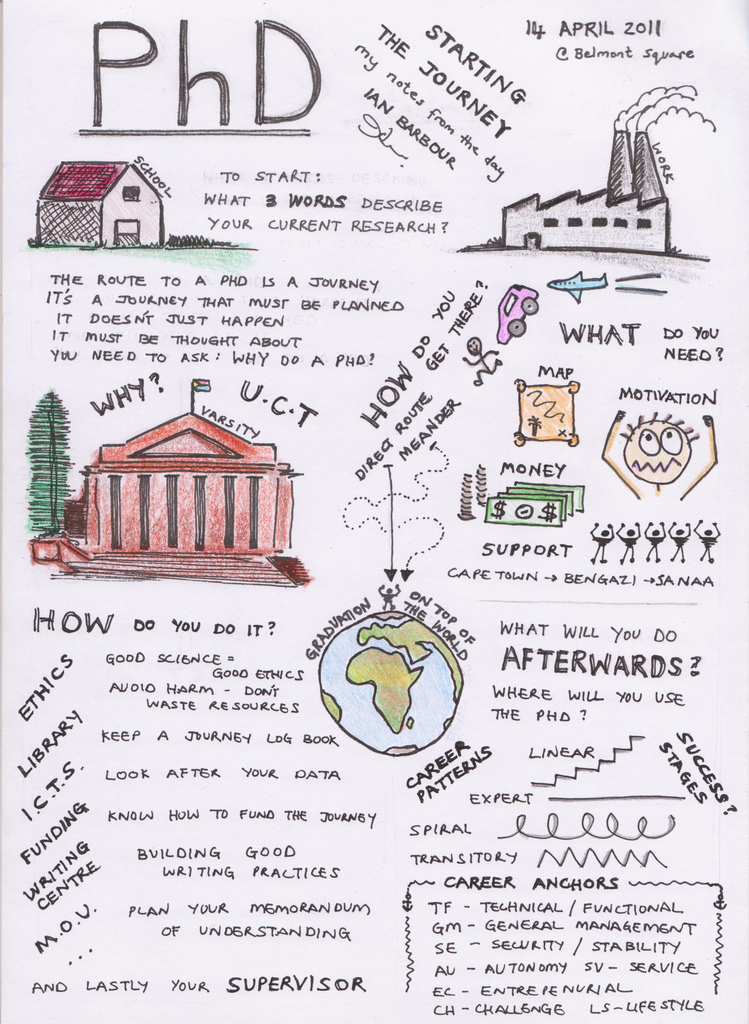
For most PhDs, successfully completing their degree will rank in the top 3 of the greatest challenges they have faced in their lives up to that point. PhDs stretch you on all levels, not just mentally but physically, emotionally and even financially. In the first part of ‘The Survival Guide’, Amara discusses important points for reflection by prospective as well as current PhD candidates.

“So you want to do a PhD?” – Why do you want to do a PhD? Write down your answer, memorise it and make it your mantra. There will be moments when you’ll ask yourself “Why did I do this?” Remember that only crazy ‘special’ people decide to do a PhD. Most of our more ‘intelligent’ friends headed straight into the world of full time employment after completing their degrees but we decided to stay back at University to ‘do’ research. Some of us left reasonably well off jobs for the penury uncertainty of PhDs. Others still, went for the part time PhD (a myth!) route combining it with full time employment. These are my all-time stars!  As a PhD candidate you provoke both awe and pity among the ‘general population.’ Your why is your personal truth so remember that not everyone will respect, understand or support your decision. A PhD is not something you do to fulfil other people’s ambitions, that is almost a recipe for failure – so really ‘Why do you want to do a PhD?’

Brace yourself – We are yet to come across anyone who found their PhD easy. My mantra is ‘A PhD is not just about intelligence but perseverance.’ A PhD is difficult and that’s ok. Embrace the challenge. Truth be told, what is worth achieving that isn’t challenging? You are going down a ‘road less travelled’, making an original contribution to your discipline, solving a problem or creating a product, allowing the world understand something just that much better. Begin with the end in mind. Create a token of what the results of your work mean. It could be a picture from your field study, an incomplete signalling pathway, a diagram of your incomplete theoretical model, the incomplete equation of your predictive model. This is something you are creating and bringing into this world. Something new. It should be difficult. Persevere.

‘No pain, no gain.’

To thyself be true – PhD candidates are unique, there is no one type of student.  You’ve decided (against all wisdom…lol) to study for a PhD. You know your why but deal with the Who? The road ahead is long…so to thyself be true. What are your strengths and weaknesses? Every day you will take both to the job with you.  What are the things that may limit you? No one is perfect but you must utilise your strengths and make allowance for your limitations. If you know you can’t deal with pressure and love the ‘que sera sera’ lifestyle, consider if a PhD is for you. What did you enjoy most about your undergraduate and postgraduate degree? A good qualification is simply not enough. Can you bear to work alone for long periods on end? Are you a committed procrastinator? Are you in a relationship? Is your partner supportive? Do you have young children? Do you plan to have children during your studies? Are you a 9 – 5 sort of person? Do you have a support network? Do you like lab work but hate writing or vice versa? What are your finances like? Will you have to work and study? Can you? What are three things you need to successfully complete that you do not have right now? How can you get them? You cannot change what you do not know. No one starts their PhD knowing it all but embracing an ‘inside-out’ approach can help identify skill and knowledge gaps and seek help.

Photo Credit: Ian Barbour https://www.flickr.com/photos/barbourians/
Photo Credit: Ian Barbour

Is s/he the One?  – No, not your significant other but your supervisor. Is s/he the one for you? This is probably going to be the most important relationship successfully completing your PhD depends on. What is your supervisor’s management style? I appreciate that it is difficult to gauge how the relationship will go but do some homework. What do their former and current students say about them? I (Amara) had an awesome supervisor who was a mentor, coach and all round superstar. My PhD was lab based and so we saw each other almost every day – difficult when you can’t stand each other. We had a great working relationship not because she told me what I wanted to hear but what I needed too. She encouraged and critiqued in the same breath. If it was bad, she said so but when it was good, she praised. Sometimes PhD candidates make the mistake of going for a big name over getting a good mentor. We hope to do a post on managing the supervisor relationship in coming weeks so stay posted. Your PhD supervisor is not supposed to be your friend – but it helps if they are friendly. Of all the PhD candidates I know did not complete, 7 out of 10 times it had to do with a breakdown in the student – supervisor relationship.  I have read, observed and heard of some horror stories. Please don’t let that be you.

Murphy’s law aka ***t happens – You’ve studied the protocol, you’ve harassed your supervisor got the equipment, its D-day and you notice your cell culture is contaminated. Five days prep has just gone down the drain. *Hugs* Or you travel for a conference and have your bag stolen, complete with your laptop containing important data (Dropbox is your friend). Despite your well laid plans, there will be setbacks. It could be your fault (you are allowed to make mistakes you know) or due to circumstances totally out of your control like your supervisor deciding to move on to pastures new in a totally different continent! Your Gantt chart has become a distant memory as you bemuse your naiveté when you thought that activity was going to take you 3 weeks but it has actually taken you three months. Your project proposal looks like a relic from times past. A friend lost antibodies worth thousands of pounds simply because someone turned off the wrong switch and shut down his freezer over the weekend!  Things may not always go to plan but remember you are a project manager and a key transferable skill you are developing is that of problem solving. So dig your heels in and keep going. Acknowledge there is a problem but don’t dwell on it, solve it!

HeadshotAbout our writer – After completing a PhD in Microbiology and Food Science,  Amara is developing her career in academia – providing teaching and learning solutions in UK FE and HE Institutions as well as conducting research in Food Microbiology. Amara believes in the combined power of education, mentoring and productive relationships as essential tools for building successful careers. ‘Ignorance can hurt more than sticks and stones.’

If you enjoyed reading this article, please share and subscribe to our network! Would you like to share an article in The Hub? We would love to hear from you. Please get in touch – info@aspiringprofessionalshub.com


CareerChat – Science careers; Thinking outside the lab coat!

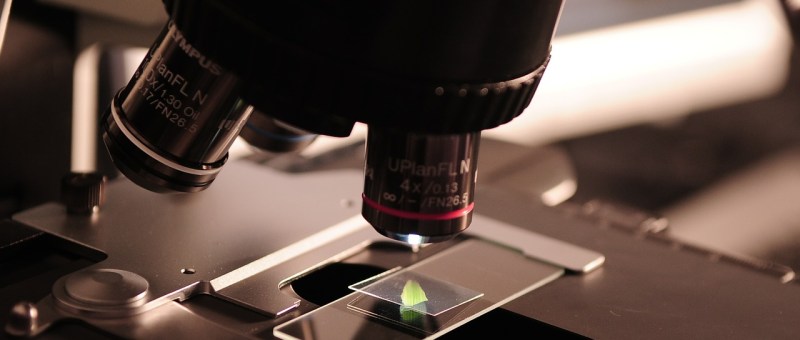
MicroscopeFinal exams…check, dissertation and viva…check…graduation…loading! What’s your next step? For recent graduates and undergraduates, are you aware of the varied career options available to you? In today’s job market, it is important to know what employment ‘doors’ your degree can open for you. It isn’t always what you think though. In today’s article, Gabriele Butkute, discusses non-lab based career options for science graduates.

If you are a final year student, you will be familiar with the question “so, what are you doing after you graduate?” You are getting frustrated just by reading that, aren’t you? Some people have known what they want to do since their first day at University and have never changed their minds. However, most of us aren’t that lucky (?) – we have a vague idea of our future career, but as our studies progress we see the picture in our head change, often causing a fair bit of anxiety because you had it ‘all figured out’ and now you feel lost.

It has been almost a year since I graduated. I might not be totally sure of what I am supposed to be or who I am supposed to become (which are very different things). Currently I am working as a Marketing and Student Enterprise intern within a Science Faculty at a University. Prior to that, I worked as an Events Assistant at a Learned Society. Both jobs have been very interesting and I believe that is the direction I would like to further my career in.

Occasionally, when I tell somebody that I studied Biomedical Science but I don’t fancy working in the lab, they look at me like I am crazy, or worse, they pity me, thinking that I am a failure (I did get a first class degree though!). These preconceptions hurt your confidence and create self-doubt, but also might tempt you to try and get a job in a setting that you don’t like, just to “fit in your degree title”. Not everybody will understand. It’s ok. Just move on and do your thing. Don’t let anyone tell you what you should do – it something feels off, it probably is.

Universities often also (subconsciously) contribute to the prejudice by not talking openly about all career options for science students. Many, or maybe even most, people enter a science degree hoping to work in a research environment, particularly medical and biological sciences. However, what often gets left out is the fact that the skills you have developed at university can be used in more than just one discipline.

Image courtesy of Gabriele Butkute

Not all of us are made for lab work and it doesn’t mean we love science any less. Some people simply want to explore other career options where scientific knowledge and skills are crucial or at least desired, but doesn’t involve directly working in a lab. Even if you do love the hours pouring agar, counting bacterial colonies or running gel electrophoresis, you might want to look a bit broader, just in case. The job market is tough, data collected and published by Higher Education Careers Service Unit (HECSU) makes this much clearer. The average science graduate unemployment in 2012/13 was 7.3%, which is higher than UK average, 6%. Biology graduates faced 9.4% unemployment, and 21.9% of those who did manage to get a job worked in retail, catering or as bar staff.

Thinking more broadly will stop you from limiting yourself and will help identify your true skills and strengths. How about a career in intellectual property law? This niche area of commercial law might be just right for people who want to pursue a science career in a more commercial, legal setting. Think of it as protecting creativity. All new biological inventions, such as therapies, assays or devices need patenting, licensing and commercialising and scientific knowledge comes into play.

For the ‘less commercial’ souls, it might be worth looking into teaching or science communication sector. Teachers themselves call it the best job in the world. It will surprise you how many educational charities there are that could use your enthusiasm alongside the knowledge of science. Science communication is such a broad field, that you can certainly find something that would make you want to get up in the morning and go to work: from outreach and policy to journalism and publishing (and many things in between).

You might be wondering how to get those jobs. From personal experience at an interview for an Events Assistant role at a Learned Society, they didn’t seem to concentrate on the grades I got (although I am sure if they had been bad, there would have been no interview to begin with). It’s the extra bits and pieces that count, now more than ever. Maybe you were a part of a student society, did some volunteering or wrote for a student newspaper. For example, in addition to my current job, I also started a blog for interns of my Faculty where I work. I love blogging. I get a kick out of checking out all the different layouts, colours and making it all look neat. I have also blogged about the Enterprise Educators UK conference I attended and they shared my blog posts on their webpage and social media. It’s great experience. And when I get asked about my writing and social media skills during an interview – here’s one more thing I can say.

The kind of competition that we have out there, just being good at your job and doing a nine-to-five probably won’t be enough. It’s just not the culture we have anymore. You are supposed to be passionate (just don’t use that word in a cover letter, huge cliché). Finding a job that is fulfilling, pays enough, has career prospects and ticks all other imaginary job requirement boxes might take a while. It probably won’t be your first, or second or even third job. But if you figure out what you want and systematically work towards it, it will come eventually (or at least that’s what I am telling myself).

You are a product and you need to sell your skills. One career pathway isn’t better than the other, it’s about finding what suits you and being open minded about changing your own preconceptions about yourself.

Gabriele B HeadshotAbout our writer – Gabriele graduated with a first class degree in Biomedical Science from London Metropolitan University. She previously worked as an Events Assistant for the Society of Biology. She currently works as a Marketing and Student Enterprise intern within the Faculty of Life Sciences, London Metropolitan University. She writes at gabrielebutkute.com.

If you enjoyed reading this article, please share and subscribe to our network! Would you like to share an article in The Hub? We would love to hear from you. Please get in touch – info@aspiringprofessionalshub.com.