#APHEvents – Networking; A Powerful Tool for Professional Success

The Aspiring Professionals Hub (APH) recently convened a workshop on networking with delegates comprising, students, University staff, members of public and diplomats who were in attendance at the Educational Forum which formed part of the activities marking the Inaugural Africa Week programme at the University of the West of England, Bristol.

We chose the area of networking as we realise how important it has been in shaping our career journey and is one of our mantras in the Hub.Our goal is simple – to demystify networking and to make it “real” for our audience especially those in the early stages of their career who might not have had the chance to network and for those who have, how to do so effectively.

The key to effective networking is to know what it is and what it isn’t– which we defined previously as ‘the cultivation of productive relationships for employment or business’ We took this a step further by defining it as ‘the process of knitting together ideas, people and situations to create opportunity.’ 

Networking is about building relationships. We discussed the importance of networking and offered some tips to get our participants started.

Preparation – you should always be prepared to network and prior to attending an event it is important to ask yourself some questions such as;

o   Who will be at the event and who/what organisation(s) do they represent?

o   Is it a formal or an informal event and if so, how should you cater for your appearance – would you need to wear a suit? Would dressing informally affect your ability to engage with any high profile delegates?

o   What would you consider as personal success for you at the end of the event?

We also stressed the importance of having business cards. These are very cheap to purchase these days and having your role i.e. what you do and what you can offer, your contact details including a phone number and email address which you can be reached on is what you need to begin your networking journey.


Finally, we highlighted the importance of follow up. This can be arduous and often easier not to do but when done correctly it is generally seen as a polite gesture and more often than not, people do respond when you follow up after discussing and exchanging contact details with them at events.

So next time, how about a “Hello……, it was nice to meet you at…..”

We had a really interactive audience and enjoyed the activities where our delegates got the chance to plan their next networking activity. Hopefully we have met our mission of ‘engaging and equipping’ a few more professionals who will utilise the knowledge they have learnt for their development.

You can see some pictures from the event here

This slideshow requires JavaScript.

Photo credit – Olivia Dixon

To find our more or read our previous articles on networking click here.

If you would like the Aspiring Professionals Hub (APH) to run a similar workshop for your organisation, please contact us – info@aspiringprofessionalshub.com.

Finally don’t forget to join the conversation by leaving a comment, also feel free to share and subscribe to our network

#PhDChat – 7 steps to starting your PhD on the right track.

3. PhD 7 stepsFor some time now we haven’t shared much on the doctoral front and as the season for new starters on the doctoral journey is nigh, hence is the need for a new post! Often I am left wondering whether these type of posts are supportive or detrimental to PhD candidates due to the complex and non-linear nature of the experiences. As one man’s meat is another’s poison so is the nature of the doctoral beast i.e. no such thing as a generic PhD.

I won’t belittle you with the suggestion there is a right or wrong way to do the PhD (who am I to know?) but I’m positive some things are particularly key in helping navigate the journey from the initial thinking phase, development of the proposal, getting the application through and starting on the road to “permanent head damage” as some people refer to it.

The seven steps I have chosen to discuss here are in no particular order and the first is to “know why you want to do the PhD and what your career options and end points are before you begin”. This is very important as far too often the idea is that once you complete your PhD, jobs will be lined up for you everywhere. That in itself is a fallacy as the job market can be just as brutal to PhD graduates as it is to graduates from first degrees. Believe me, one thing you do not want after your PhD and spending countless ££££ and $$$$ is #JOBLESS…..there is nothing as demoralising as knowing they you are a broke ass jobless DR.

The second step is that you’ll need to “get career and mentor advice early on”. This is very important! I have come across many PhD graduates who have spent between 5 and 10 years, sometimes even more on contract/temporary, rolling post-doctoral research careers which for some ends up in a blind alley career. In some of those cases, these over qualified individuals look for opportunities to change career paths, taking much lower salaries to break away from the unending slave-like performance that a lengthy post-doc could easily turn into.

Now it might be that you already know your career plan and you eventually would like to be an academic, working as a lecturer at a University beyond your PhD. If that is the case, my advise would be to seek opportunities to embark on a postgraduate teaching qualification. I was fortunate to have had a mentor who changed the course of my career taking me away from my obsession with returning to medicine and telling me that she saw a career as a lecturer or educator in me. Alongside this, came two senior academics who had convinced me on the importance of starting the teaching qualification during the PhD. I won’t deny how arduous the task was; doing a PhD, keeping a part-time job and doing a teaching qualification alongside it. Painful as it might have been, it was one of the best decisions I took as it paid dividend during my PhD and instrumental in me getting my first full-time lecturing role after the PhD.

So, having an idea where your career should or could go is important before and when you start your PhD. One thing that can help you with the support to build the network and find mentors to help your PhD would be joining a professional society. The importance of this cannot be overstated. For whatever field you choose to embark on your PhD studies, even if your PhD is on trying to understand the alignment of stars, or why pandas in captivity refuse to mate or best, the phenomena of witchcraft, there is a professional society that you can benefit from immensely.

#UniAdvice – Choosing the RIGHT Masters Degree for You

The demand for a Masters degree is on the rise and with the efforts of many Universities across the globe to ‘internationalise the curriculum’, there is now even more interest and perhaps, reason to embark on a Masters degree. I remember undertaking my masters degree over a decade ago and I can comfortably say it was one of the best career decisions I (Emmanuel) have made as it determined the career path which I am on today.

The Masters degree, for those who are not very sure, is a higher level qualification which you can attain after studying for a Bachelor’s degree (traditional route) or other technical qualification (for those on polytechnic or college courses + some experience). Increasingly, Universities are considering individuals with extensive experience in a particular sector to study for Masters degrees on a part-time face to face or online/ distance learning basis; offering the opportunity to use qualifications, skills and experience from other ventures to showcase themselves as certificated “Masters” of that field.

So now you have a better idea what the Masters degree is about, how do you know what Masters course is for you?

#UniAdvice – Developing Self Awareness for professional success.

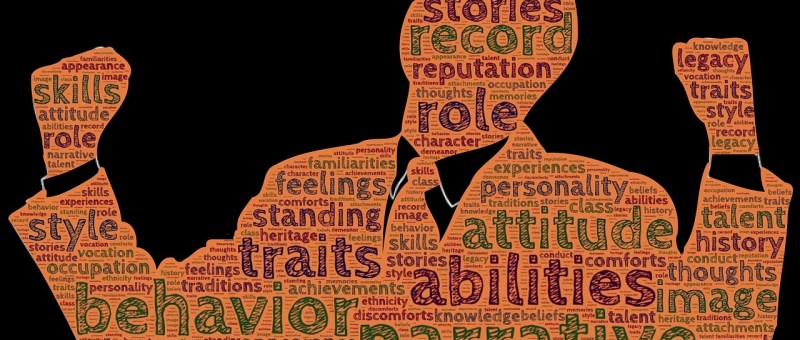
identity
Image – Geralt

‘What are your two greatest strengths? How do you think your greatest weakness will impact on your performance in this role?

I  was at a job interview. On the outside, I worked to project the confident, cool and collected interviewee. On the inside, I was on my knees begging ‘Please have mercy on this graduate in the wilderness of graduate employment for those of us without experience!’ I answered the technical questions with flair (at least I thought so). I talked about my dissertation, latest news in the sector…I could already see my staff ID card in the horizon. Then the question above was posed and I just went blank.

Thing is, up to that point, I had thought that interviews were only to test if an individual had the subject knowledge to do the job. ‘We are looking for an accountant, you are an accountant, you’re hired!’ However, prospective employers are also searching for an individual who is a good fit for their organisation. S/he has the knowledge and experience but…Is s/he a team player? Can s/he persevere through rejection? Is s/he inspirational? How does s/he manage conflict? Is s/he empathetic?

#WideningParticipation : BME & STEM Engagement – Can we do more?

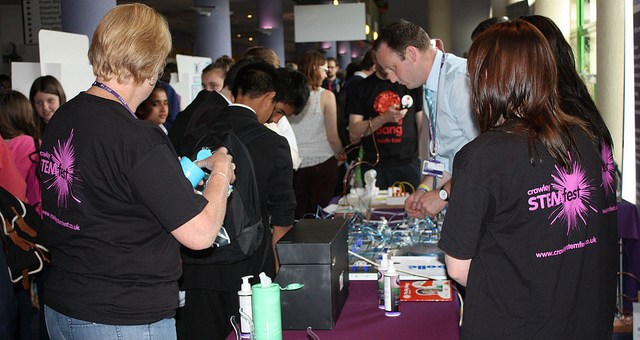
Big Bang Fair
Image – Central Sussex College

Recently, there has been a lot of discussion focused on how to deliver diversity within Science, Technology, Engineering and Maths (STEM). However it is still the case that a lot of work remains in addressing the underrepresentation of black and minority ethnic (BME) individuals, disabled people, women and those from socially disadvantaged groups in STEM.  In this article, Hephzi and Amara discuss how decision makers within STEM can engage with BME communities to ignite a passion for STEM in young people and create an awareness of career opportunities within these sectors.

Up until 2011, the concepts of ‘science communication’ and ‘public engagement’ were alien to me. I had never been to a science fair, a science show or even visited a science museum! I had never sat in an audience where someone or a group of people discussed the range of opportunities and possibilities which could arise from pursuing a career within STEM.

I belong to two categories classed as underrepresented audiences in STEM; I am black and female. My recent discovery of the variety of ways in which scientists engage with the public is despite the fact that I have always been interested in science. I studied all three science subjects – Physics, Chemistry, and Biology – as well as Maths for my A’ Levels and have ‘stayed in science’ till date – working towards a PhD in Cell Biology. So, how does one with such an interest in science have such a myopic view on the diversity of career pathways within it?