So they ‘fall in love in the lab’ and they ‘cry’, so what? – lending a voice to the conversation about women in Science

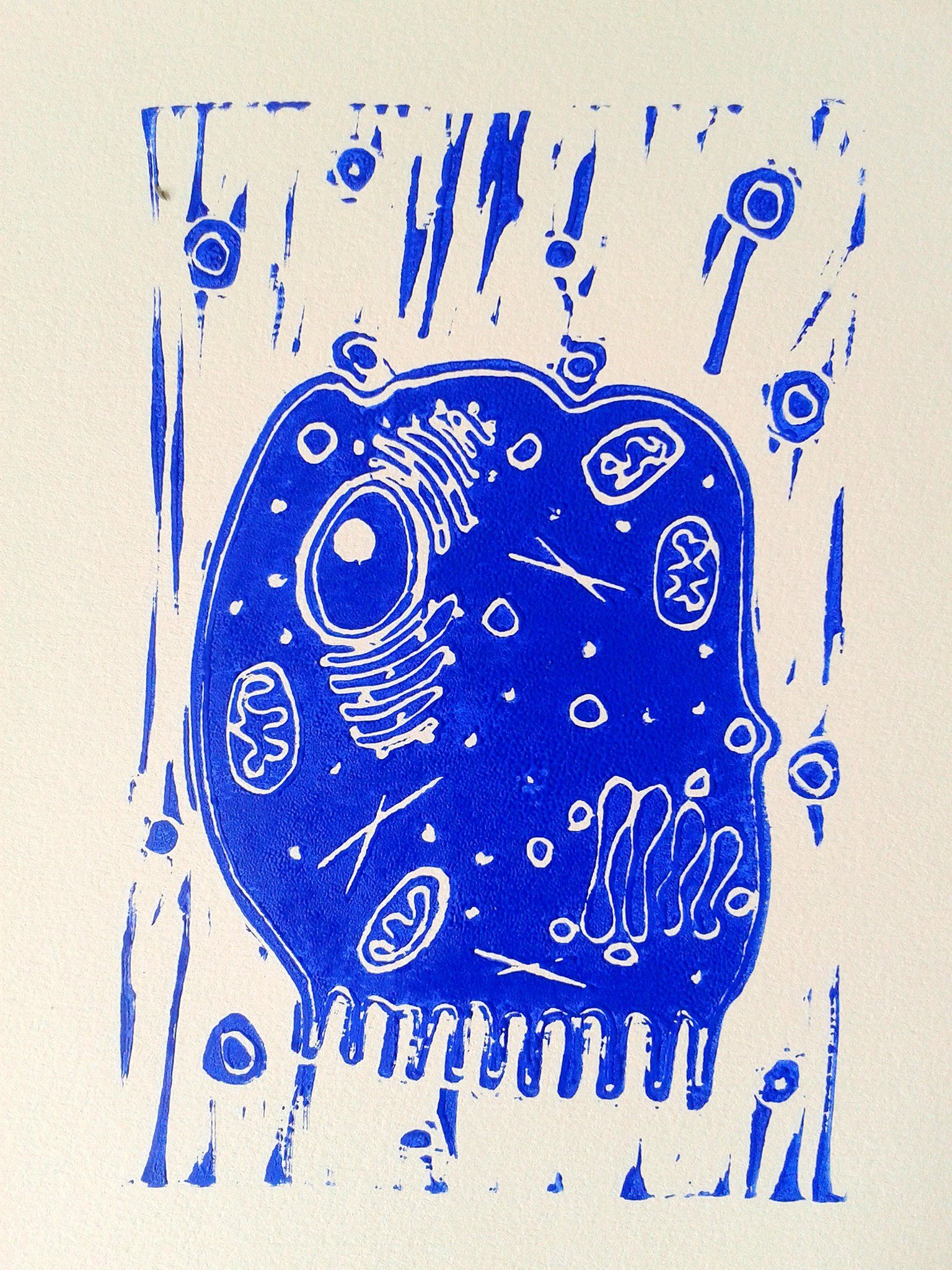
Picture1In the past week there has been an outcry about the place of women in science following the comments by Nobel Prize winner, Professor Tim Hunt suggesting the need for sexually segregated labs as women in labs are a distraction because they ‘fall in love’ and ‘cry’ when their work is criticised. His comments raised furore, with both men and women – in science and other disciplines.Sadly, this is not the first denigrative assertion to be made about female professionals, particularly within Science, Technology, Engineering and Mathematics. Sadder still, it probably will not be the last.

A friend of ours – a non-scientist – heard about these comments and posted articles on Facebook about the legendary late Marie Curie (1867-1934), the first woman to win a Nobel prize and the only woman to have won it twice. She was famous for her work on radioactivity and in 2009 was  voted the most inspirational woman in science. We now have Marie Curie research fellowships which have provided both men and women excellent opportunities to carry out research that have contributed to the development of the science. Aside from Marie Curie,  there have been many other female scientists who have made outstanding contributions to their fields such as Mary Somerville, Dorothy Hodgkin, Rosalind Franklin, Alice Roberts and Maggie Aderin-Pocock.

Amidst the furore which engulfed the science pages of many newspapers and editorials in the last week, there is a lighter yet important point to consider in this conversation.  Many people do meet their spouses or partners at their places of study or work – this is not unique to the sciences. Does it really matter? We know a lot of ‘research couples’, when you spend so much time in the lab or in a work environment, you can get to know your colleagues on a much more intimate level. As long as you remain professional, ‘falling in love’ does not need be a bad thing.  Thus, the suggestion that it is a distraction is really far from the truth. `Falling in love’ in the laboratory environment is not a distraction but rather should be seen as a blessing in disguise as many scientists would not have a hope in Pluto to find partners and spouses because of the demands of the research or science. Perhaps we need to celebrate science unions widely so that it is accepted! Perhaps!!

As for the comments on crying!!!  The thought of the alternative to crying makes crying possibly a much milder reaction to criticism. Until you learn to deal with it, most of us – male and female alike – do not respond well to criticism. In all disciplines, criticism abounds but we must use it as a tool for growth. There have been scientists, men included, who have resorted to far worse actions following criticisms of their publications, retractions of their publications or failure to get certain grants. For anyone who keeps up with the ‘going ons’ in their field, you will be very conversant with these. Should we now applaud violent reactions or in some cases suicidal tendencies following criticism because crying is for want of a better word, intolerable?

At least they cry, come back and try again to succeed which is the basis of research. Who knows! The Marie Curie’s, Rosalind Franklin’s and Sally Davies’s of this world shed a tear or many in the early days of their scientific journeys to the point where they achieved global status but do we remember them for ‘falling in love in the lab’ or ‘crying’? Of course not, thus, the comments should be given the response it deserves, NOTHING!! Whilst we generally lambast the comments alluded to Prof Hunt let’s silently applaud him for saying what he thinks in the open for us all to tackle a much bigger problem of stereotyping and marginalisation of women in the scientific and technical careers.

Women have immensely contributed to science and in my opinion, whilst every scientist is not a woman, every woman is a scientist after all women perceive, experience, plan, execute, and manage biological change better than any male scientist. (Open for debate!!).

In future posts we will address the real world issues surrounding gender, race and disability in different career disciplines.

Disclaimer – If after reading this you find yourself falling in love with someone in your lab or feeling the rightful need to cry when your work faces criticism, please do not hold us responsible, but come back and share your wonderful stories.
Making the most of your PhD – Musings of a nearly completed PhD candidate

Picture3In today’s post, Mr A, a third year PhD candidate and in the process of submitting his PhD shares some thoughts on how to manage and make the most of the PhD process.

In the final stages of the PhD, I am faced with the big elephant in the room –writing up the thesis. I feel like my brain is fried beyond recognition and  anything to keep me away from the thesis for a minute appears to be a blessing in disguise. Despite the challenges, this stage of the PhD has been quite an interesting experience with both high and low moments. Overall, I have enjoyed doing a PhD.  Looking back at my journey, there have been several key aspects that have played an important role in my progress. I hope these will be useful to other PhD candidates.

Getting the PhD Supervisor(s)-Student relationship balance right

Some people regard this as the most important and akin to a marriage of convenience.  I would definitely not disagree with this perspective and it is the major juggling act you would have to learn to manage. It is imperative that from the start of your PhD, there is an established order of how your PhD will be managed by both you and your supervisor. Yes YOU! The management of your PhD is just as much your responsibility as you think it is your supervisors’. Knowing what is expected of you at each stage of the process and delivering (at least to some extent) of what is expected is one sure way of keeping the relationship smooth. It is also important you know what you should expect from your supervisors from the early point. Simple things like their areas of strength e.g. technical, pastoral, social etc. and other things like how regularly you should meet should be established early on and maintained. For me, weekly meetings in the first year of my PhD kept me on track and on my toes all the time, in the second year it was a fortnightly exchange and in the final year it has been a case of meeting as and when we deemed necessary which worked for both of us without compromising the quality of the work being undertaken and the timelines to be met.

 Continuous development through University and external workshops

At my University and generally in most UK universities, the graduate schools organise workshops to develop the skills of the research students to help them through the PhD and also preparing them for life beyond the PhD. For any PhD candidates not taking advantage of such graduate school workshops, you are really missing out!! Examples of the type of activities at these workshops include – learning to use statistical tools (SPSS), preparing for transfer and viva voce, academic writing and structuring your thesis, applying for grants and learning to publish. External bodies also organise workshops that are beneficial to the PhD students. For example, in the UK, a group called the Voice of Young Scientists (VOYS), part of the Sense about Science network regularly organise events tailored to develop science PhD students. One of the sought after VOYS workshop helps develops researchers on how to the media and using media tools to communicate the science. Pretty awesome isn’t it?

 Keep reading – and never stop writing

As a PhD student in the sciences, my PhD has been predominantly laboratory based and at times through the PhD whilst I was reading, I wasn’t writing. Now at the stages of the final write up, I have to review old literature and going back to things which I would not have had to if I had kept the writing flowing….tut tut tut!!! Regrets!  The things I didn’t know when I started eh!! I could try blaming the fact that my research is laboratory based but knowing what I do now….it’s no excuse!! As I approach the end of the PhD I have realised how important it is to maintain a writing flow throughout the PhD.

Disseminate your work

The isolation encountered by many PhD students can occasionally create some weird alien feeling of pseudo existence in some odd planet somewhere thus, the chance to talk about your work with your peers or anybody who would care to listen is important.  It can occasionally offer you the chance to get out of the laboratory, office, University and if you are lucky, the country. My PhD journey has been enriched greatly by the opportunities I had to attend several national and international conferences and more than anything else it brings a sense of belonging and pride that you can actually be recognised for the many hours and candles burnt during the night working in your little silo. It also creates an opportunity for feedback from established researchers in your field of study which would only help to improve your research.

Join a professional society

For anyone thinking of embarking on a career in research or academia it is imperative you find a professional society in your area of interest or field to be a part of. Some societies are free for student members whilst others charge a minimal fee for the student members including PhD and postdoctoral members. Without question, this should be high up on your list before or you start your PhD and where possible, get involved. If you can, volunteer for the society as this is one sure way to get yourself noticed. I have been a member of several professional societies and undoubtedly my involvement with the professional societies has been a major highlight and key part of my PhD journey.

Keep a social life

Your supervisor will always want to ensure you are continuously working. S/he might probably want you to spend 30 hrs everyday (if it were possible) eating, thinking and dreaming about your research. Word of advice, ensure you find time for a social life. Whether it is going out for drinks, travelling or whatever “your thing” is, letting your hair down (even if you are bald) occasionally is necessary to sustain you through the PhD and ensuring you have a positive support network for an occasional ‘usual PhD rant’ is also necessary. I still have many people to thank for my occasional outbursts during the PhD especially Dr M. Av-B who’s response was usually “let’s go get a coffee”

No PhD experience is the same anywhere and undoubtedly, there are other helpful aspects that could be beneficial to you as a PhD student. The summary of all of this is simple; be professional, work hard and where you can, CREATE TIME to enjoy yourself because you will need it.

We would love to hear your thoughts on this topic. What advice would you like to share with other PhDs to enable them successfully complete? Please leave a comment below. If you would like to write a guest article or like us to cover a particular topic, please contact us on aspiringprofessionalshub@gmail.com or@AspProfHub

So you want to do a PhD? – Your survival guide…Part 1

For most PhDs, successfully completing their degree will rank in the top 3 of the greatest challenges they have faced in their lives up to that point. PhDs stretch you on all levels, not just mentally but physically, emotionally and even financially. In the first part of ‘The Survival Guide’, Amara discusses important points for reflection by prospective as well as current PhD candidates.

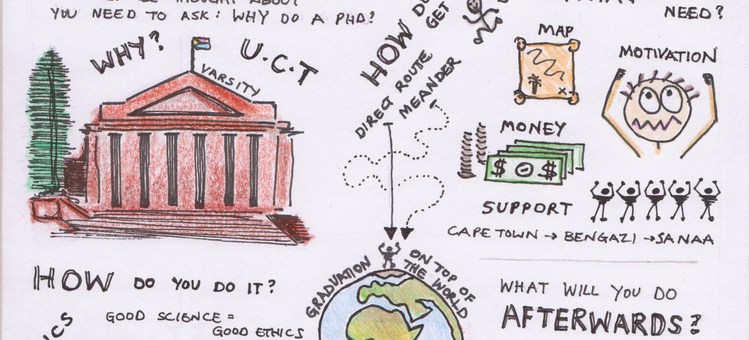
“So you want to do a PhD?” – Why do you want to do a PhD? Write down your answer, memorise it and make it your mantra. There will be moments when you’ll ask yourself “Why did I do this?” Remember that only crazy ‘special’ people decide to do a PhD. Most of our more ‘intelligent’ friends headed straight into the world of full time employment after completing their degrees but we decided to stay back at University to ‘do’ research. Some of us left reasonably well off jobs for the penury uncertainty of PhDs. Others still, went for the part time PhD (a myth!) route combining it with full time employment. These are my all-time stars!  As a PhD candidate you provoke both awe and pity among the ‘general population.’ Your why is your personal truth so remember that not everyone will respect, understand or support your decision. A PhD is not something you do to fulfil other people’s ambitions, that is almost a recipe for failure – so really ‘Why do you want to do a PhD?’

Brace yourself – We are yet to come across anyone who found their PhD easy. My mantra is ‘A PhD is not just about intelligence but perseverance.’ A PhD is difficult and that’s ok. Embrace the challenge. Truth be told, what is worth achieving that isn’t challenging? You are going down a ‘road less travelled’, making an original contribution to your discipline, solving a problem or creating a product, allowing the world understand something just that much better. Begin with the end in mind. Create a token of what the results of your work mean. It could be a picture from your field study, an incomplete signalling pathway, a diagram of your incomplete theoretical model, the incomplete equation of your predictive model. This is something you are creating and bringing into this world. Something new. It should be difficult. Persevere.

‘No pain, no gain.’

To thyself be true – PhD candidates are unique, there is no one type of student.  You’ve decided (against all wisdom…lol) to study for a PhD. You know your why but deal with the Who? The road ahead is long…so to thyself be true. What are your strengths and weaknesses? Every day you will take both to the job with you.  What are the things that may limit you? No one is perfect but you must utilise your strengths and make allowance for your limitations. If you know you can’t deal with pressure and love the ‘que sera sera’ lifestyle, consider if a PhD is for you. What did you enjoy most about your undergraduate and postgraduate degree? A good qualification is simply not enough. Can you bear to work alone for long periods on end? Are you a committed procrastinator? Are you in a relationship? Is your partner supportive? Do you have young children? Do you plan to have children during your studies? Are you a 9 – 5 sort of person? Do you have a support network? Do you like lab work but hate writing or vice versa? What are your finances like? Will you have to work and study? Can you? What are three things you need to successfully complete that you do not have right now? How can you get them? You cannot change what you do not know. No one starts their PhD knowing it all but embracing an ‘inside-out’ approach can help identify skill and knowledge gaps and seek help.

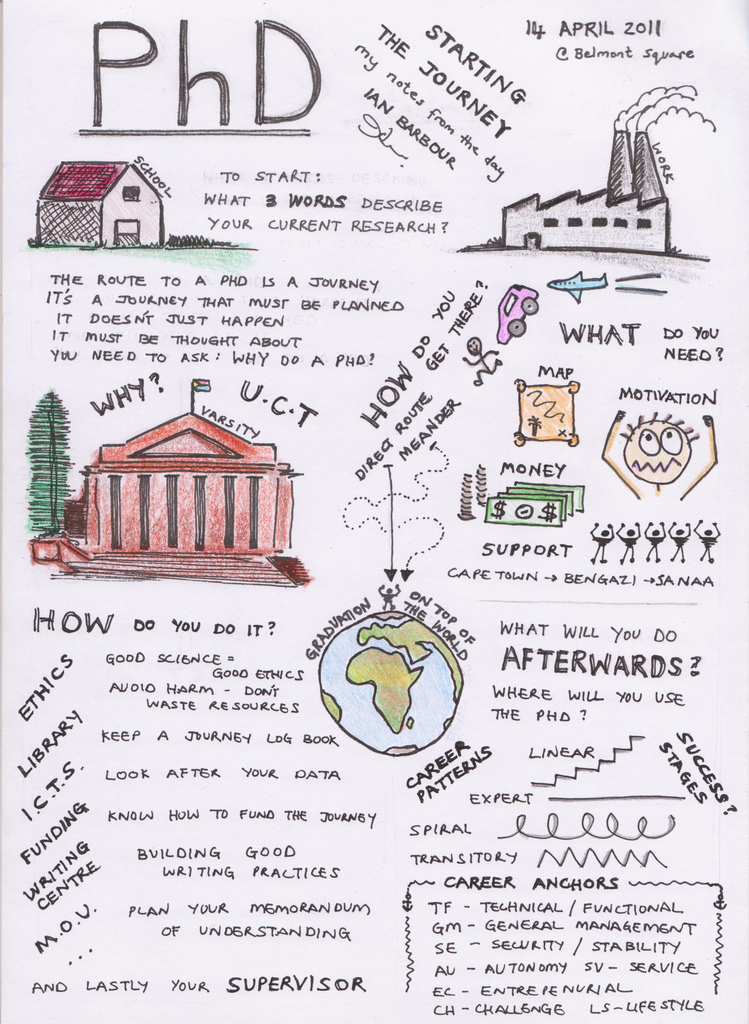
Photo Credit: Ian Barbour https://www.flickr.com/photos/barbourians/
Photo Credit: Ian Barbour

Is s/he the One?  – No, not your significant other but your supervisor. Is s/he the one for you? This is probably going to be the most important relationship successfully completing your PhD depends on. What is your supervisor’s management style? I appreciate that it is difficult to gauge how the relationship will go but do some homework. What do their former and current students say about them? I (Amara) had an awesome supervisor who was a mentor, coach and all round superstar. My PhD was lab based and so we saw each other almost every day – difficult when you can’t stand each other. We had a great working relationship not because she told me what I wanted to hear but what I needed too. She encouraged and critiqued in the same breath. If it was bad, she said so but when it was good, she praised. Sometimes PhD candidates make the mistake of going for a big name over getting a good mentor. We hope to do a post on managing the supervisor relationship in coming weeks so stay posted. Your PhD supervisor is not supposed to be your friend – but it helps if they are friendly. Of all the PhD candidates I know did not complete, 7 out of 10 times it had to do with a breakdown in the student – supervisor relationship.  I have read, observed and heard of some horror stories. Please don’t let that be you.

Murphy’s law aka ***t happens – You’ve studied the protocol, you’ve harassed your supervisor got the equipment, its D-day and you notice your cell culture is contaminated. Five days prep has just gone down the drain. *Hugs* Or you travel for a conference and have your bag stolen, complete with your laptop containing important data (Dropbox is your friend). Despite your well laid plans, there will be setbacks. It could be your fault (you are allowed to make mistakes you know) or due to circumstances totally out of your control like your supervisor deciding to move on to pastures new in a totally different continent! Your Gantt chart has become a distant memory as you bemuse your naiveté when you thought that activity was going to take you 3 weeks but it has actually taken you three months. Your project proposal looks like a relic from times past. A friend lost antibodies worth thousands of pounds simply because someone turned off the wrong switch and shut down his freezer over the weekend!  Things may not always go to plan but remember you are a project manager and a key transferable skill you are developing is that of problem solving. So dig your heels in and keep going. Acknowledge there is a problem but don’t dwell on it, solve it!

HeadshotAbout our writer – After completing a PhD in Microbiology and Food Science,  Amara is developing her career in academia – providing teaching and learning solutions in UK FE and HE Institutions as well as conducting research in Food Microbiology. Amara believes in the combined power of education, mentoring and productive relationships as essential tools for building successful careers. ‘Ignorance can hurt more than sticks and stones.’

If you enjoyed reading this article, please share and subscribe to our network! Would you like to share an article in The Hub? We would love to hear from you. Please get in touch – info@aspiringprofessionalshub.com


CareerChat – Science careers; Thinking outside the lab coat!

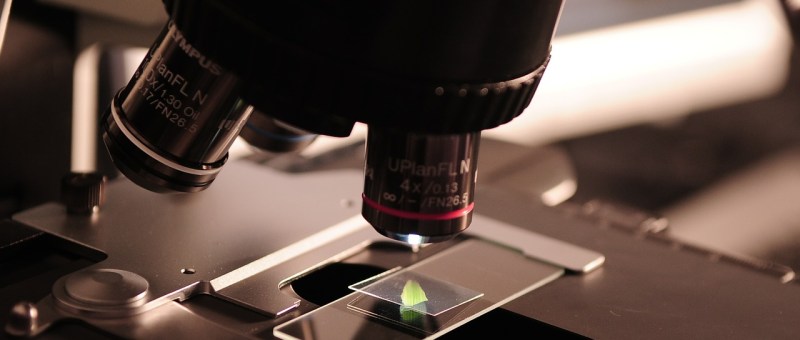
MicroscopeFinal exams…check, dissertation and viva…check…graduation…loading! What’s your next step? For recent graduates and undergraduates, are you aware of the varied career options available to you? In today’s job market, it is important to know what employment ‘doors’ your degree can open for you. It isn’t always what you think though. In today’s article, Gabriele Butkute, discusses non-lab based career options for science graduates.

If you are a final year student, you will be familiar with the question “so, what are you doing after you graduate?” You are getting frustrated just by reading that, aren’t you? Some people have known what they want to do since their first day at University and have never changed their minds. However, most of us aren’t that lucky (?) – we have a vague idea of our future career, but as our studies progress we see the picture in our head change, often causing a fair bit of anxiety because you had it ‘all figured out’ and now you feel lost.

It has been almost a year since I graduated. I might not be totally sure of what I am supposed to be or who I am supposed to become (which are very different things). Currently I am working as a Marketing and Student Enterprise intern within a Science Faculty at a University. Prior to that, I worked as an Events Assistant at a Learned Society. Both jobs have been very interesting and I believe that is the direction I would like to further my career in.

Occasionally, when I tell somebody that I studied Biomedical Science but I don’t fancy working in the lab, they look at me like I am crazy, or worse, they pity me, thinking that I am a failure (I did get a first class degree though!). These preconceptions hurt your confidence and create self-doubt, but also might tempt you to try and get a job in a setting that you don’t like, just to “fit in your degree title”. Not everybody will understand. It’s ok. Just move on and do your thing. Don’t let anyone tell you what you should do – it something feels off, it probably is.

Universities often also (subconsciously) contribute to the prejudice by not talking openly about all career options for science students. Many, or maybe even most, people enter a science degree hoping to work in a research environment, particularly medical and biological sciences. However, what often gets left out is the fact that the skills you have developed at university can be used in more than just one discipline.

Image courtesy of Gabriele Butkute

Not all of us are made for lab work and it doesn’t mean we love science any less. Some people simply want to explore other career options where scientific knowledge and skills are crucial or at least desired, but doesn’t involve directly working in a lab. Even if you do love the hours pouring agar, counting bacterial colonies or running gel electrophoresis, you might want to look a bit broader, just in case. The job market is tough, data collected and published by Higher Education Careers Service Unit (HECSU) makes this much clearer. The average science graduate unemployment in 2012/13 was 7.3%, which is higher than UK average, 6%. Biology graduates faced 9.4% unemployment, and 21.9% of those who did manage to get a job worked in retail, catering or as bar staff.

Thinking more broadly will stop you from limiting yourself and will help identify your true skills and strengths. How about a career in intellectual property law? This niche area of commercial law might be just right for people who want to pursue a science career in a more commercial, legal setting. Think of it as protecting creativity. All new biological inventions, such as therapies, assays or devices need patenting, licensing and commercialising and scientific knowledge comes into play.

For the ‘less commercial’ souls, it might be worth looking into teaching or science communication sector. Teachers themselves call it the best job in the world. It will surprise you how many educational charities there are that could use your enthusiasm alongside the knowledge of science. Science communication is such a broad field, that you can certainly find something that would make you want to get up in the morning and go to work: from outreach and policy to journalism and publishing (and many things in between).

You might be wondering how to get those jobs. From personal experience at an interview for an Events Assistant role at a Learned Society, they didn’t seem to concentrate on the grades I got (although I am sure if they had been bad, there would have been no interview to begin with). It’s the extra bits and pieces that count, now more than ever. Maybe you were a part of a student society, did some volunteering or wrote for a student newspaper. For example, in addition to my current job, I also started a blog for interns of my Faculty where I work. I love blogging. I get a kick out of checking out all the different layouts, colours and making it all look neat. I have also blogged about the Enterprise Educators UK conference I attended and they shared my blog posts on their webpage and social media. It’s great experience. And when I get asked about my writing and social media skills during an interview – here’s one more thing I can say.

The kind of competition that we have out there, just being good at your job and doing a nine-to-five probably won’t be enough. It’s just not the culture we have anymore. You are supposed to be passionate (just don’t use that word in a cover letter, huge cliché). Finding a job that is fulfilling, pays enough, has career prospects and ticks all other imaginary job requirement boxes might take a while. It probably won’t be your first, or second or even third job. But if you figure out what you want and systematically work towards it, it will come eventually (or at least that’s what I am telling myself).

You are a product and you need to sell your skills. One career pathway isn’t better than the other, it’s about finding what suits you and being open minded about changing your own preconceptions about yourself.

Gabriele B HeadshotAbout our writer – Gabriele graduated with a first class degree in Biomedical Science from London Metropolitan University. She previously worked as an Events Assistant for the Society of Biology. She currently works as a Marketing and Student Enterprise intern within the Faculty of Life Sciences, London Metropolitan University. She writes at gabrielebutkute.com.

If you enjoyed reading this article, please share and subscribe to our network! Would you like to share an article in The Hub? We would love to hear from you. Please get in touch – info@aspiringprofessionalshub.com.

Reflections – My journey towards global relevance

Personal development? Professional development? – These are terms that we hear quite often but what do they really mean to you as an individual? Is it simply about developing your skills or does it entail something more? In this ‘Reflections’ piece, Blessing Obinaju expatiates on this topic by sharing her journey of personal and professional development.

Finding your feet in the murky waters of global relevance.’ I recently read this article again on The Aspiring Professionals’ Hub. I will refrain from rehashing the entire message of the article because I want to concentrate on these particular points;

Begin with the end in mind – This is our mantra on the Aspiring Professional’s hub. In your field of study, area of business interest or chosen career, is there anyone, business or role model in that position you aspire to be in worldwide? Knowing something about the journey to their attainment or achievement could be a starting guide for you to start a plan for your own global attainment. These days it is not so hard to learn about global figures when you have Google and in most cases these global stars are on social media sites such as LinkedIn, Twitter or have personal websites.

Have a plan – of your own for that career, design, business or idea BUT with a global audience in mind. For example, if you are choosing a course at University, think broadly about how relevant that course is another country or even worldwide before deciding. If creating a business plan, can that business service a need in another town, state, country, continent beyond your current location? So we suggest in whatever your goals or targets, THINK GLOBALLY.

Finally, personal development is catching fire within Africa. I do remember when I made the decision to pursue a career in academia; I was in my third year studying for an undergraduate degree. I remember the responses I received when I mentioned I was going into teaching. I also remember that to most of my peers at the time, it was the joke of the century.

What is my point?

I was perhaps fortunate to have found my first footing in the murky waters – deciding for myself what I wanted and who I wished to become. It would have been easy to have abandoned that footing simply because it was criticized. Why didn’t I? Well, I wasn’t looking at the immediate moment, I was looking at the end goal, as the article aptly stated, I was beginning with the end in mind.

So, how did I crack on?

I was privileged to have had close relatives who were already in the field. Thus, it was easy to research the steps required to attain the height I envisioned. I devised my plan (including options for any derailment or obstacles) and relentlessly followed it. Of course, nothing ever goes strictly according to a laid out plot – it wouldn’t be life if it did. However, what happens when you have a plan is, there is a calculated margin of what I love to call “happen-stance”: occurrences that take you by absolute surprise, frustrate and completely throw you off your path. I’ am sure that some of you are stomping your feet at this moment and screaming ‘Provide us with a detailed breakdown.’  I won’t tease you longer. For those of you who are Nigerians, you will be able to follow the path more closely. I wouldn’t be an academic if this piece had no schematics. So, here’s the plan and I am happy to say I am currently in the last phase.

Image courtesy of Blessing Obinaju.

So, how has this impacted me, re: global relevance? First, one of my most cited papers as an academic is the very first article I published shortly after my M.Sc. This and the various presentations at conferences during the Ph.D., have been quite relevant to placing my feet firmly on the cobbled stones that help us cross the waters which divide relevance and insignificance. As an academic or an aspiring academic, you can never attend enough conference, workshops or seminars in your field. More importantly, my academic experience and my ability to continuously adapt my plans to fit my goals – despite challenges that the world would always throw my way –  resulted in a book – The DANCE of Life: A guide to living your best life every day. It has also opened opportunities to share my experience as a STEM ambassador for the Science, Technology, Engineering and Mathematics Network as well as in several other forums.

There were some critical control steps in my plan;

Location, location, location – Even though I gained my Master’s degree from a country other than that where I currently hold lectureship position, there was no debate over whether or not I should return to my home country upon completion of the degree. It was more of a forgone conclusion because I knew I was aiming for a lectureship position in my home country and that position would pay for the Ph.D.

Think long term – Notice that my very first job was a volunteer opportunity (yes, it was in Nigeria!). The point of this was, while I was job hunting for academic positions, the volunteer position which was still an education role, ensured that there was no gap period on my CV and I gained additional work experience.

My candid recommendation

Never underestimate the value of internships and do not overlook volunteer opportunities either. Just be certain that they are related to or somewhat impact on your end goal. It is also important to state that the most invaluable tool to really finding one’s feet within those waters is, an ability to constantly increase your bank of knowledge and not just in your area of certification. Being well-versed and well-read isn’t just an attribute of the rich and affluent – thanks to technology – everyone can be. It only takes being proactive and of course, actually desiring to reach your envisioned peak, whatever that is.

Blessing Obinaju is an Academic Researcher, Career Counselor, Life Coach and Image consultant. She works in the Department of Biochemistry, University of Uyo, Nigeria. She is also the Principal consultant at La Belle Vie, providing life coaching services to individuals. You can find her on Twitter @ObinajuBE.