#CareerChat – What Does It Mean To Be A Good Leader?

leadership-article
Image: Image Basket

Are we born to lead or follow? Are there any certain, genetically determined traits found in some people that naturally puts them in a leadership position? In today’s post, Dr Monika Stuczen shares her thoughts on what it takes to be a good leader and simple tools that make for effective leadership. Enjoy reading!

I was born into an average working class family and grew up under communism in my country. I can’t say that my parents or the society helped me to become a confident child. I was rather treated like someone without any rights to speak, especially at school. If you spoke out loud, it was seen as a lack of respect towards adults and teachers so we always kept our thoughts and opinions to ourselves. As a young person, I was so shy that even a trip to the shop was a challenge because I had to speak and ask for what I wanted. I so hated this feeling of shyness and over years was trying to do everything to overcome it by exposing myself to many challenging situations which required me to be more open and take a lead.

#PhDChat : ‘Athena Swan – Quest for Change or Another Tick Box Exercise?’

pregnant
Image – Jason Corey

‘Opinion’ is our latest addition to The Hub. This is a space where writers can share their personal opinions about topical issues. In today’s article, a current PhD candidate* discusses her experience of becoming pregnant during her lab-based PhD. Should PhD candidates be treated as students (tax exempt stipend, no benefits) or staff (pay tax on salary, employee benefits e.g. maternity pay)?

I’ve been contemplating this post for a while – to write or not to write, to share or not to share. After careful consideration, I believe the story should be shared so that this issue can be debated by and with a wider audience. Perhaps this post can resonate with the collective experiences of others who found themselves in my position.

Women’s rights, equality for women and now promoting more women in science are hot topics today. But is it just another tick box exercise or an honest quest for change? What is the reality on the ground?

In 2005, the Equality Challenge Unit (ECU) established the Athena Swan Charter to – ‘encourage and recognise commitment to advancing the careers of women in science, technology, engineering, maths and medicine (STEMM) employment in higher education and research’. A statement on the ECU website reads: ‘We support universities and colleges to build an inclusive culture that values the benefits of diversity, to remove barriers to progression and success for all staff and students, and to challenge and change unfair practices that disadvantage individuals or groups’.

Since its inception, many universities have signed up to adopt the charter and have put measures in place so women in the profession are better supported such as flexible working hours, Job shares and scheduling events during core hours (10 am – 4pm).

Bridging the Skills Gap – Are you Skilled to Kill?

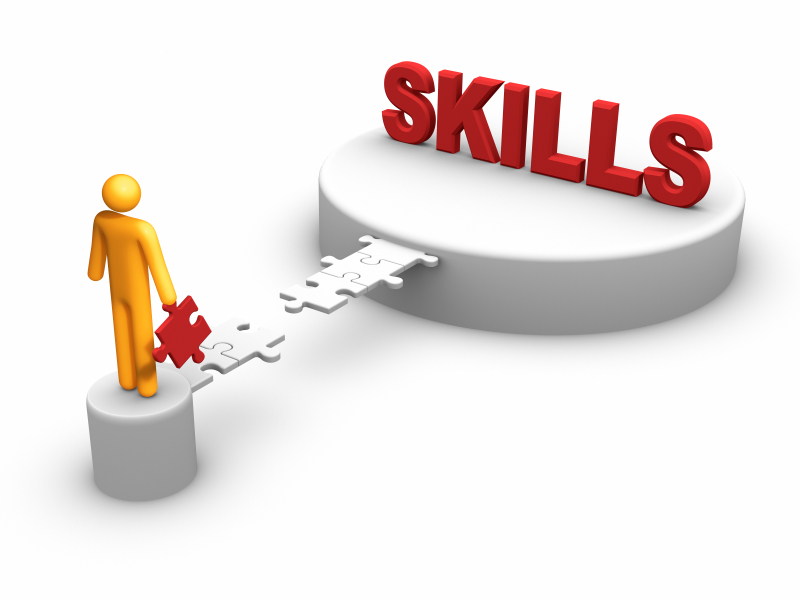
essential-skills-for-winning-chess Employers say they can’t get enough skilled labour. Further and Higher Education institutions talk about embedding employability skills in the curriculum. On a personal level, what does being skilled mean to you?Have you identified the skills you have and the skills you need to stand out in your job search or in your current profession? Are there any gaps or are are you skilled to kill? In this article, Dr Nadia Anwar discusses the term ‘skills’ and the importance of skills training.

Skills come both naturally and through training. They are the weapons of power with which you can make a long lasting impression on the highly demanding job market and influence people who play a significant role in your success. Although present in all, most of the time, skills need to be acknowledged and recognized by a person so that they could be appropriately demonstrated in his/her private and public life. However, what are these skills and how are they acquired still generate confusion in potential candidates and hiring agencies.

Skills function as a measuring tool to judge someone’s ability or the degree of efficacy in performing a task.

However, a significant key to understanding any process that involves an interaction designed to assess someone’s ability in any field or aspect of life is to place the concerned person in the context and environment in which s/he is being judged. Not only that, the context also needs to be accommodated by tailoring the skills according to its demands.

RE: The postdoctoral Conundrum – To Postdoc or not to Postdoc (feedback and advice for those considering whether or NOT to Postdoc)

Following the article by Dr Victor Ujor on “The postdoctoral Conundrum – To Postdoc or not to Postdoc!” two readers left very engaging and interesting comments on LinkedIn which we thought would be of benefit to our readers and the contributors have also very generously agreed for their comments to be shared with our readers.

Dr Lia Paola Zambetti, is an Experienced Scientific communicator and currently Assistant Head/Project Manager at A*STAR (Agency for Science, Technology and Research) and completed her PhD studies at the University College London. She advises that;

“If you are not 1000% convinced that you want to stay in academia (and have the stellar publication record that is a requirement nowadays) then probably…better to not postdoc!”

It should also be made abundantly clear right from the start that the % of success in getting an academic position is ridiculously low……”

Subsequently, Dr Chris Gaj, Director at the Research Partnership in Philadelphia, experienced healthcare professional and PhD Graduate from Yale University added to the comments made by Dr Zambetti below.

“To echo Lia, do not do an academic postdoc unless you really have to. If you have your heart set on being a tenure track professor, you probably have no choice but to pursue the postdoctoral fellowship pathway. If your interests lie elsewhere, do not use the postdoc as a default path. Strive to reach your goals. It may be that you are unable to get where you want to or even to a place that you can tolerate – if you are faced with the choice of an academic postdoc or pushing shopping carts/mopping floors/cleaning the trash compactor aisle (I am describing my first real job back in high school) then maybe an academic postdoc is better.

What I suggest to people looking for anything other than academic science is ‘do not postdoc unless there is no other viable option.’

And work hard to make sure you are trying to get other opportunities. Don’t do a half-____ed job of it. If the postdoctoral pathway is largely forced on you, always be working towards ways to escape.

Now an industrial postdoc is a different story. This gets you industry experience and sets you up for potentially going into non-scientific pathways like business. But I know these are hard to come by.

No matter where you are in your pathway. Good luck, God bless, and try not to let the job market get you down. It took me about 18 months to find a real position. 12 months in graduate school and 6 months after defending, but it did happen. Just try (I know it’s REAL hard) to stay positive and keep moving forward.”

Many thanks to Dr Zambetti and Dr Gaj for sharing meaningful advice and allowing us to publish their comments on the hub

If you enjoyed reading this article or are challenged by it, please share your thoughts with us. Also share with your contacts and subscribe to our network! If you have an article you would like to share with our readers, please get in touch – info@aspiringprofessionalshub.com

#PhDChat – The Postdoctoral Conundrum; to postdoc or not to postoc?

5. Postdoc conundrumFor many PhD candidates, undertaking postdoctoral training after their PhD programs appears as the “natural” career transition upon graduating. This is not an exact science and in today’s post, Dr Victor Ujor discusses the ‘postdoctoral concept’ and offers beneficial tips for PhD candidates thinking of the of the next steps in their career after the PhD

For most PhD students particularly in the sciences, as soon as they near the end of the grueling PhD journey, they are literally feverish at the prospect of landing a real ‘money-paying’ job. In today’s economy, such jobs are few and far between. Nonetheless, they still exist, but to get one, you ought to have a roadmap from the onset. An overwhelming number of PhD candidates drift towards the Postdoctoral end of the job spectrum for a number of reasons.

First, most PhD candidates feel they are expected to do a postdoc – gain extra experience, get more publications and then land the real job. In some cases, that does happen, but if one does not have a clear-cut strategy as to how to negotiate the winding Postdoctoral alleyway, they might end up stuck in a convoluted maze for an unpleasant period of time. Second, more often than not, Postdoctoral positions are more available that positions in industry, which pays more. Third, some PhD candidates are confused about their career prospects i.e. should they decide to ditch academia for industry.

For PhD candidates at the confusing intersection between the end of the PhD program and a vastly hostile market, perhaps it is important to clarify the concept of a postdoctoral experience .

 What is a Postdoctoral experience really?