“Writing is Fun and Escapism.” -A Journey into the World of Fiction

Are you thinking of writing your first novel or have you started writing but need that bit of inspiration to help you complete your first manuscript?  In this article, John Hancock, Associate Professor of Molecular Biology and Author of several academic textbooks in Molecular Biology and Cell Signalling shares his experience of writing fiction. John also shares some advice for prospective authors on taking the plunge into writing that first novel. Enjoy!

Writing is both fun and escapism. Having written quite a lot of non-fiction having the chance to write a story is refreshing. There is no right or wrong way to do fiction, by which I mean you can write about anything as long as it, hopefully, comes across as engaging and enjoyable. 

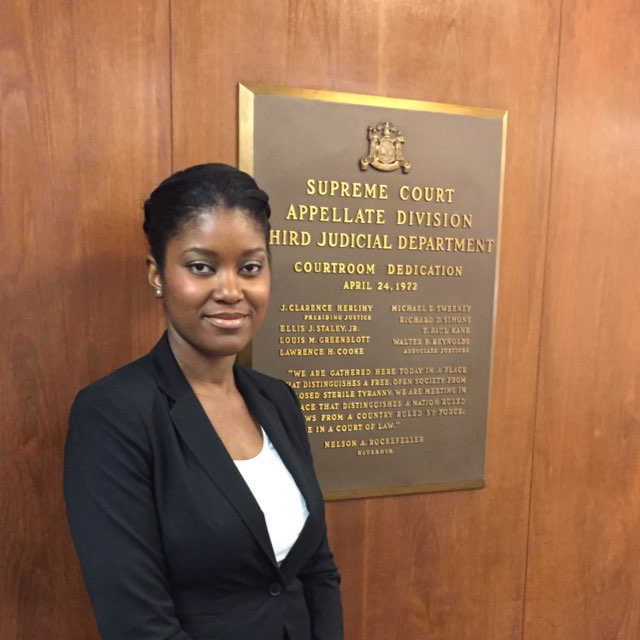
#CareerChat – Simple and Effective Tips for Success at the New York Bar Exam.

LegalIn a previous article, Lola discussed the challenges and potential benefits of intercontinental relocation on developing a legal career. In this she reflects on her experience of undertaking the New York Bar exam and shares some tips to enable prospective candidates succeed.

 “In an increasingly globalized legal marketplace, and with increasing numbers of United States practices – particularly New York based – opening in Britain, it makes sense for UK-based lawyers to be dual qualified.” – BPP

Studying for any bar exam can be intimidating for most candidates, especially for foreign trained lawyers who are unfamiliar with the basic legal concepts. A healthy level of anxiety is better than an unhealthy level of confidence. The key is to channel your anxiety towards diligent preparation and these tips for success will go a long way to help you prepare. 

#PhDChat : ‘Athena Swan – Quest for Change or Another Tick Box Exercise?’

pregnant
Image – Jason Corey

‘Opinion’ is our latest addition to The Hub. This is a space where writers can share their personal opinions about topical issues. In today’s article, a current PhD candidate* discusses her experience of becoming pregnant during her lab-based PhD. Should PhD candidates be treated as students (tax exempt stipend, no benefits) or staff (pay tax on salary, employee benefits e.g. maternity pay)?

I’ve been contemplating this post for a while – to write or not to write, to share or not to share. After careful consideration, I believe the story should be shared so that this issue can be debated by and with a wider audience. Perhaps this post can resonate with the collective experiences of others who found themselves in my position.

Women’s rights, equality for women and now promoting more women in science are hot topics today. But is it just another tick box exercise or an honest quest for change? What is the reality on the ground?

In 2005, the Equality Challenge Unit (ECU) established the Athena Swan Charter to – ‘encourage and recognise commitment to advancing the careers of women in science, technology, engineering, maths and medicine (STEMM) employment in higher education and research’. A statement on the ECU website reads: ‘We support universities and colleges to build an inclusive culture that values the benefits of diversity, to remove barriers to progression and success for all staff and students, and to challenge and change unfair practices that disadvantage individuals or groups’.

Since its inception, many universities have signed up to adopt the charter and have put measures in place so women in the profession are better supported such as flexible working hours, Job shares and scheduling events during core hours (10 am – 4pm).

#UniChat – “From the Equator to the North Pole” – Studying Medicine in Ukraine

imagesEvery year, thousands of students leave their countries to progress their education in lands unknown. In recent years, increasing tuition costs in Higher Education Institutions (HEIs) in the UK and US have increased the popularity of seeking education in other countries including non-English speaking countries. In today’s post, Emmanuel caught up with Dr Oge Ezeoke, an intern at a teaching hospital in Nigeria, who completed a medical degree in Ukraine. Oge discusses her experiences and challenges of being an international student in Ukraine and offers some words of advice for anyone considering studying medicine in Ukraine.

APH: Why did you choose to study in Ukraine?

OE: Most people ask me why I went all the way to Ukraine to study medicine. I think the best answer would be, I didn’t. After graduating from high school, I applied to different Nigerian universities without luck and I decided to look outside the country instead of staying at home waiting. I applied to one university in Ukraine and I got accepted.

APH: How were your early experiences and what challenges did you encounter?

OE: I arrived in Ukraine without knowing a single individual. I had no friends or relatives over there. It felt like landing on the moon. At first I was unhappy because I was so far away from home, but I was also afraid because I had never lived on my own. After settling down and completing my registration, I faced my first challenge, the language. My program was taught in English but once I left the classroom, I was on my own. I had to walk around with a translator, usually a foreign student like myself who could speak the language. So let’s say I was independently dependent, and that motivated me to learn the language.

Another challenge was the weather. That was quite a challenge going from the equator to the North Pole.

“Maybe if I had slept in a cold room for a month before going to Ukraine I would have been better prepared for it.”

But my toughest challenge of studying in Ukraine was the racism. At first, I didn’t have a problem with the way people stared at me or my friends, probably because we stared back. But as I began to understand the language, I started to hear the side remarks and the insults. Luckily I was never physically attacked because ladies were told to always walk in pairs and not to stay out late. It was difficult but in a way I appreciated it and after some time it got easier and I learnt how to accommodate it.

APH: Were there any good points?

OE: There were a lot of interesting and new things I enjoyed while I was there. I learnt a new language. I also leant how to cook Indian and East African cuisine. I got to travel and visit new places within the country.

I enjoyed the organization and how orderly things were. I’m not saying things in my country are not organized, it was just nice to have a different feel altogether. A couple of my friends enjoyed the way things were done over there and decided to stay back and further their studies. I thought about it, in fact I almost considered it. But I needed a lot more practical experience and I knew I wouldn’t be satisfied staying back in Ukraine.

My school was good for the theoretical knowledge but not for the practical one. I wanted to believe that was because there were so many foreign students and most of the local patients we interacted with in the hospitals sometimes got “overwhelmed” by our presence in the sense that they weren’t too comfortable with the idea of being examined or touched by a foreigner. I believe this was a general thing in most of the universities in Ukraine. And it affected how much practical skills we got to learn or apply and the effect of that was seen when I got back home for my internship. But I was still grateful for the whole learning process.

APH: What can you say about the occasional negative impression about medical studies in Ukraine?

OE: While I was in Ukraine, I heard a lot of things that were said about people who went to study in Ukraine. There was this general idea that only “spoilt children” were sent Ukraine and all we did was go clubbing and become musicians. Now, that isn’t entirely true. Everyone is free to do what he or she wants to do. If someone decides to go to school and study till they drop, their choice.

Medical students back in Nigeria also felt it was a waste of time studying abroad because the “medicine” was different. This is completely wrong! Practicing back in Nigeria has shown me that medicine is basically the same everywhere. The only difference would be that we tend to pay attention to the diseases or conditions which are most common or have the highest incidence in our own environments.

“…medicine is basically the same everywhere. The only difference would be that we tend to pay attention to the diseases or conditions which are most common or have the highest incidence in our own environments.”

APH: What would you say about other students taking the same route you did?

OE: I know right now most parents wouldn’t want to send their children to Ukraine considering the ongoing tensions and the political crisis in the eastern part of the country. This however did not affect the western part of Ukraine.

APH: Any last words about your experience?

OE; Studying in Ukraine was a wonderful and life changing experience for me. I learnt so many things and I also believe it made me a bit more focused. So if anyone is interested in studying Medicine in Ukraine, I would advise the person to go ahead. It’s not as expensive as other medical schools in Western Europe or Europe as a whole.

If you don’t have a problem with the weather or racism, then it’s ok to study in Ukraine. Plus, if you would like to simply get a degree in Medicine and further your career in a different geographical location then it isn’t a bad idea. The reason is the postgraduate programs in Ukraine, in my opinion presently doesn’t benefit foreigners because of the struggle to acquire practical skills. All in all, it is still a wonderful place to study medicine.

If you enjoyed reading this article, please share and subscribe to our network! To find out more information about studying abroad or choosing a course to study at University, do get in touch with us. If you have an article you would like to share with our readers, please contact us – info@aspiringprofessionalshub.com

Does Intercontinental Relocation Mean Restarting Your Legal Career or Training?

Legal Careers Moving across countries or continents occasionally pose career defining questions and challenges such as the equivalence or transferability of qualifications or certifications. In today’s post, Lola Adekanye shares her experience of a transatlantic legal career and offers practical suggestions on nurturing a legal career across continents.

So, for some good reason you have to be uprooted from one jurisdiction to another in the course of your legal career journey, tossing your plans to go to law school and chart a path on the bench or at the bar up in the air. This is the picture of my career journey thus far; I started my career in England, then I relocated to Nigeria and subsequently to the U.S. While, some lawyers change their career paths completely from law to a different field or discipline. This choice has its own challenges as one would still need to qualify and be employable in the new location and when properly weighed, this was not a very attractive option for me.

In the course of obtaining two law degrees in England,  professional law certificates both in Nigeria and  New York and another law degree in the United States, I have come to the conclusion that a transatlantic legal career can be rich and fulfilling with proper planning.

The two major deterrents to transitioning lawyers or law students are qualifying in the new jurisdiction and employability given the lack of familiarity with the legal systems and structures in the new jurisdiction.

Qualifying  – Legal studies and the process of qualifying to practice law in most jurisdictions is notorious for being grueling and very demanding and the entry requirements vary distinctly from jurisdiction to jurisdiction, so it is important to adequately prepare by conducting appropriate and extensive research.

In addition to research, obtaining first hand information about the jurisdiction is fundamental. Having the right information early on will put you on the right path and save time. The qualifying requirements to sit a Bar entry exam varies widely from jurisdiction to jurisdiction and are usually very specific. For instance some jurisdictions require that a law degree must include specific courses. Thus, current law students are in a good position to prepare to meet those requirements while they are in law school while practicing attorneys can manage their schedules to start making plans to meet the requirements. Practicing attorneys may also find that in some jurisdictions, experience counts as an alternative entry or admission requirement to exam.

A clear road map for qualifying puts things in perspective for lawyers who consider changing career paths due to the challenges of transitioning into a law career in a new jurisdiction. It turns out that changing to a new career path would require a considerable amount of studying which may take equal amount of time or perhaps more time than it would take a transitioning lawyer to sit the qualifying Bar exams.

Employability – My legal counsel during my undergraduate studies enlightened me to the comforting fact that a law degree equips you to function in a variety of capacities order than litigation. This would require that you  obtain at least basic substantive knowledge in another field or additional soft skills in addition to core legal skills such as drafting and research. This is even more true as clients directly or indirectly demand an integrated service of their attorneys and law firms.

 The ability to apply business skills or orientation, operational knowledge, language skills and science knowledge to legal representation is an advantage to landing a job or finding a role within other non-conventional legal positions.

On that note, if you are a current student or aspiring lawyer, it might also be worth considering a combined degree as it can be of great benefit. For anyone studying outside the U.S, taking a minor in another course of interest during their undergraduate year while you major in law would be the way to achieve this. While for students studying in the U.S, going for first degree in any course in order to qualify for admission to law school to earn a Juris Doctor which is a law degree equivalent to a Bachelor of Laws (LLB) in other jurisdictions is advisable.

Finally, keep an open mind to a host of alternative practice areas to litigation.

Lola Adekanye obtained her Master of Laws (LL.M.) in Securities and Financial Regulation from Georgetown University. She operates as a Legal Counsel as well as a Business Risk and Compliance Consultant. Lola enjoys writing as well as sharing her experience in developing a legal career as well as business strategy and international education.

If you enjoyed reading this article, please share and subscribe to our network! If you have an article you would like to share with our readers, please get in touch – info@aspiringprofessionalshub.com